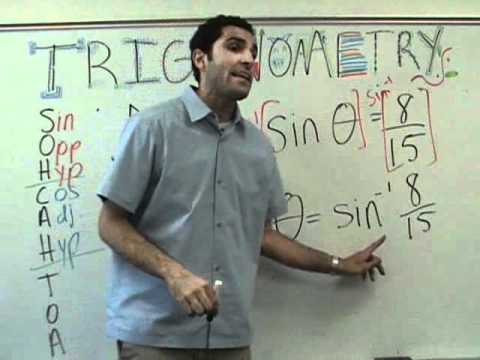
You know that moment in math class when the teacher drops a bomb like “Okay folks, here comes trigonometry?” Yeah, that’s the one where half the room suddenly looks like a bunch of deer caught in headlights. But honestly, trigonometry isn’t as scary as it seems.
I remember my first encounter with sine, cosine, and all those triangles. I thought, “Why on Earth do I need to know this?” Fast forward a few years, and there I was trying to calculate the height of a tree for a science project. Spoiler alert: I used just that!
So let me tell you—bridging Algebra 2 and trigonometry is like finding that missing puzzle piece. When you connect those dots between equations and angles, the whole picture becomes clearer. It’s not just about numbers; it’s about understanding the world around us in a cool way.
Stick around because we’re diving into how these subjects work together in ways you might never have thought of!
Understanding the Challenges of Algebra 2 and Trigonometry: A Scientific Perspective
Alright, let’s talk about Algebra 2 and Trigonometry. You know, those classes that sometimes feel like they’re designed to drive you crazy? There’s a lot going on there, and understanding the challenges can actually make it a bit less daunting.
Algebra 2 builds on what you learned in Algebra 1, but it dives deeper into concepts like complex numbers, polynomials, and functions. It’s like going from riding a bike with training wheels to going full-on mountain biking. You gotta get comfy with the basics first!
One big challenge is functions. Functions are like little machines; you input a number, and they churn out another one. But wait! Now you have different types of functions—linear, quadratic, exponential—and each behaves differently. It might feel overwhelming at first, but understanding how each type works gives you better tools to tackle problems.
- Complex numbers: They might sound fancy but think of them as regular numbers, just with an added twist (like the imaginary unit i). They’re super useful for solving equations that don’t seem solvable at first glance!
- Polynomials: These are expressions with variables raised to whole number powers. The more terms they have, the trickier they can get!
Now onto Trigonometry. This subject often makes students scratch their heads and say “Wait…what?” Basically, it deals with angles and the relationships between them and sides of triangles. Have you ever tried to find out how tall a tree is just by measuring its shadow? That’s trigonometry in action!
The main hurdle here is mastering the sine, cosine, and tangent. They sound complicated because they are tied closely to angles in right triangles. To put it simply:
- Sine: It gives you the ratio of the opposite side over the hypotenuse.
- Cosine: It tells you about the adjacent side over the hypotenuse.
- Tangent: This one is all about opposite over adjacent.
You might think this stuff is only good for building bridges or launching rockets—but hold on! The real beauty lies in how these concepts interconnect in scientific fields like physics or engineering.
For instance, when you’re studying waves—say sound waves or light waves—you’re using trigonometric functions all day long! They help model patterns in nature that appear everywhere around us; from ocean tides to electrical currents.
I remember struggling through these topics back in high school; I was convinced I’d never use them again after graduation. But then one day while working on a project related to sound waves for a science fair, everything clicked! Suddenly those seemingly random formulas were essential for making sense of my work.
The takeaway here is simple: every challenge in Algebra 2 and Trig isn’t just another hurdle; it’s a bridge connecting math to real-world applications. Each equation solved is also an avenue into understanding some fascinating stuff about our universe!
You may face challenges along the way—some days might feel like fighting an uphill battle—but stick with it! Those moments of clarity make all those equations worth tackling.
Understanding Algebra 2 Trigonometry: Grade Level Expectations in Science Education
Algebra 2 and trigonometry might sound a bit intimidating, right? But honestly, they’re like the bread and butter of higher mathematics and are super important in science education. Connecting these two areas can really help you understand scientific concepts way better.
So, what’s the deal? When we talk about Grade Level Expectations for Algebra 2 and trigonometry, we’re looking at skills that should be developed during those courses. You start with the basics of algebra, like solving equations and working with functions. Then you dive into trigonometry, which deals with the relationships between angles and sides in triangles.
Now, here’s a thought: imagine being out on a hike. You come across a steep hill, and you want to know how high it is without climbing it. If you’ve got some basic trig skills—like knowing sine, cosine, or tangent—you can actually figure that out just by measuring the angle of elevation from where you stand! That’s how powerful this stuff can be.
Then there’s the concept of functions. In Algebra 2, you’ll dig deeper into different types of functions—linear, quadratic, polynomial, and exponential—each having their own formulae and graphs. With trigonometric functions like sine or cosine added into the mix, you start to see patterns that pop up in science all over the place.
Let’s break it down a bit more:
- Graphing: Understanding how to graph these functions is key—it helps visualize relationships. You can plot periodic behavior naturally found in waves or oscillations.
- Sine and Cosine: These functions might feel abstract at times but are crucial for modeling real-life phenomena. Think about sound waves or light waves; both can be described using trig functions.
- Applications: In physics class, for example, when dealing with forces acting at angles or calculating trajectories of objects in motion, having that solid grasp on trigonometry gives you an edge.
Here’s something cool: did you know many scientists rely on Pythagorean Theorem? It comes straight from trigonometry! It helps in numerous practical applications—from architecture to computer graphics!
Bridging Algebra 2 with trig isn’t just about passing those tests; it’s all about making connections that apply to real-world scenarios too!
So next time you’re grappling with an equation or trying to figure out angles in geometry class, just remember: this knowledge isn’t just classroom stuff; it’s powerful tools for understanding our world!
Integrating Algebra 2 and Trigonometry for Enhanced Scientific Analysis and Insights
Algebra 2 and trigonometry might seem like two separate worlds, but they actually complement each other beautifully, especially in scientific analysis. You might be surprised at how often they cross paths! Let’s break it down a bit.
When you think of algebra, you’re talking about solving equations and working with variables. It’s all about finding the unknowns! On the other hand, trigonometry deals with the relationships between angles and sides of triangles. It helps us understand wave patterns, rotations, and much more. So why bother blending them? Well, together they provide tools that are essential for scientists!
Imagine you’re out hiking in a mountainous area. You want to know the height of a peak that you can’t access directly. Here’s where both subjects swoop in to save the day! Using trigonometry, you can create a right triangle by measuring your distance from the base of the mountain and your line of sight to its peak. With some basic algebra to plug those numbers into the right equations, boom—you’ve got an estimate for how tall that mountain really is!
Now let’s talk applications. A lot of scientific fields benefit from this integration:
- Physics: When studying motion or forces, you often have to calculate trajectories. Here’s where quadratic equations (a key part of algebra) and sine or cosine functions (from trigonometry) work hand in hand!
- Engineering: Engineers frequently use both areas when designing structures. They need algebraic formulas for calculations while also considering angles for stability using trigonometric principles.
- Astronomy: Astronomers rely on these concepts for mapping celestial objects. They use algebraic formulas for distance calculations while employing trigonometric functions to determine their positions.
This combo isn’t just theoretical; it gives tangible results to real problems we encounter every day.
Given this context, think about how important education is in these subjects! Solid foundations in both can open doors for students pursuing careers that require strong analytical skills.
Sometimes people think math is just about numbers on a page or formulas crammed into your head before tests. But really, it’s like building blocks! By integrating Algebra 2 with trigonometry, you’re not only enhancing your mathematical toolkit but also sharpening your analytical skills—skills that are incredibly helpful in scientific research and everyday problem-solving.
So next time someone mentions algebra or trig as if they’re boring school subjects, remember: these disciplines are intertwined like good friends who always help each other out when things get tricky!
You know, when I think back to my own school days, I remember a moment in math class that just clicked. We were grappling with algebra and then suddenly, bam! Trigonometry made its entrance like a superhero in a cape. At first, it felt like I was juggling two separate worlds: algebra had its equations and variables, while trigonometry was all about angles and triangles. It was all a bit overwhelming, you follow me?
But here’s the thing: these two subjects are actually more connected than you might realize. Like, seriously intertwined. In many scientific disciplines—whether you’re looking at physics or engineering—you can’t really do one without the other. Algebra helps us manipulate equations while trigonometry lets us understand relationships between angles and dimensions. So when you’re trying to solve a problem involving waves or maybe some cool physics concept like projectile motion, both tools come into play.
For instance, think about a roller coaster ride—yeah! Picture that steep drop or the loop-de-loop. The height and distance are usually calculated with algebraic formulas, but the angle at which the coaster goes down is all about trig functions like sine and cosine. If you didn’t bridge those two concepts together, well… your roller coaster would probably be more of a sad slide than an exhilarating ride!
And then there’s this whole world of science where these concepts intermingle even further. You can look at everything from sound waves to light waves through the lenses of both math types. They’re like best friends supporting each other in some serious scientific bonding moments.
It’s kind of bittersweet to realize how important they are together after the fact—kinda makes me think why we don’t teach it more as one unit? If students grasp those connections early on—man! They’d be so much better prepared for anything that comes next.
So next time you’re grappling with an algebraic equation or finding the sine of an angle—remember there’s this whole beautiful dance going on between them that opens up doors to understanding our universe better. Isn’t that just neat? It’s like piecing together a cosmic puzzle where every part counts!