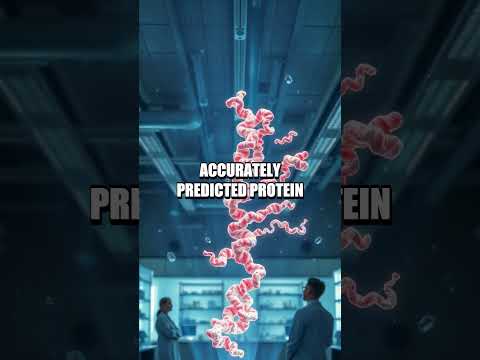
Alright, picture this: you’re out with friends, and someone brings up how AI can now analyze data faster than you can say “science is cool.” Crazy, right?
I mean, just a few years ago, we were still trying to explain what AI even was. Now it’s like that super-smart kid in class who finishes the math problems in half the time. You kind of want to be friends with them but also feel a bit intimidated.
Well, in the world of scientific research and outreach, AI is stepping up its game big time. It’s not just about robots taking over jobs (thankfully!). It’s more like having a turbocharged assistant that can sift through mountains of data while you grab your coffee.
So let’s chat about how these innovations are shaking things up for scientists and the rest of us curious folks. Seriously, you’ll want to hear this!
Exploring the Role of AI in Advancing Scientific Research: Applications, Challenges, and Future Directions
Sure! Let’s talk about how AI is shaking things up in the world of scientific research. So, first off, we’ve got to understand that AI stands for Artificial Intelligence. Basically, it’s when computers get smart—like they can learn and make decisions on their own. This is huge for science, like really.
One neat application of AI is in **data analysis**. Scientists have loads of data from experiments or observations. And honestly, sifting through that can be a total nightmare. Here’s where AI comes in to save the day! It can spot patterns faster than you can say “data set.” For instance, researchers studying climate change can use AI to analyze weather data and predict future trends more accurately.
Another exciting area is **drug discovery**. Creating new medicines usually takes forever, not to mention a ton of money. With AI, researchers can simulate how different compounds interact with biological systems before they even get into a lab. That’s like having a superpower! It speeds things up and reduces costs significantly. Can you imagine getting life-saving drugs out there quicker? It’s a game changer.
Now, let’s switch gears for a second and talk about some **challenges** with using AI in research. One biggie is the issue of **bias** in algorithms. If the data fed into an AI system isn’t diverse or representative enough, its conclusions will be too—leading to potential misinterpretations or worse outcomes in real-world applications. It’s like if you only asked your best friend for their opinion on movies; you’d miss out on so many other great ones!
Another challenge is the reliance on technology itself. What happens when our tech fails? Researchers need backup plans because AI isn’t infallible—even though it seems that way sometimes! The truth is, humans still need to oversee these systems to ensure accuracy and reliability.
And let’s not forget about the whole ethical side of this stuff! There are ongoing discussions about how far we should let AI influence decisions in sensitive fields like medicine or environmental science. You want your life-saving treatment decided by a machine? That could feel pretty scary.
Looking ahead, the future directions for AI in scientific research seem bright but complex. We might see more opportunities for **collaboration** between humans and machines—imagine scientists working alongside their own personal AIs as teammates! Plus, advancements in explainable AI could help make those black-box algorithms easier to understand for everyone involved.
In summary:
- AI enhances data analysis, helping scientists find patterns quickly.
- It accelerates drug discovery, potentially leading to faster medication development.
- Challenges include bias in algorithms that can skew results.
- Technology reliance poses risks if systems fail.
- Ethical concerns arise regarding decision-making roles for machines.
- The future may see better collaboration between humans and AI systems.
Overall, it looks like we’re just scratching the surface here with what AI can do for science—and I’m excited (and maybe a little nervous) about where it’ll take us next!
Understanding the 30% Rule for AI: Implications and Insights in Scientific Research
The 30% Rule for AI is this idea that suggests AI can effectively handle about 30% of a specific task or problem without human intervention. It’s not saying AI can’t do more, but that’s where it really shines, at least right now. Think of it like this: imagine you’re assembling a puzzle. You can definitely finish the puzzle on your own, but maybe a friend can help you put together the corner pieces while you work on the middle. That way, you save time and get things done faster.
So, what does this mean for scientific research? Well, AI has been making waves in labs and research institutions by assisting in data analysis. For instance, when researchers collect tons of data from experiments—like genetic sequences or climate models—AI can comb through all of that much quicker than any person could. And that’s super valuable because it allows scientists to focus on interpretation and innovation instead of getting bogged down in the weeds.
But there’s more to the story! The **30% Rule** also hints at some limitations. See, relying too heavily on AI could lead to a lack of critical thinking among researchers. It’s like if you started letting your friend do most of the puzzle work; you might miss out on understanding how the pieces fit together overall.
Now, let’s break down some implications of this rule:
- Efficiency: With AI tackling mundane tasks—like sorting data—scientists have more time to brainstorm new hypotheses.
- Error Reduction: Machines can spot patterns we might overlook. This reduces human error in repetitive tasks.
- Skill Development: Researchers need to develop skills that allow them to work alongside AI effectively.
- Ethical Considerations: The reliance on AI raises questions about biases in algorithms which could affect results.
Let me share an example here: there was a study where researchers used AI to analyze thousands of clinical trial results about cancer drugs. The tool helped identify patterns that led them to new insights they hadn’t noticed before! But they still needed their expertise to ensure those insights were relevant and scientifically sound.
Now onto some insights. It’s clear that while embracing technologies like AI can push scientific frontiers, it also demands responsibility. Researchers have to understand both what these systems are doing and their boundaries. If they ignore these boundaries? Well, then we risk misinterpretation or missing out on crucial discovery moments.
In summary, while the **30% Rule** points toward exciting possibilities in scientific research through smart use of AI, it also serves as a reminder: collaboration between humans and machines is essential. Finding that sweet spot will help drive innovation forward without losing sight of human insight and creativity! So remember—it’s all about balance!
Revolutionizing Science: AI Innovations in Research and Outreach – A Comprehensive Guide (PDF)
So, let’s chat about how AI is shaking things up in the world of science. It’s kinda like watching a superhero movie where the nerdy guy becomes a genius overnight. You know what I mean?
AI, or artificial intelligence, is changing the way researchers work and communicate. It’s not just some fancy tech; it’s like having a super-smart assistant that can handle loads of data super fast.
AI Innovations in Research
First off, AI tools can sift through mountains of research papers quicker than you can say “new discovery.” Imagine trying to read every science article ever written. Yeah, good luck with that! Instead, AI algorithms scan and summarize findings, helping researchers stay on top of trends and breakthroughs in their fields.
Another cool thing? Predictive modeling. Researchers use AI to predict outcomes based on existing data—like guessing how a new drug might work before it even gets tested on humans. It speeds up the trial-and-error process significantly.
Then there’s data analysis. With AI, scientists can analyze complex datasets, like genetic information or climate models, in ways that were almost impossible before. This means they’re uncovering patterns and insights way faster than using traditional methods.
For example, think about the ongoing fight against diseases. AI algorithms analyze patient data to find potential treatments or predict flare-ups in illnesses such as diabetes or heart disease by spotting trends that are not immediately obvious to humans.
AI in Outreach
Now let’s talk about how we’re spreading the word about scientific innovations with AI. There’s this whole movement towards making science more accessible—like moving from a dusty library to an interactive online platform.
One major shift is using chatbots to answer questions about research findings. Imagine visiting a website where you can ask questions and get instant responses from an AI chatbot trained on vast amounts of scientific information! This makes learning feel less intimidating and way more interactive for everyone interested in science.
Also, social media is buzzing with the help of AI tools that analyze public interest and engagement with various scientific topics. This lets researchers understand what people actually care about so they can present their work in a more engaging way. Ever seen those viral videos explaining complex science concepts? Yup! That’s partly thanks to insights provided by these smart systems.
And don’t forget about virtual reality (VR) experiences powered by AI technologies! They’re creating immersive ways for people to experience scientific concepts firsthand—like walking through the human body or exploring distant planets without leaving your living room. Super cool!
In summary, it seems like AI is becoming an integral part of both research and outreach in science. By helping with analysis speed-ups and making information more accessible to all sorts of folks out there, it feels like we’re just scratching the surface here! Who knows what else this tech will do next?
So, let’s have a chat about AI and how it’s shaking things up in the world of science. It’s not just robots or self-driving cars anymore. I mean, if you think about it, AI is kind of becoming this magic tool in research and, believe it or not, even in outreach too.
I remember watching a documentary a while back about scientists hunting for new drugs. They were using AI to sift through huge piles of data—like millions of compounds—to find the ones with potential. It was like having a super-smart assistant that never gets tired or distracted. Seriously! They could analyze patterns and predict which compounds might work against diseases. That’s something that would’ve taken ages if done manually.
But it’s not just about crunching numbers in labs. AI is also helping scientists communicate their findings better. Imagine you’re at a scientific conference, and instead of getting hit with jargon that makes your head spin, there’s an AI tool simplifying complex ideas into everyday language so more folks can understand what’s going on. Sounds great, right? This means more people can engage with science—not just the experts but anyone who’s curious.
And look, it doesn’t stop there! With tools like chatbots or virtual assistants, researchers can answer questions from the public in real time. It’s like having your own personal scientist on speed-dial! People can get quick responses to their queries without having to navigate through complicated papers.
But here’s the thing: while these innovations are super cool, there are some bumps along the road too. Like, what happens when we start relying too much on algorithms? We gotta remember that technology isn’t perfect—sometimes it misses the nuance or context we humans pick up on easily.
In any case, as we move forward with AI driving many aspects of research and outreach, there’s this hopeful vibe I feel—that maybe more people will connect with science on a personal level. You know? It’s all about breaking down those walls and making knowledge accessible to everyone out there—whether you’re a student just starting out or someone who hasn’t cracked open a textbook since high school.
At the end of the day, embracing these innovations could push us toward a future where science isn’t just for scientists but for all of us who want to learn about our world—and beyond! How cool is that?