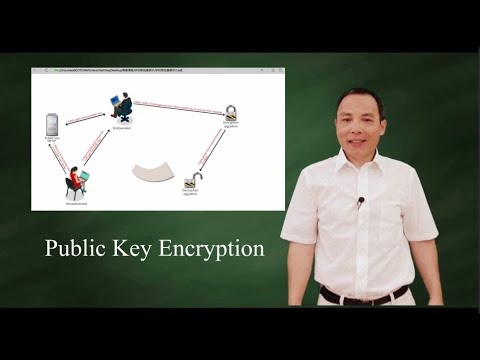
Alright, so picture this: you’re trying to send a super secret message to your best friend, maybe something embarrassing like that time you tripped in front of your crush. You don’t want just anyone snooping in on that convo, right?
Well, that’s where asymmetric public key cryptography swoops in like your trusty sidekick. Imagine it as a high-tech secret handshake. It sounds fancy, but it’s really just a way to keep your messages safe from nosy people.
Basically, it lets you lock up your message with a special key that only the person you’re sending it to can unlock. Like a digital version of putting your notes in a box with a unique key!
But how does this magic actually work? What’s the science behind it all? Let’s break it down together!
Understanding Asymmetric Public Key Encryption: Mechanisms and Applications in Science
When you think about sending secret messages, you might picture a spy in a movie using some fancy gadget. In reality, asymmetric public key encryption is actually how many of our digital communications stay safe. It’s like having a special key that only you can use, while everyone else has a different one that lets them send messages to you.
So, here’s the deal: **asymmetric encryption** uses two keys instead of just one. You’ve got your public key and your private key. The **public key** is like your address—anyone can see it and use it to send you messages. The **private key**, on the other hand, is something only you should know—not even your best friend should have it!
Now, let’s break down how this works in simple terms. Imagine you’re sending a love letter (or an email) to someone special. You lock that letter in a box and then use the public key to seal it shut tightly. Only your private key can unlock it again! So even if someone intercepts your beautiful message, they can’t read it without the private key.
One of the coolest things about this system is that it’s super secure. Let’s say someone tries to guess your private key. With modern encryption methods like RSA or ECC (Elliptic Curve Cryptography), they’d need to be *really lucky*—and have *lots* of time on their hands—to crack it!
Now, let’s talk about where this tech fits into science and everyday life:
- Secure data transmission: Scientists often share research results or confidential information over the internet. Asymmetric encryption keeps this sensitive data safe from prying eyes.
- Digiat signatures: When scientists publish studies or send documents, they can sign them digitally using their private keys, ensuring authenticity.
- Blockchain technology: Asymmetric encryption is a bedrock for cryptocurrencies and secure transactions online.
- Secure communications: Researchers in different parts of the world often collaborate on projects through emails or shared documents—this encryption helps keep those communications private.
But hold up! You might think all this sounds complex—and yeah, some parts are tricky—but the beauty lies in its application! For instance, when I first learned about asymmetric keys during my classes at university, I was blown away by how something so abstract could impact our daily lives—from chatting with friends online to securing important files.
In summary, asymmetric public key encryption isn’t just tech jargon; it’s essential for keeping our digital lives safe and sound. So next time you’re tapping away on your phone or laptop, remember there’s some serious science at play behind those seemingly simple messages!
Understanding the Core Principle of Public Key Cryptography in Modern Science
Public key cryptography is, like, a big deal in our digital age. You may not realize it, but it underpins a ton of services you probably use daily! Think about online shopping or chatting with your friends over messaging apps. Encryption is what keeps your information safe from prying eyes. So, let’s break it down.
The core principle behind this nifty little system is the idea of **asymmetric encryption**. Now, that sounds all fancy, but basically it means you have a *pair of keys*—one public and one private. The public key can be shared with everyone, whereas the private key is kept secret by you. Imagine it like having a mailbox: anyone can drop in a letter using the public mailbox slot, but only you have the key to open it and read those letters.
Here’s how the magic happens: when someone wants to send you an encrypted message, they use your public key to scramble the data. This makes it unreadable for anyone else who might intercept it. When you receive that message, you use your private key to unlock and read it. Pretty cool, right?
Now let’s talk about why this is important in modern science and technology:
- Security: Public key cryptography ensures that sensitive data remains confidential during transmission.
- Authentication: It verifies identities—making sure you’re actually communicating with who you think you’re talking to.
- Integrity: It checks that data hasn’t been tampered with during its journey from sender to receiver.
Think of how often we rely on passwords and two-factor authentication online! Without strong encryption methods like these, we’d be way more vulnerable to hackers and snoopers.
Now here’s a bit of context: back in the day, people used symmetric encryption—where both parties share the same secret key for encrypting and decrypting messages. But here’s the catch: sharing that key safely could be super tricky! Enter public key cryptography as a game-changer.
Just picture being in a crowded café trying to share secret notes without anyone reading them over your shoulder; total chaos! But with asymmetric cryptography? You just hand out your public key like candy while keeping your private one under lock and key.
Also worth mentioning, one popular method called RSA (Rivest-Shamir-Adleman) was one of the first widely-used systems of public-key cryptography introduced back in 1978 by three clever folks named Ron Rivest, Adi Shamir, and Leonard Adleman. It involves some complex math related to large prime numbers—seriously mind-boggling stuff!
This whole concept has shaped so much of our communication today—from securing credit card transactions to protecting our privacy online. And as technology advances even further into areas like blockchain or secure voting systems? Well, guess what? Public key cryptography will still play an essential role in keeping things safe!
So there you have it—a straightforward peek into the principles behind public key cryptography! It’s fascinating how something so complex helps us navigate our digital lives securely every single day!
Examining the Key Challenges of Asymmetric Key Cryptography: Insights from Scientific Analysis
Just imagine you want to send a secret message to your friend. You’d probably wish that no one could read it, right? Well, this is where **asymmetric key cryptography** comes in. It’s a cool method used to keep our digital conversations safe, but, like everything else, it has its ups and downs.
First off, let’s break down what asymmetric key cryptography actually is. You have two keys: a public key and a private key. The public key can be shared with everyone—you can think of it like your address that people use to send you letters. But the *private key*? That’s your secret treasure. Only you get to hold onto it.
Now, here are some of the **key challenges** of this system:
- Computational Complexity: The algorithms used in asymmetric encryption can be resource-intensive. This means they require more processing power and time compared to symmetric methods (where both parties use the same key). So when you’re trying to encrypt a ton of data quickly, things can slow down.
- Key Management: Keeping track of all those keys is no small feat! If someone loses their private key or if it’s compromised, all the messages they’ve sent become vulnerable. It’s like losing the lock on your front door—suddenly everything inside is at risk.
- Vulnerability to Advances in Computing: As technology evolves, what was secure yesterday might not be secure tomorrow. For instance, quantum computing could potentially break many current encryption methods by making it easy to crack those complex algorithms.
- Potential for Misuse: Just because we have great tools doesn’t mean everyone uses them responsibly. Cybercriminals can exploit asymmetric cryptography for nefarious purposes, like sending ransomware demands—like holding someone’s data hostage until they pay up.
It’s wild how something meant for protection can also open doors for bad actors!
I remember hearing about a guy who lost access to his crypto wallet because he misplaced his private key—every penny was gone! It was such a gut-wrenching story that really highlights the importance of keeping that private key safe.
To wrap this up (not literally; there’s so much more on this topic!), asymmetric cryptography is crucial in our digital lives but definitely comes with some hefty challenges. It requires constant vigilance from both tech developers and everyday users alike!
You know, every time I think about how we share information online—like texting a friend or sending an email—I get a little amazed. There’s so much going on behind the scenes to keep our chats private. So, let’s chat about asymmetric public key cryptography. Sounds fancy, huh? But it’s really just a clever way of keeping your secrets safe from prying eyes.
So picture this: remember those days when you would send secret messages to your best friend in school? Maybe you shared inside jokes or little secrets that only the two of you understood. You’d pass notes in class, right? Well, asymmetric cryptography is kinda like having a super secure way to share those notes, except now it’s all digital.
In simple terms, this type of cryptography uses two keys—a public one and a private one. The public key is like your friend giving out their mailbox number. Anyone can drop their message in there because they know the address. But only your friend has the key to open that mailbox and read what’s inside. In other words, if I want to send you a secure message, I use your public key to lock it up tight.
But here’s where it gets even cooler: even if someone manages to grab your locked message while it’s being sent over the internet, they can’t open it without that private key. It’s like trying to break into Fort Knox with just a spoon—it ain’t gonna work!
I actually remember when I first learned about this stuff during college; I was blown away! I thought back then that security meant putting my phone on airplane mode or using tough passwords—who knew there was such artistry behind keeping our data safe? It made me realize how much trust we put into these systems every day.
Yet, as amazing as this all sounds, it’s not without its challenges. For instance, the very nature of these keys means they must be managed carefully. If someone got hold of your private key… well that’s just like giving them the combo to your diary! It’s wild how intricately tied technology is to trust.
So anyway, next time you send a secure email or hop onto an app that promises privacy using asymmetric cryptography, take a moment and appreciate that invisible shield around your words. It’s not just tech; it represents trust in an age where sharing has become second nature but with risks lurking everywhere. Seriously cool stuff!