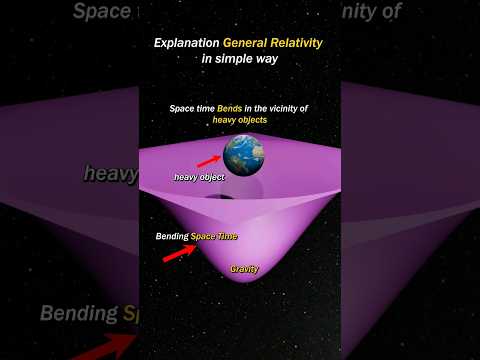
Alright, so picture this: you’re lying on the grass one night, staring up at the stars, and a shooting star zips by. You make a wish, but then you think, “Wait, what even are those twinkly things up there?”
That’s the thing about space—it’s mysterious and kinda overwhelming. I mean, have you ever tried to wrap your head around the sheer size of the universe? Crazy stuff! Like, if you could drive to the nearest star at highway speed, it would take you over four thousand years. Seriously!
But don’t worry; we’re not diving into any boring math or in-depth theories here. Nah! This is all about satisfying that curiosity of yours in a fun way. You’ll come away with some cool insights and maybe even a few facts to impress your friends at parties.
So let’s geek out together over black holes, planets, and everything in between. Buckle up; it’s gonna be a wild ride through the cosmos!
Exploring the Challenges: Is Astrophysics the Most Difficult Degree in Science?
So, astrophysics, huh? It’s like the cool older sibling in the family of science degrees. Everyone knows it’s impressive, but is it really the hardest one out there? Let’s take a closer look at this and explore what makes astrophysics tick.
First off, astrophysics is no walk in the park. It’s a blend of physics and astronomy. You’re diving deep into the rules of how the universe operates. Concepts like gravity, black holes, and cosmic radiation are just scratching the surface. You’re taking on some seriously mind-bending stuff.
Now, consider the math involved. Astrophysics requires a solid grasp of calculus and differential equations. These aren’t just schoolyard arithmetic problems; they’re tools you’ll be using to decode how stars form and evolve or why galaxies behave the way they do. This can be daunting for many students.
And then there’s the sheer scale of knowledge you need. Not only do you need to understand complex physical laws, but you also have to get comfy with advanced topics in both physics and astronomy. Everything from quantum mechanics to thermodynamics comes into play. All that can feel overwhelming if you’re not prepared for it!
But hey, it’s not all doom and gloom! The excitement of discovery keeps many going. Remember those late nights stargazing? Imagine having even a tiny part in unraveling the mysteries behind those twinkling lights! That sense of wonder is what pulls a lot of folks into this field.
In comparison to other sciences like biology or chemistry, astrophysics might feel tougher, mostly because it deals with concepts that are abstract rather than observable in everyday life. But then again, pursuing something like theoretical physics comes with its own set of challenges too—so should we really crown astrophysics as “the hardest”?
Some students thrive on abstract thinking while others shine in lab work or hands-on experiments found more often in life sciences like biology or medicine. It really boils down to personal strengths and interests.
On top of that, one major challenge is keeping up with advancements. The universe doesn’t wait for anyone! Research in astrophysics is constantly evolving with new discoveries happening all the time—think about how fast things changed when we discovered exoplanets! So staying current can feel like running on a treadmill that keeps speeding up.
To wrap it up, calling astrophysics *the most difficult* degree really depends on who you ask! Each science has its own challenges suited to different types of learners. If you’re passionate about understanding our universe—even if it’s tough—you’ll find yourself loving every bit despite those hurdles.
Astrophysics might be intense and require some serious brainpower but guess what? Hard doesn’t mean impossible!
Exploring the Four Types of Astrophysics: A Comprehensive Overview of the Field
Astrophysics is such a broad and captivating field, isn’t it? It’s like the universe itself, filled with mysteries waiting to be uncovered. There are basically four main branches of astrophysics that help us make sense of everything from the tiniest particles to giant galaxies. Let’s break them down.
1. Stellar Astrophysics
This branch focuses on stars—those twinkling lights we see in the night sky that can sometimes feel so distant and unreachable. Stellar astrophysicists study how stars form, evolve, and eventually die. They look at factors like temperature, luminosity, and even chemical composition.
For instance, when a star runs out of fuel, it can explode in a supernova! Pretty dramatic, right? After that explosion, it might leave behind a neutron star or collapse into a black hole—the ultimate destination for some stars.
2. Galactic Astrophysics
Now, let’s zoom out a bit and consider galaxies. Galactic astrophysics dives into the structure and dynamics of these massive collections of stars, gas, dust, and dark matter—yup, dark matter again! Galaxies come in various shapes: spiral ones like our Milky Way or elliptical ones that look more like giant blobs.
Imagine peering through a telescope and seeing millions of stars clustered together; that’s what galactic astrophysicists are trying to understand. They explore things like galaxy formation and interactions—like when two galaxies collide and create something new!
3. Extragalactic Astrophysics
As if studying our own galaxy wasn’t enough, extragalactic astrophysics takes us even further beyond! This branch focuses on objects outside our own galaxy—the billions of other galaxies out there in the universe! These researchers analyze quasar emissions (super-bright centers of distant galaxies) or cosmic microwave background radiation (the afterglow of the Big Bang).
One wild part? They use powerful telescopes to look back in time! Seriously! Since light takes time to travel across space: looking at distant objects means observing them as they were millions or even billions of years ago.
4. Cosmology
Finally, we arrive at cosmology—the grand study of the universe as a whole! Cosmologists tackle some profound questions about what our universe is made of (hint: dark energy is still an enigma) and its fate over time. Is it expanding forever? Will it eventually collapse?
They often combine observations from all sorts of phenomena—like supernovae or gravitational waves—to paint a picture of how everything fits together on a cosmic scale.
In all these branches, there is so much we’re still figuring out! Each type gives us unique insights into different parts of the universe puzzle while reminding us just how vast—and mysterious—it is out there! So if you ever gaze up at the starry sky again—and feel tiny compared to those giants—just remember that there are brilliant minds working tirelessly to unravel the secrets hidden within that expanse above us.
Downloadable PDF on the Fundamentals of Astrophysics: A Comprehensive Guide for Science Enthusiasts
Astrophysics is like this huge, mysterious puzzle that tries to explain the universe around us. You’ve probably heard terms like “black holes,” “nebulas,” or “dark matter,” right? Well, it can get pretty intense and complex, but, at its core, it’s all about understanding the big questions: how do stars form? What happens to them when they die? And what the heck is out there in space?
Now, if you’re a science enthusiast itching to learn more about these cosmic wonders, a downloadable PDF on the fundamentals of astrophysics might just be what you need. Imagine it as your personal guide through the vast cosmos. Here’s what you could typically find in something like that:
- Basic Concepts: You’d start with fundamental ideas—gravity, light, energy. These are the building blocks.
- The Life Cycle of Stars: Stars are born in nebulae (that’s space dust and gas), live their lives fusing hydrogen into helium, and eventually go out with a bang or a whimper.
- Galaxies and Their Types: There are spiral galaxies (think Milky Way), elliptical ones (like giant eggs), and irregular ones (which are kind of messy). Each type has its own charm!
- Black Holes and Neutron Stars: Ever wonder what happens when massive stars collapse? These objects are mind-boggling! Black holes suck everything in—light included! Neutron stars could be as small as a city but weigh more than our Sun.
- The Expanding Universe: This part talks about how galaxies are moving away from us. It’s all thanks to an event called the Big Bang; everything we see today started from that one gigantic explosion!
- Dark Matter and Dark Energy: Here’s where things get really wild! Most of the universe is made up of these mysterious substances we can’t even see but know they exist because of their gravitational effects.
I remember my first astronomy class—a sky full of stars felt so distant yet so close at the same time. The professor mentioned something about how many of those twinkling lights were actually entire galaxies filled with billions of stars! It blew my mind!
So this PDF would not just be dry facts; it would also include diagrams and maybe some fun illustrations to help visualize these concepts. You’d find explanations for common terms too. Like how light years measure distance in space—not time! That’s an easy mistake to make.
And hey, if you’re into exploring more resources after reading through all this juicy stuff, there could be links to documentaries or sites where you can watch real-life telescopes capturing images from deep space. Seriously cool!
In short, diving into astrophysics can feel overwhelming at first but remember: every expert was once a beginner too. With that downloadable PDF in hand—or on your phone—you’ll have a great start toward unlocking some cosmic secrets! Who knows? Maybe you’ll become the next big name in space science one day!
You know, sometimes I sit outside at night, staring up at the sky, and it just hits me—there’s so much going on up there! Seriously, if you let yourself get lost in those twinkling stars, it can feel like you’re peeking into a giant cosmic playground. But have you ever thought about what really makes all that magic happen? That’s where astrophysics comes in.
Astrophysics is like the bridge between what we see and how it all works. It’s about understanding everything from the tiniest particles to massive galaxies. Think of it this way: when you gaze at the stars, you’re not just looking at lights; you’re observing a universe that’s been evolving for billions of years! How cool is that?
One time, I was trying to explain black holes to my little cousin. Her eyes were wide with wonder and confusion as I described these regions in space where gravity is so strong that nothing—not even light—can escape. She looked at me and said, “So they suck everything up? Like a vacuum?” I couldn’t help but laugh. But honestly, that’s a pretty good analogy! It made me realize how important it is to find relatable ways to explain complex ideas.
Astrophysics also touches on topics like the Big Bang or how stars are born and die. When you learn about how our sun will eventually run out of fuel billions of years from now and turn into a red giant before becoming a white dwarf, it can be both eerie and awe-inspiring! You start connecting dots between your life here on Earth and these cosmic events. Suddenly, everything feels interlinked in this wild universe.
While some folks might get scared off by equations or technical jargon when they hear “physics,” it doesn’t have to be intimidating. The beauty of astrophysics lies in its ability to spark curiosity within us. Whether it’s the quest for dark matter or pondering what might lie beyond our observable universe—there’s always something new waiting to be uncovered!
So when you look up at that vast expanse tonight, take a moment to appreciate not just the beauty but also the science behind it all. Imagine what kind of mysteries are still out there waiting for someone curious enough to seek them out—and who knows? Maybe one day you’ll be one of those people unraveling the secrets of the cosmos!