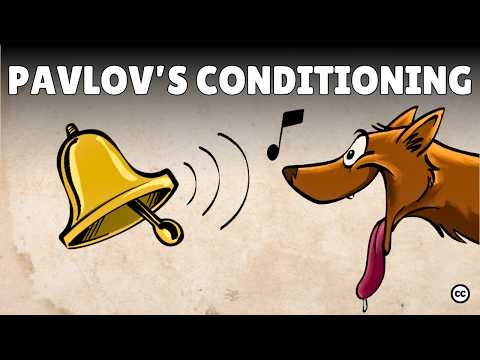
You know that feeling when your phone buzzes, and you just automatically reach for it? Or when you hear a can of soda crack open and your mouth waters? That’s kind of what Pavlov was getting at.
Back in the day, this dude was all about dogs. Seriously! He discovered something wild about how we learn. So, he rang a bell every time he fed his pooches. And guess what? Soon enough, just the sound of that bell made them drool like crazy. Crazy, right?
It’s like Pavlov gave us a peek into how our brains make connections between things we experience. This stuff isn’t just about furry friends, though. It lays the ground for tons of behavioral science today. Conditioning techniques pop up everywhere—in schools, therapy rooms, even when training pets.
Stick around! We’re diving into how this legacy shapes our lives and behaviors in ways you might not expect. Who knew a dog and a bell could teach us so much?
Exploring Pavlov’s Major Contributions to Behavioral Psychology and Scientific Research
Pavlov’s contributions to behavioral psychology are like a treasure chest of insights that changed how we think about learning and behavior. Born in Russia in 1849, Ivan Pavlov was initially a physiologist, but his work on dogs led him to stumble upon something way deeper: the idea of conditioning.
So, what’s all this about? Basically, Pavlov discovered that dogs could learn to associate stimuli with responses. He’d ring a bell before feeding them, and after a while, just the sound of the bell made them salivate. This was no accident—it was *classical conditioning*, where a neutral stimulus (the bell) becomes linked to an unconditioned stimulus (food) that induces a response (salivation).
Key Points on Pavlov’s Legacy:
- Classical Conditioning: The foundation of understanding how behaviors can be learned through associations.
- Experimental Approach: Pavlov emphasized rigorous experimentation. His careful measurements made his findings hard to dispute.
- Influence on Psychologists: His work paved the way for behavioral psychologists like B.F. Skinner, who expanded on these ideas with operant conditioning.
One time, I remember hearing about a teacher who used Pavlov’s principles in her classroom. Whenever she turned off the lights before starting the lesson, students would settle down quickly because they learned—over time—that this meant it was time to focus up. It’s kind of mind-blowing how those simple actions can shape behavior!
So you’re probably wondering: why does this matter? Well, it shows how our environment influences us. Pavlov’s research opened doors for further studies into how people and animals learn through experience.
Another major contribution is his concept of **generalization**. This idea suggests that if you condition an animal to respond to one stimulus, they might also respond similarly to related stimuli. Like how your dog might also come running if it hears a different bell that sounds kind of like yours! Crazy right?
Pavlov didn’t stop there; he also looked at things like *extinction*—where if you stop giving food after the bell rings, eventually the dog stops salivating when it hears the sound again. It teaches us about habits too; if we don’t keep reinforcing our behaviors or habits, they can fade away.
In short, Ivan Pavlov’s explorations into conditioning opened up a world where psychology could be examined scientifically and rigorously. His legacy still ripples through fields today—from therapy practices focusing on behavior modification to advanced research in fields like education and animal training.
Pavlov showed us just how intertwined our reactions are with our experiences! Isn’t it neat thinking about why you might feel excited just hearing your favorite song play? You can thank good ol’ Pavlov for that insight!
Understanding Classical Conditioning: Pavlov’s Influence on Behaviorism and Its Significance in Scientific Research
Classical conditioning is one of those neat concepts that just sticks with you, kind of like the smell of fresh cookies wafting through the house. You know, it’s all about how we can learn to associate one thing with another. And honestly, it’s a big deal in understanding human and animal behavior.
So let’s start with Pavlov, right? This Russian guy was studying digestion back in the late 1800s and ended up stumbling upon something way cooler—dogs! He noticed that his dogs would start to salivate not just when they got food, but even when they heard the sound of a bell he was using in his experiments. Like, wow! They learned to connect that bell with food. That’s basically how classical conditioning works; you pair a neutral stimulus (the bell) with an unconditioned stimulus (the food) until the neutral stimulus alone triggers a response (salivation).
In simpler terms:
Neutral Stimulus + Unconditioned Stimulus = Conditioned Response.
Look at it this way—imagine you hear your favorite song every time you’re about to go hang out with friends. Soon enough, just hearing that song could make you feel all excited and happy inside, even if you’re just sitting alone at home!
But what does all this have to do with behaviorism? Well, classical conditioning laid down the groundwork for behaviorism itself. Think of behaviorism as a school of thought where scientists study behaviors without worrying too much about what happens inside our heads—it’s all about observable actions! Pavlov’s findings were monumental because they showed that behavior could be learned through association.
Now moving on to some key points regarding its significance in research:
- Experimental Framework: Pavlov’s methods gave researchers a clear framework for experimenting on learning and behavior.
- Treatment Techniques: Techniques like systematic desensitization are based on classical conditioning principles to help treat phobias or anxiety.
- Behavior Analysis: Understanding how various stimuli influence responses has deepened our knowledge in psychology.
- Cultural Implications: This approach helps explain cultural behaviors by connecting certain stimuli unique to different environments.
You see what I mean? Classical conditioning isn’t just some old-school concept; its ripples have spread across various fields!
One emotional anecdote comes from my friend Lizzie. She used to get super anxious whenever she’d hear her old phone ringtone because it reminded her of stressful calls from work. After realizing this connection, she changed her ringtone—and poof! No more anxious vibes when making or receiving calls! Just like Pavlov’s pups learned that bell = food, Lizzie connected her ringtone with stress instead of good vibes.
In essence, Pavlov’s legacy is everywhere if you look closely enough. From training pets to helping treat disorders and understanding behavioral responses in humans—classical conditioning opened doors we never knew existed in behavioral science! It shows us how our environments shape us in profound ways, connecting feelings and actions on levels we might not even notice until we stop and think about them.
So yeah, next time you get excited for pizza when someone rings the doorbell—or even when your friend’s laugh makes you smile—you can thank good ol’ Pavlov for shedding light on how our brains make connections between experiences!
Exploring Ivan Pavlov’s Major Contributions to Psychology: Unraveling the Science of Classical Conditioning
Sure thing! Let’s chat about Ivan Pavlov and his contributions to psychology, specifically focusing on classical conditioning. This guy really changed the game in how we understand behavior. So, here we go!
Who was Ivan Pavlov?
Pavlov was a Russian physiologist born in 1849. Initially, he studied digestion and won a Nobel Prize for his work on the physiology of the digestive system. But what he’s most famous for, like, seriously famous for, is his groundbreaking research into classical conditioning.
What is Classical Conditioning?
Alright, imagine this: you walk into a café and smell fresh coffee brewing. Your mouth waters, and you start to feel energized just thinking about that first sip. This response—salivating at the smell of coffee—is a simple example of classical conditioning. It’s all about learning through association.
At its heart, classical conditioning involves pairing an unconditioned stimulus (like food) with a neutral stimulus (like a bell). Over time, the neutral stimulus can trigger a response by itself! In Pavlov’s experiments with dogs, he rang a bell before presenting food. Eventually, just ringing the bell made the dogs salivate! Pretty cool, huh?
Pavlov’s Experiment
In his experiments, Pavlov used dogs as subjects. He noticed that they would salivate not just when food was presented but also during other events leading up to it—like seeing the lab assistant who fed them or hearing footsteps. This led him to realize that these behaviors could be conditioned.
Here’s how it went down:
- Unconditioned Stimulus (US): Food—this naturally caused salivation.
- Unconditioned Response (UR): Salivation in response to food.
- Conditioned Stimulus (CS): The bell—initially neutral.
- Conditioned Response (CR): Salivation in response to just the bell after conditioning.
What this shows is how we can learn associations between different things around us—and how behaviors can be trained!
Pavlov’s Legacy in Behavioral Science
The impact of Pavlov’s work extended far beyond those hungry pups. His research laid down important foundations for behavioral psychology and provided insights into learning processes that are still relevant today.
Pavlov’s findings have influenced various fields like education, therapy, and even marketing! Teachers use rewards (think stickers) to condition students’ good behavior; therapists apply these principles to help people overcome phobias or other unwanted behaviors; marketers often create positive associations with products through catchy jingles or slogans.
Anecdote – My Coffee Ritual
You know what? I have this little ritual every morning where I brew coffee while listening to my favorite playlist. When I hear those tunes now? I get instantly energized even before tasting the coffee—thanks to my brain associating those sounds with my morning boost! That’s basically classical conditioning in action!
Taking It Further: Extinction and Generalization
Pavlov didn’t stop there; he also discovered concepts like extinction and generalization. Over time if you stop pairing the bell with food? The dogs eventually stopped salivating at just the sound of it—that’s extinction! And if they salivated not only at their specific bell but other similar sounds? That’s generalization.
So there you have it: Ivan Pavlov wasn’t just some old dude tinkering with dog biscuits; he uncovered vital truths about how we learn from our environments by linking stimuli together.
Thanks to him, we understand more about behavior than ever before! It’s fascinating stuff if you think about how deeply intertwined our experiences are with our learned responses… pretty rad!
You know, when you hear about Pavlov, it’s easy to just think of the whole dog and bell thing. But there’s so much more to it than that! I mean, his work really changed how we look at behavior and learning. It’s like he opened this massive door for understanding how living beings interact with their environment.
So, picture this: you’re sitting in a café, and every time someone rings the bell for a coffee order, your stomach growls because you’ve had coffee every time you’ve been there. That’s classical conditioning right there! Pavlov showed us that you can link a neutral stimulus (that bell) to an unconditioned stimulus (the coffee smell), which can lead to a conditioned response (your stomach rumbling). It’s wild how our brains can make those connections without us even realizing it!
I remember a friend of mine had this little dog named Max. Every time she pulled out his leash, he’d go bananas—jumping around and barking like he was about to burst with excitement. She’d only have to touch the leash, and bam! He was ready for an adventure. It made me think about how powerful conditioning is. Max didn’t need any fancy training; he just learned that the leash meant good stuff was coming.
Pavlov’s ideas didn’t just stay stuck in the world of dogs or simple experiments; they spilled over into psychology, education, and even marketing. Think about it—advertisers use similar techniques all the time! They pair jingles with products so that hearing one instantly makes you think of the other. Talk about savvy!
But here’s where it gets even cooler: Pavlov also inspired other researchers who built on his work. B.F. Skinner took things further with operant conditioning where behavior is influenced by rewards or punishment. You feed a kid ice cream for cleaning their room? Well, there’s your operant conditioning in action!
In a way, it’s comforting to know we have these tools for understanding behavior and learning processes better. Like when you’re trying to get yourself up early or tackle that pile of laundry—you find ways to condition yourself into better habits.
Of course, it’s important to recognize there are limits too. Not everything can be explained by conditioning alone; emotions and personal choices play huge roles in our actions as well. Still, Pavlov’s legacy lingers like that catchy tune stuck in your head—it reminds us that our experiences shape how we respond over time.
So yeah, next time you hear someone mention Pavlov or see a pup going nuts over a leash or jingle bells ringing at Christmas markets, just remember there’s way more behind those connections than what seems simple on the surface!