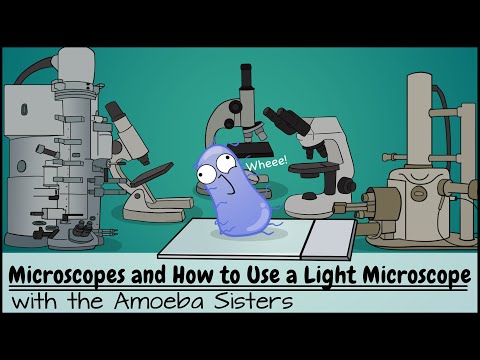
You ever look through a microscope and feel like you’ve entered a whole new world? Seriously! One moment you’re just staring at a slice of onion, and the next, you’re surrounded by tiny cells doing their thing. It’s kind of like peeking into nature’s little secret life.
Well, that’s what biology microscopes do—they open the door to the unseen. And honestly, that’s where the magic happens. The tiniest details can teach us so much about life itself.
Imagine being able to share that wonder with others! To show them not just what they’re looking at but actually help them understand it. That’s what scientific outreach is all about. It’s not just about spreading knowledge; it’s about sparking curiosity and inspiring future scientists.
So how do we take this awesome tool and make it accessible? Let’s dig into how biology microscopes can enhance scientific outreach, one little slide at a time!
Revolutionizing Biology: The Impact of Microscopes on Scientific Discovery and Understanding
You know, microscopes are like magical windows into a world we can’t see with our naked eyes. Seriously! They’ve changed biology in a huge way. Let me break it down for you.
The Beginning of Microscopy
So, way back in the late 1500s, humans first started making simple microscopes. Can you imagine peering through one of those early glass lenses and seeing tiny critters swimming around in a drop of water? That moment was just the tip of the iceberg. With every new advancement, from compound microscopes to electron microscopes, scientists began to discover more about life at tiny scales.
Unveiling Cell Structure
With the invention of the microscope, we got to see cells for the first time. Think about that! In the 1800s, scientists like Robert Hooke looked at cork and coined the term “cell.” Before that, no one knew what made up living things! And not just cells—you also get insights into cell structures like nuclei and organelles. It’s like opening up a whole new chapter in a book of life!
Microbiology’s Boom
Then came microbiology. Imagine being one of those early scientists who discovered bacteria. You’d be looking through your microscope and suddenly realize these tiny organisms were everywhere! Thanks to guys like Louis Pasteur and Antonie van Leeuwenhoek—who looked at everything from pond water to dental scrapings—we learned how microbes affect health and disease.
The Role in Disease Understanding
Speaking of health, microscopes have been crucial in understanding diseases too. Take cancer as an example; scientists use advanced microscopy techniques to see how cancer cells differ from normal ones. It’s kind of heartbreaking but also incredibly important for developing treatments.
Revolutionizing Teaching and Outreach
Microscopes aren’t just for hardcore scientists either. They play a big role in education and outreach today! Schools are using modern imaging techniques to get kids excited about biology. It’s amazing watching students react when they finally magnify something cool under a microscope—like looking at onion cells or even their own cheek cells!
And let’s not forget research facilities are using outreach programs that involve community members using microscopes too. This connection helps demystify science, bringing everyone together over something as simple as an interesting slide.
The Future is Bright!
Looking ahead, with advancements like super-resolution microscopy and digital imaging techniques popping up everywhere, we’re on the brink of discovering so much more! Seriously, it feels like every year there’s something new waiting around the corner.
In short, microscopes have revolutionized biology in ways society could hardly imagine when they first started appearing on lab benches centuries ago. They’ve given us tools not only to explore but also connect with each other—bridging gaps between complex scientific concepts and everyday understanding. How cool is that?
Enhancing Bioimaging Efficiency: Strategies for Optimizing Microscope Performance in Scientific Research
Alright, let’s chat about how to make bioimaging more efficient by optimizing microscope performance. Seriously, this stuff is so important in scientific research. The kind of cool things you can see under a microscope? Mind-blowing.
First, you gotta understand that the quality of the optics plays a massive role. It’s like trying to take a picture with a blurry camera; you just won’t get the detail you need. Investing in high-quality lenses can totally change the game. Better optics mean sharper images, and who doesn’t want that?
Then there’s the illumination system. In bioimaging, having the right kind of light is crucial. Fluorescence microscopy, for instance, relies on specific wavelengths to excite fluorescent dyes in samples. If your light source isn’t on point, say goodbye to those vibrant pictures!
Now think about sample preparation. You can have the best microscope in the world, but if your sample isn’t prepared correctly, it’s kinda all for nothing. Proper staining techniques or even using live-cell imaging can provide way better results than just throwing something under a scope and hoping for the best.
After that, something called image processing software comes into play. You know how sometimes photos need a little editing? Same here! With good software, scientists can enhance images post-capture — adjusting contrast or eliminating background noise makes a huge difference.
Okay, let’s talk about training and user expertise. Even top-of-the-line equipment won’t perform well if users don’t know their stuff. Regular training sessions or workshops could seriously boost performance across labs. Imagine everyone knowing exactly what settings to use for specific samples; that’s efficiency at its finest!
Here’s another thing: integrating automation and robotics. Seriously! Automating certain processes not only saves time but also minimizes human error—think of it as letting robots do the boring parts while you focus on what really matters: discoveries!
And speaking of discoveries, collaboration is key too! Sharing findings with other researchers can lead to improved methods and techniques beyond what one lab might come up with alone.
Oh! I can’t forget about keeping your equipment well-maintained and calibrated. Regular check-ups prevent those dreaded surprises during research hours. Just like you wouldn’t ignore a weird noise from your car; microscopes need TLC too!
In summary:
- Quality optics: Sharp lenses matter.
- Illumination: Better light sources equal better images.
- Sample preparation:> Good prep means good outcomes.
- Image processing software:> Enhances post-capture.
- User expertise:> Training boosts performance.
- Automation:> Saves time and reduces errors.
- Collaboration:> Sharing knowledge expands success.
- Maintenance:> Calibration keeps things running smoothly.
So there you have it! By focusing on these areas, you’ll not only enhance bioimaging efficiency but also open doors to new scientific discoveries that could change our understanding of biology forever! It’s exciting stuff when you think about it!
You know, when you think of science, a lot of people picture lab coats, test tubes, and maybe someone with glasses peering into a microscope. Well, there’s something magical about that last part. Microscopes are like portals to another universe, revealing a world we can’t see with our naked eyes.
I remember the first time I looked through one—seriously, my mind was blown! I was in high school, and my teacher handed me the microscope to examine a tiny drop of pond water. At first glance, it just looked like some murky liquid. But when I took that first peek through the lens, wow! Suddenly there were little creatures swimming around! It felt surreal—like being shrunk down to the size of an ant and diving into this bustling underwater city. That moment ignited my love for biology.
So here’s where it gets interesting: enhancing scientific outreach through these nifty tools can totally change how people connect with science. Imagine schools using microscopes not just for fancy experiments but as gateways to explore biology in real-time. You could have kids looking at the structure of leaves or even bacteria from their own fingertips. It makes science feel more personal and tangible.
But there’s still more to it than just looking at cool stuff under glass. When people actually use microscopes and see biology in action, they’re less likely to view science as this distant realm reserved for professionals in white lab coats. Instead, they start relating to it—it becomes part of their lives! You feel me? People get curious; they ask questions instead of feeling intimidated by complex theories or jargon.
Plus, there’s something about sharing that experience with others that really amps up the excitement! Think school projects or community events where families gather around microscopes together—it fosters connection and sparks discussion about science among all ages.
And let’s not overlook accessibility here either. As technology improves and costs go down, making microscopes available in community centers or libraries can empower so many more folks. Imagine what a group of interested adults could do with access to those tools—people who might not have had a chance in traditional classroom settings!
So yeah, enhancing scientific outreach through biology microscopes isn’t just about showing off cool slides; it’s really about creating engagement and understanding within communities. The world is out there just waiting for us to take a closer look at it—and who knows what else we might discover along the way?