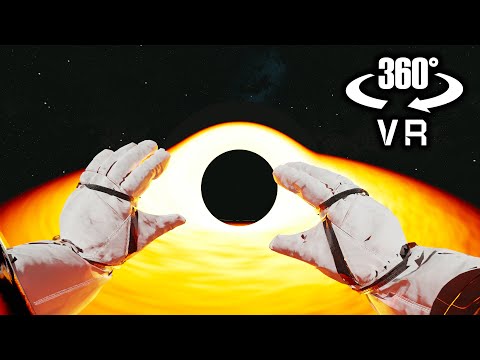
So, let me tell you a quick story. Last week, I was chatting with my niece about space. She’s seven and has this wild imagination. Suddenly, she asked if black holes were like cosmic vacuum cleaners! I mean, how cool is that?
But here’s the deal: they kinda are! Black holes suck everything in their path— even light gets trapped. It’s both terrifying and mesmerizing at the same time.
You ever thought about what it would be like to experience a black hole? Well, buckle up! There’s this interactive online simulator out there that lets you take a wild ride through one without leaving your couch.
Seriously, you can explore these cosmic beasts like you’re zooming through space in your own little spaceship. Fun, right? Let’s check it out together!
Explore the Mysteries of Black Holes: Free Interactive Online Simulator for Science Enthusiasts
Let’s talk about black holes! They’re like the universe’s version of a vacuum cleaner, but way more mysterious and a lot less useful, you know? So, what exactly is a black hole? Basically, it’s a region in space where gravity pulls so much that even light can’t escape from it. Yeah, you heard that right—no light means they’re impossible to see directly. They’re like the ultimate hide-and-seek champions of the cosmos.
Now, if you’re into exploring the weirdness of black holes without getting sucked in—literally—a free interactive online simulator can be super fun. These simulators let you visualize how black holes work and how they affect their surroundings. They make complex concepts easier to grasp by letting you play around with them.
You might wonder why we care about these cosmic enigmas. Here are a few cool things about black holes:
- Singularity: At the center of a black hole lies the singularity, where density becomes infinite and known physics breaks down. Mind-bending, right?
- Event Horizon: This is the point beyond which nothing can escape. If you cross it, bye-bye! You won’t be coming back.
- Accretion Disk: Around many black holes, there’s this whirling disk of gas and dust spiraling in at incredible speeds before getting devoured.
Using an interactive simulator can help bring these ideas to life! For example, some simulators let you adjust different parameters like mass and spin. Ever wondered how big a black hole has to be to start pulling in stars? Tinkering with these settings shows you firsthand how massive objects warp space-time around them.
I remember my first time using one of these simulators—I was completely blown away watching how gravity bends paths of light around a black hole. It felt surreal! Imagine being able to explore those ideas as if you were an astronaut navigating through space. How cool is that?
These tools help demystify science and make learning fun. When you’re playing with something as phenomenal as a black hole simulator, it ignites curiosity and sparks questions—which is what science is all about!
So if you’re curious about space phenomena or just want to impress your friends with some mind-blowing facts about black holes, definitely check out one of those online simulators. Seriously! You’ll walk away feeling like you’ve taken your own mini-adventure into the cosmos.
Exploring the Cosmos: Innovations in 3D Black Hole Simulation and Their Impact on Astrophysics
Alright, let’s chat about black holes and this cool world of 3D simulations that are shaking things up in astrophysics. Seriously, the universe is a wild place, and understanding black holes helps us get a peek into some of its most bizarre behaviors.
First off, you probably know that black holes are these ginormous gravitational monsters. Light can’t escape from them, which is why we call them “black.” But what if I told you that scientists have been using 3D simulations to explore these enigmatic entities? These simulations are like virtual playgrounds for researchers. They allow us to visualize how black holes interact with their surroundings.
- Visualizing Gravity: Traditional methods of studying black holes mainly relied on math and theory. With 3D simulations, though, we can actually *see* how gravity bends space and time around these cosmic beasts. It’s mind-blowing!
- Create Scenarios: Imagine being able to tweak parameters—like the spin of a black hole or the type of matter around it—and instantly see the effects. This helps scientists predict phenomena that would take ages to calculate by hand.
- User Interaction: Some online simulators let anyone hop on and explore these cosmic wonders at home! You can experience a black hole’s gravitational pull or check out what happens when particles get too close.
This brings back memories from my first science fair project in middle school. I made a model of our solar system with marbles for planets and rubber bands for gravity. It was fun trying to explain how everything orbits around the sun! Now imagine that but on steroids with technology—where you can manipulate forces and witness realistic outcomes in real-time!
The impact of these innovations is pretty massive too. With every simulation run, researchers gather data that help shape our understanding not just of black holes but also concepts like gravitational waves. These waves are ripples in spacetime caused by massive celestial events, like two black holes colliding. Simulating such events gives clues about what we might detect through observatories here on Earth.
- Theories Tested: Each simulation acts like a mini-laboratory where existing theories about physics can be tested against virtual scenarios. If something doesn’t match up with observations from telescopes, it sends researchers back to the drawing board!
- Aiding Discoveries: There’s an entire industry now focusing on developing better simulators and refining existing ones—all aiming to solve mysteries about dark matter or even how galaxies formed.
You see? The connections between technology and our understanding of the cosmos are truly remarkable! Each leap forward may feel small individually but together they build our grasp on this vast universe.
In short, thanks to 3D simulations of black holes, we’re not just staring at the night sky wondering what’s out there anymore; we’re actively experiencing it in ways that spark curiosity and fuel scientific discovery. Who knows what we’ll learn next?
Explore Black Holes: Interactive Online Simulator on GitHub for Science Enthusiasts
Sure, let’s chat about black holes and that cool interactive online simulator you might find on GitHub. Seriously, black holes are like the rock stars of the cosmos. They’re mysterious, powerful, and totally capture our imagination.
So, what exactly is a black hole? Basically, it’s a region in space where the gravity is so strong that nothing—not even light—can escape from it. Imagine a vacuum cleaner sucking up everything in its path, but 10 trillion times more intense. That’s a black hole for you!
Now, here’s where the exciting part comes in. You can actually experiment with black holes using an interactive online simulator! These simulators let you play around with concepts like gravity and spacetime without having to leave your couch. You get to see how objects behave near these cosmic beasts.
But what can you do with an online simulator? Well, for starters:
- Visualize gravitational effects: You can see how light bends around a black hole or how objects spiral into it when they get too close.
- Create different scenarios: Want to drop a star into a black hole? Go for it! The simulator lets you set up various situations and watch what happens.
- Lear about spacetime: The more you interact with the simulator, the better you’ll understand Einstein’s theory of relativity and how massive objects warp spacetime.
I remember once messing around with one of these simulators. I placed different celestial bodies near a black hole. It was wild to see them getting stretched out into long strands before disappearing! It was almost like watching spaghetti being sucked into boiling water.
The technical side of things might sound intimidating at first, but honestly? It’s pretty user-friendly once you get started. Even if you’re not a science nerd or an astrophysicist, just playing with these tools can spark curiosity.
And if you’re thinking of diving deeper into astronomy or physics, this kind of hands-on experience could really help you grasp some challenging ideas in a fun way. Just imagine explaining your findings to friends—like turning them into mini experts on black holes!
So if you’re keen to explore these cosmic wonders more deeply without leaving home, check out those simulators on GitHub—it’s definitely worth your time! Who knows? Maybe you’ll be inspired to delve further into space science or even become an astrophysicist yourself one day!
In short: black holes are captivating, and playing around with an interactive simulator can give you insights into their mysterious nature while allowing for some hands-on fun! What could be better than that?
You know, when you think about black holes, it’s almost like stepping into a sci-fi movie. They’re these mysterious cosmic entities that seem to warp time and space. Seriously, just try to wrap your head around that! I mean, we’ve all heard the stories—stars collapsing under their own gravity, creating these regions in space where not even light can escape. It sounds like something out of a dream or a wild imagination, right?
Recently, I stumbled upon this interactive online simulator that lets you experience black holes in a fun way. And oh man, it was mind-blowing! You get to adjust parameters and see how they affect the black hole’s environment. Like, watching how light bends around them is totally mesmerizing. Remember your childhood days of playing with toy cars and pretending they were zooming through outer space? This felt like that but on steroids!
So there I was, fiddling with various settings—a little bit more mass here, less spin there—and suddenly the simulator turns into this cosmic playground. It’s really easy to lose track of time while you’re just playing around with it! At one point, I got so involved in tweaking things that I almost forgot about dinner—oops!
Trying to simulate what it might be like near the event horizon—the boundary beyond which nothing escapes—is quite an experience. One second you’re feeling all science-y and intellectual; the next second you’re like a kid again, lost in curiosity about the universe’s mysteries. It kind of reminds me of those school science fairs where you’re just trying to explain complex stuff in simple ways—like showing how colors mix or how plants grow.
And then there’s the realization: understanding black holes isn’t just for physicists or star-gazers with fancy telescopes. With these simulators, anyone can take a stab at exploring one of the universe’s greatest enigmas from their living rooms! It’s democratizing science in a way; you’re part of this big cosmic story.
These experiences get you thinking too—about our place in the universe and how much we still don’t know. Black holes are daunting but also beautiful mysteries waiting for us to explore them more closely. So yeah, if you ever get bored or need a brain break from work or school stuff, definitely check out one of those interactive simulators. You might just find yourself enchanted by the vastness out there!