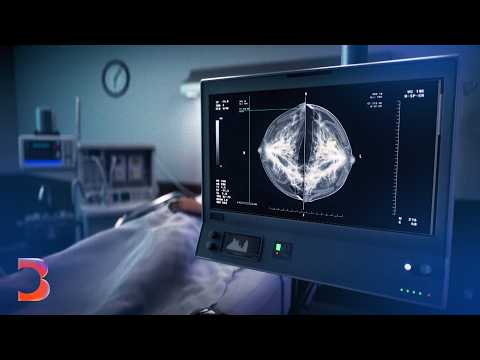
You know that feeling when you get stuck in an elevator and suddenly your heart starts racing like you’re training for the Olympics? Well, imagine if doctors could look at your blood and figure out, like, everything going on in your body without needing to poke you with needles. Sounds cool, right?
Well, that’s where blood MRI technology comes into play. It’s pretty nuts how far we’ve come. This tech can give us insights about our health faster than you can scroll through your phone during a boring meeting. Seriously!
Just think about it: less poking, less prodding, and way more info. That’s what advancements in this field are all about. So let’s chat a bit about how this magic happens and why it matters so much!
Exploring Recent Advances in MRI Technology: Innovations and Implications for Scientific Research
So, let’s talk about MRI technology and how it’s been changing the game lately. You might think of MRI as that big, noisy machine you see in hospitals. But there’s a lot more happening behind those walls.
First off, **MRI** stands for Magnetic Resonance Imaging. It’s a fancy way of taking images of the inside of your body without using any harmful radiation. Instead, it uses strong magnets and radio waves to create detailed pictures of organs and tissues.
One significant innovation is the development of **functional MRI (fMRI)**. This technology can measure brain activity by detecting changes in blood flow. Basically, when a part of your brain is active, it gets more blood. So, researchers can “see” which areas are working hardest during various tasks or responses.
And here’s where things get really interesting. Recent advances have led to improvements in the resolution and speed of MRI scans. That means you can get clearer images faster than ever before! Picture a super fast camera that takes breathtaking shots; that’s what we’re talking about.
Also, scientists are now able to use **blood MRI technology** to delve deeper into understanding diseases like cancer or heart conditions. This means they can image specific blood vessels or even detect tumors by analyzing how they interact with contrast agents—substances injected into the body that make certain areas pop up on an MRI scan.
Another cool aspect is **newer artificial intelligence (AI) tools** being incorporated into MRI analysis. These tools can help radiologists read scans more quickly and accurately than ever before! Imagine having an incredibly sharp assistant who never gets tired—that’s what AI brings to the table!
Let’s not forget about the implications for scientific research too! With these advancements:
- Improved diagnostics: Researchers can detect diseases earlier, which often leads to better treatment outcomes.
- Personalized medicine: Tailoring therapies based on how someone’s body reacts at a molecular level is becoming more feasible.
- Understanding complex disorders: By observing blood flow patterns and brain activity together, scientists are unraveling mysteries behind mental health conditions.
Now here’s an anecdote for you: I once heard about a researcher who was studying how stress affects our brains using fMRI. They discovered something surprising—when placed under stress while viewing images of loved ones, participants showed different areas lighting up in their brains compared to stressful images alone. It was like seeing love literally light up their minds!
In short, advancements in MRI technology are not just cool—they hold profound implications for healthcare and scientific research. The better we get at understanding our bodies from the inside out, the closer we move towards personalized medical solutions and effective treatments for conditions that have long puzzled us. Exciting times ahead!
Exploring Advanced MRI Techniques: Innovations and Applications in Scientific Research
So, here’s the thing about MRI technology. It’s come a long way since it was first introduced. You know how when you go for an MRI, it’s like getting a super detailed snapshot of your insides? Well, there are some new fancy techniques that are making these snapshots even clearer and more useful for scientists.
Advanced MRI Techniques have really stepped up the game. One cool innovation is functional MRI (fMRI). This technique measures brain activity by detecting changes in blood flow. When brain areas are more active, they need more oxygen, and fMRI can track this by looking at blood flow changes. It’s like watching a movie of your brain in action!
Another exciting advancement is Diffusion Tensor Imaging (DTI). This method helps visualize white matter tracts in the brain by measuring the diffusion of water molecules. You know how water flows differently through a river with bends and curves? Well, DTI shows us how water moves through brain tissue, revealing structures that are critical for understanding brain disorders.
And then there’s Magnetic Resonance Spectroscopy (MRS), which lets us analyze the chemical composition of tissues. Think of it like tasting different flavors in your favorite dish. MRS helps researchers figure out what’s going on at a molecular level in tumors or other diseases.
Now, let’s talk about blood MRI technology. It’s kind of mind-blowing! Traditional MRIs could struggle to provide clear images of blood vessels or detect issues related to blood flow effectively. But innovations like Blood Oxygen Level Dependent (BOLD) imaging have changed that.
Here are some key points regarding advancements in Blood MRI technology:
Imagine being able to watch how blood flows through your body during exercise or how it changes during stress—pretty cool stuff!
A while back, I heard about a clinical trial where researchers used advanced blood MRI techniques to monitor patients with cardiovascular issues closely. They found that they could actually see improvements in their patients’ conditions over time—how amazing is that? It’s like having a real-time view into someone’s health and recovery progress!
So anyway, all these advancements aren’t just techie jargon—they’re changing the landscape of medical research and diagnosis profoundly. With every new method that gets developed, we get even closer to understanding our bodies and improving treatments for various ailments.
In short, advanced MRI techniques have transformed how we visualize and understand human anatomy and pathology—especially regarding blood circulation and related conditions—making them invaluable tools not just for doctors but also for scientific research across many fields.
Chronological Exploration of MRI Development: Milestones in Medical Imaging History
Magnetic Resonance Imaging (MRI) has come a long way since its inception. It’s that incredible machine you often see in hospitals, and it helps doctors peek inside your body without any invasive procedures. The journey of MRI development is filled with cool milestones and fascinating discoveries, so let’s break it down!
In the late 1940s, scientists began exploring magnetic fields and radio waves. The big names here are Nobel Prize winners Felix Bloch and Edward Purcell, who first demonstrated the concept of nuclear magnetic resonance (NMR). They basically showed that certain nuclei resonate at specific frequencies when placed in a magnetic field. This was like opening a door to a brand-new world!
Then, fast forward to the 1970s. During this decade, things really started heating up! A researcher named Dr. Raymond Damadian recognized that MRI could be used for medical imaging. He found out that cancerous tissues have different relaxation times than healthy tissues. This was groundbreaking since it meant we could potentially spot tumors without surgery.
Now, enter the genius of Dr. Peter Mansfield and Dr. Charles Bacus. They developed techniques that made MRI images clearer and speeds faster, which means you wouldn’t have to wait forever for your results. Their work paved the way for the first-ever clinical MRI scanner in 1980—talk about a game changer!
By the early 1990s, MRI had become mainstream in hospitals worldwide. But it didn’t stop there! Innovations continued with new sequences like T1-weighted and T2-weighted imaging, allowing doctors to see different types of tissues more clearly.
One of the coolest advancements in recent years is blood MRI technology. Researchers started using contrast agents—substances injected into veins—to improve image clarity even more! These agents help highlight blood vessels or detect abnormalities with even better precision.
So what’s next? Well, scientists are exploring ways to make MRIs even quicker and potentially able to visualize blood flow dynamically in real time! Imagine being able to monitor how blood circulates through your heart as it beats—that’s some sci-fi stuff coming into reality!
In summary, from its curious beginnings in NMR research to becoming an everyday tool in hospitals today, MRI technology has shaped modern medicine profoundly. With continuous advancements, especially in areas like blood imaging, who knows where this journey will take us next? It’s like watching a cool movie unfold right before our eyes—except this time it’s all about science!
You know, thinking about blood MRI technology is pretty mind-blowing. Imagine being able to take a peek inside your body without invasive procedures, just like flipping through a book. A while back, my friend had to undergo traditional imaging for some health issues, and honestly, the whole process seemed daunting. Needles, biopsies—yikes! But with advancements in blood MRI tech, things are changing fast.
So basically, this new approach uses magnetic resonance imaging (MRI) to visualize blood flow and even detect diseases. It’s like turning on a light in a dark room and seeing where everything is hidden. What’s super exciting is that this technology allows doctors to monitor diseases non-invasively. They can look at how your blood vessels are doing or even spot conditions like cancer without needing a scalpel.
Now, let’s get into some cool details. Traditional MRIs are usually sensitive to soft tissues but haven’t been great at visualizing blood flow directly. Recently developed techniques help to analyze the dynamics of blood flow and changes occurring within it by focusing on certain properties of the blood itself—like its composition or how it interacts with the magnetic field used in MRIs. That’s some next-level stuff!
I remember when I first learned about how certain markers in the blood can indicate diseases early on; it made me think about how awesome it would be if we could catch things before they become serious problems. With these advancements in MRI tech, we might just be able to do that—and that could save so many lives!
But hey, it’s not all sunshine and rainbows; some challenges still exist around this tech’s accuracy and availability across different hospitals. Though researchers are pushing boundaries daily, there’s still work needed to make it widely accessible.
In any case, as I think about where medical technology is headed with these innovations in MRI for blood imaging, I feel hopeful. It’s these little advancements that lead us closer to proactive healthcare rather than reactive treatment—definitely something we can all appreciate! Don’t you think?