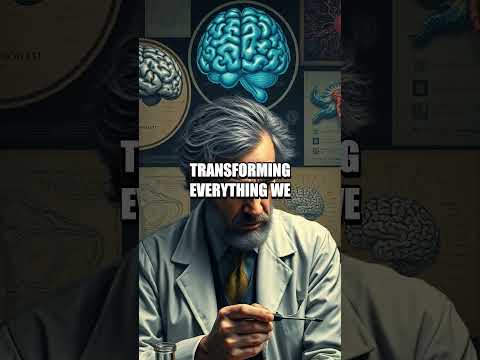
You know what’s wild? There was this dude, Santiago Ramón y Cajal, who used to look at brain cells under a microscope and thought they were like tiny trees. Yeah, seriously! He called them neurons, and he basically laid the groundwork for modern neuroscience. Talk about a game changer!
Fast forward to today, and his work is still shaking things up in brain research. I mean, can you imagine peering into the window of your own mind? It’s like the ultimate adventure!
So here we are, diving into Cajal’s legacy and how it connects to what scientists are doing now. Buckle up! You’re in for a ride through the intricate world of our brains—just like those tiny trees he admired!
Cajal’s Pioneering Contributions to Neuroscience: Transforming Our Understanding of the Nervous System
So, let’s talk about a guy named Santiago Ramón y Cajal. You know, he was a Spanish neuroscientist who basically changed the game in how we understand the nervous system. His work laid the foundation for modern neuroscience, and it’s pretty wild to think about how his discoveries are still relevant today.
Cajal’s biggest contribution was his theory of the neuron. Back in the late 19th century, most folks thought that neurons were all interconnected in a big network, kind of like a tangled mess of wires. But Cajal proposed something different: he suggested that neurons are individual cells. They communicate with each other but aren’t physically connected. This idea is called the **neuron doctrine**, and it was groundbreaking! Imagine being told that what you thought you knew about how your brain works was totally wrong.
He didn’t just stop at his theories; Cajal was also an incredible artist. He created detailed drawings of neurons using a staining technique developed by another scientist named Golgi. His illustrations were so precise that they’re still used as references today! They showed different types of neurons—like pyramidal and Purkinje cells—and revealed their complex structures and connections. Seriously, looking at his drawings feels like peeking inside a secret world!
Cajal also discovered something called **neuroplasticity**. This is all about how our brains can change in response to experiences or injuries. He showed that neurons could grow new connections throughout life—a fascinating concept back then! Just think about it: your brain isn’t static; it’s more like a flexible piece of clay continuously being reshaped by your thoughts and experiences.
Now let’s get into how his work has influenced current research in neuroscience. Nowadays, understanding neural circuits is crucial for everything from treating mental health disorders to developing brain-computer interfaces. Researchers build on Cajal’s ideas when they explore how different brain areas communicate with each other or how specific neuron types are involved in memory formation.
Oh, and speaking of real-world applications, here’s something cool: when scientists study neurodegenerative diseases like Alzheimer’s or Parkinson’s, they often reference Cajal’s findings on neuron structure and connectivity to understand what goes wrong as these conditions progress.
In short, Cajal opened up this whole new world of understanding for neuroscientists today. His insights gave us the tools we need to keep digging into the complexities of the nervous system—and who knows what amazing discoveries lie ahead? The journey started with him looking at slides under a microscope over a century ago! How cool is that?
Exploring the Impact of Recent Brain Research on Scientific Advancements and Understanding
Brain research has been kicking into high gear over the last few years, and it’s all thanks to pioneers like Santiago Ramón y Cajal. You know, he’s the guy who really put neuroscience on the map back in the late 19th century. He discovered that our brains are made up of individual cells, which he called neurons. This idea was pretty revolutionary at the time because most folks thought the brain was just a big jumble of goo.
Cajal’s work laid down the groundwork for so much of what we understand about how our brains work today. If you think about it, he’s like the grandfather of modern neuroscience! His meticulous drawings showcased neural networks and helped us figure out how these neurons communicate.
So, fast forward to now, right? Recent advancements in technology are giving scientists some serious tools to dig deeper into brain research. For example, imaging techniques like fMRI (functional magnetic resonance imaging) let researchers peek inside a living brain and watch it do its thing while reacting to different stimuli. It’s as if we can literally see thoughts in action! Crazy, huh?
- Neuroplasticity: One significant finding is neuroplasticity—the brain’s ability to reorganize itself by forming new connections throughout life. This blows people’s minds because it means that learning and recovery from injuries are possible.
- Neurodegenerative diseases: Understanding how neurons communicate helps scientists tackle disorders like Alzheimer’s and Parkinson’s disease. By studying how these neuronal connections break down over time, they are working on potential treatments.
- Mental health: New insight into anxiety and depression is changing how we treat mental health issues. Looking at brain circuits involved in mood regulation opens up possibilities for more targeted therapies.
The future looks hopeful! Researchers nowadays are using a variety of approaches inspired by Cajal’s foundational ideas. For instance, they’re combining biology with computer science through fields like artificial intelligence to analyze complex data from large-scale neural networks.
A little side note: I once heard about this cool project where scientists built a digital model of a worm brain using Cajal’s principles! They figured out how its tiny neurons communicated with each other and used that knowledge to better understand more complex brains—totally mind-blowing!
The impact of Cajal’s legacy is super clear when you see how his principles guide current studies in everything from developmental neuroscience to understanding consciousness itself. It’s like building a tall tower; you need strong foundations to reach great heights!
In sum, exploring advances in brain research isn’t just about understanding our gray matter; it also has real-world implications for treating diseases and improving mental health outcomes. So next time you think about your brain, remember Cajal and all those bright minds pushing us further into understanding this wild organ that makes us who we are!
Cajal’s Enduring Legacy: Transforming Neuroscience and the Study of the Brain
So, let’s chat about a guy named Santiago Ramón y Cajal. He’s often considered the father of modern neuroscience, and his legacy is still shaping the way we understand our brains today. Born in Spain in 1852, Cajal had a knack for art and science, and man, did he make an impact!
Cajal was pretty curious about how the brain worked. Back then, most folks thought the brain was just a mushy blob. But Cajal disagreed. He proposed that neurons—the tiny building blocks of our nervous system—were separate cells that communicated with each other. This was a big deal! His idea became known as the neuron doctrine, which is like the foundation of modern neuroscience.
What’s cool is that Cajal didn’t just theorize; he backed it up with some seriously impressive drawings. Using a special staining technique called Golgi staining, he was able to visualize neurons like nobody else before him. He meticulously sketched them out, showing their intricate shapes and connections. These sketches were not only beautiful but also crucial for understanding how neurons work together within circuits.
Today, when you look at images from advanced technologies like MRI scans or optogenetics, you can see how Cajal’s early work laid the groundwork for all this new stuff! The research done now on neural circuits and brain functionality draws from his original ideas about neuronal connectivity.
Cajal’s influence extends beyond just understanding neurons; he also explored neuroplasticity—the idea that our brains can change throughout our lives based on experiences. It’s wild to think that something we know now as essential in learning and memory was already hinted at by him over a century ago! He recognized that these changes could happen even in adulthood, shattering old beliefs about fixed brain structures.
Let’s not forget his insistence on observing carefully rather than jumping to conclusions too quickly. This scientific humility echoes strongly today as researchers continue to explore mysteries of the brain. His approach encourages critical thinking—an essential trait for anyone diving into science.
Even after all these years since his passing in 1934, Cajal’s legacy lives on. Neuroscience has evolved tremendously but remains grounded in many principles he established. Researchers are still discovering more about how neurons communicate and adapt, many times using methods inspired by his work.
And if you’ve ever heard terms like “neuroscience” or “brain mapping,” you’re seeing Cajal’s influence at play! His ideas are integrated into modern studies across various domains—from psychology to computational neuroscience—making it clear: this guy left quite an imprint on science!
So yeah, next time you think about your own brain or how memories form or even how we learn new skills—you can give a little nod to Santiago Ramón y Cajal for paving the way!
You know, it’s pretty mind-blowing when you think about how far we’ve come in understanding the brain. Take Santiago Ramón y Cajal, for instance. This dude was like the rock star of neuroscience back in the late 1800s. He had this incredible knack for drawing intricate images of neurons, which is a fancy term for brain cells. His work laid the foundation for all that we study today in neuroscience.
I remember when I first learned about Cajal’s drawings in school. There was something mesmerizing about those delicate lines and shapes on paper. It felt like staring at a piece of art while knowing it was revealing so much about how our minds work. His meticulous sketches didn’t just show what neurons looked like; they hinted at how they communicate with each other. You could almost feel the sparks flying between them!
Fast forward to now, and you realize that without Cajal, modern brain research would be playing catch-up big time. His ideas helped us understand concepts like neuroplasticity—basically how our brains can change and adapt over time—like when you learn a new skill or recover from an injury. This adaptability is so powerful; it means we’re not stuck with the brain we were born with.
These days, scientists are building on Cajal’s legacy, using super high-tech imaging techniques to peer even deeper into our neural networks. You might have heard of fMRI or PET scans? They’re these amazing tools that let us visualize what’s happening inside our brains while we’re doing different tasks or even just chilling out.
But sometimes, I wonder if we lose some magic in all this techy stuff. Sure, it’s impressive to see colorful images lighting up as our brains work, but there’s something intimate about those hand-drawn sketches that connects us to the human experience—like knowing someone looked at the same thing and felt compelled to put pencil to paper just so we could understand ourselves a little better.
So yeah, it seems clear: Cajal not only opened up new doors back then but also set us on an exciting journey into understanding who we are today. And as we keep diving into this vast ocean of brain science, it’s kind of comforting to think that we’re still building on his incredible vision—a vision filled with curiosity and wonder about one of nature’s greatest mysteries: our own minds!