You know that moment when you first hear about calculus, and your brain just like, short-circuits? Yeah, same here! I remember sitting in class, staring blankly at the board, wondering how a bunch of squiggles and letters could possibly relate to anything in real life.
But here’s the kicker: calculus isn’t just some nerdy math thing. It’s behind almost everything we think of as cool in science! You’ve got technologies that rock our world, like GPS and medical imaging. They all owe a huge be thanks to calculus and differential equations.
Basically, it’s like the secret sauce in scientific innovation—empowering breakthroughs that change our lives. So let’s dig into how these mathematical tools are shaping our future. It might just blow your mind!
Exploring Real-Life Applications of Differential Calculus in Science and Technology
Differential calculus might sound like a heavy topic, but it’s actually super cool and used in tons of ways around us. Basically, it’s about understanding how things change. Let’s break it down a bit and see how this math wizardry helps us in real life, especially in science and technology.
First off, what is differential calculus? It’s a branch of mathematics that deals with the concept of a derivative. A derivative tells you how a quantity changes as something else changes. For instance, if you’re driving a car, your speed at any moment is like the derivative of your position over time. If you know how far you’ve gone over time, taking the derivative gives you your speed—pretty neat, right?
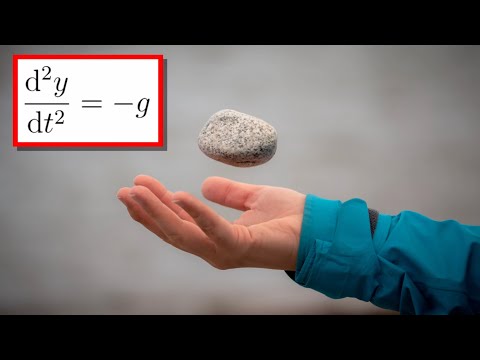
Now let’s look at how this applies in science. In physics, differential calculus is crucial for understanding motion. Think about an object falling under gravity. Its velocity changes as it falls; by using derivatives, scientists can calculate exactly how fast it’s going at any point in its descent.
Another cool application is found in biology. When studying populations of organisms — like bacteria or animals — scientists often model their growth with differential equations. They can predict how quickly populations will grow or decline based on current conditions. For example, if food becomes scarce or if there are predators around, using these equations helps biologists make sense of those changes.
But wait! It gets even more interesting when we consider technology. Engineers use differential calculus when designing roller coasters! The curves and slopes are all about finding the right angles to make sure people have a thrilling ride without flying out of their seats. By applying derivatives to understand forces acting on riders at various points on the coaster track, they can ensure maximum fun while keeping safety in check.
And there’s more! In the realm of computer science, algorithms often involve complex calculations that depend on understanding change over time or space. For instance, when developing software for video games or simulations that require realistic motion (think: characters jumping or cars racing), programmers use principles from differential calculus to calculate movements accurately.
Let’s not forget medicine. Differential equations are used to model the spread of diseases and predict outbreaks. By analyzing how quickly something like a virus spreads through a population based on certain factors—like social distancing measures—you get insights into what might happen next and how best to respond.
So basically, whether we’re talking about physics, biology, engineering, computer science, or medicine… differential calculus pops up everywhere! It turns abstract concepts into practical applications that make our world function smoothly.
In summary:
- Physics: Understanding motion and velocity.
- Biology: Modeling population growth and decline.
- Engineering: Designing safe roller coasters.
- Computer Science: Simulating realistic movements in games.
- Medicine: Predicting disease spread effectively.
So next time you hear someone mention differential calculus don’t think “ugh” or “that sounds boring.” Instead, just remember it’s behind so much of what we see and do every day! Who knew math could be this exciting?
The Integral Role of Mathematics in Advancing Science and Innovation
Math and science have this beautiful relationship, you know? They’re kind of like best friends who can’t live without each other. So, let’s talk about the integral role of mathematics—especially calculus and differential equations—in advancing science and innovation.
First off, calculus is all about understanding change. Imagine you’re watching a roller coaster. The way it speeds up and slows down is a lot like how calculus helps scientists understand how things change over time. Calculus allows scientists to model everything from the motion of planets to the spread of diseases. It’s like having a magic tool that helps predict what’s going to happen next.
Now, you might be thinking, “Okay, but how does that translate into real-world stuff?” Well, take climate science for example. Scientists use calculus to model how temperature changes with different variables like carbon dioxide levels or solar radiation. By analyzing these changes, they can make predictions about future climate conditions—which is super important for planning and innovation in renewable energy sources.
Then we have differential equations. Oh man, these are where things get really cool! They describe relationships involving functions and their rates of change. Think about them as the rules of the game that dictate how different phenomena interact with one another. For instance, they’re crucial in understanding waves—like sound or light waves. When you strum a guitar string, it vibrates in complex ways that can be described using differential equations.
These equations are everywhere in science. They help engineers design bridges by modeling stresses and forces acting on structures. You wouldn’t want to drive over a bridge that’s not been calculated properly!
But let’s not forget biology! In epidemiology—the study of disease spread—differential equations help model how infections spread through populations over time. This has become even more evident during pandemics when scientists use them to predict outbreak patterns and the effects of interventions like vaccinations.
And there’s chemistry too! Reaction rates are often modeled using differential equations as well. Take two chemicals mixing together; their concentration changes over time based on how quickly they react with each other—another beautiful dance described by math.
In conclusion—or just wrapping this up—you see how both calculus and differential equations serve as vital languages for describing natural phenomena? They enable scientists to construct models that lead to breakthroughs across various fields—from engineering marvels to medical innovations.
So yeah, next time you think about math being all about numbers on paper or complicated calculations, remember it’s more than just that! It’s the foundation upon which so many scientific advancements stand tall today!
The Importance of Differential Equations in Scientific and Engineering Models: Understanding Real-World Phenomena
So, let’s talk about differential equations. You might think they sound a bit intimidating, maybe something only mathematicians get excited about. But seriously, these little equations are like secret codes that help us understand how the world works!
First off, what’s a differential equation? Well, it’s just an equation that involves functions and their derivatives. In simpler terms, it connects how things change with respect to each other. For instance, if you drop a ball from a height, you could use differential equations to figure out how fast it falls and where it’ll land.
Now, why are they important? The thing is, they pop up everywhere in science and engineering. Let’s break that down a bit:
- Physics: They help describe everything from motion to electricity. Take Newton’s laws of motion; they’re basically differential equations in disguise! When you throw a ball or push a car, these equations tell you how long it’ll take to reach its destination.
- Biology: These equations model population dynamics. Imagine you have rabbits multiplying in your backyard (lucky you!). By using differential equations, we can predict how many rabbits there will be over time based on factors like food supply and predators.
- Chemistry: They describe reaction rates too! You know when you’re baking cookies and the dough rises? Differential equations can help scientists understand this process better by showing how reactants change over time.
- Engineering: Want to build a bridge? You’ll definitely need differential equations. They help engineers calculate stresses and strains in materials to ensure structures remain safe under load.
So here’s the kicker: all those fancy tech gadgets we love rely on these concepts as well. Think of smartphones or airplanes—these devices are built on models that use differential equations like their foundation.
And check this out: I remember once walking through a park when I saw this father teaching his kid about swings. He explained that the swing’s motions could be predicted using physics principles! That’s pure math magic right there—differential equations standing behind simple fun!
In essence, understanding differential equations helps us make sense of real-world phenomena by predicting outcomes based on initial conditions or changes over time. It turns chaos into order—pretty cool stuff if you ask me!
To sum up: whether it’s the way planets orbit or how diseases spread, differential equations play an essential role in making sense of our universe while driving scientific innovation forward. Isn’t it neat to think that with just some numbers and letters dancing around together, we can unravel so many mysteries?
Calculus and differential equations might sound daunting at first, like some secret code only mathematicians speak. But honestly, they’re like the backbone of so many amazing things in science. Think about it: every time you’ve watched a rocket launch or even just seen a bird glide through the air, there’s a whole lot of calculus behind those movements.
Let’s rewind for a moment. I remember this one summer when I was trying to learn how to ride my bike without training wheels. At first, it was all wobbly and chaotic, but after practicing, I started to understand how to balance my weight and pedal smoothly. That moment when you start picking up speed and feel that rush—that’s kind of what calculus does for scientists and engineers in the world of innovation. It’s all about finding that balance and understanding the movement of things around us.
Now, calculus is like the language of change. It helps you figure out how fast something is moving or how much something is growing over time. Differential equations? They take it a step further by showing how these changes are related. For example, if you toss a ball in the air, the path it takes can be described using differential equations that consider gravity, speed, and even air resistance.
These concepts aren’t just theoretical; they’re super practical too! In fields like physics, engineering, biology—you name it—these tools help experts design everything from airplanes to medical devices. They’re used in climate modeling to predict weather patterns or even in developing new technologies like renewable energy systems.
But here’s where it gets really interesting: with current global challenges—climate change being one—you can see how essential these mathematical tools are for innovation. Scientists use calculus not only to analyze data but also to create models that guide sustainable practices and help predict future trends based on different variables we face today.
So next time you hear someone mention calculus or differential equations, just remember—they’re not just numbers on a blackboard; they’re about understanding our world better. They translate complex natural phenomena into something we can work with—making scientific innovation possible.
It’s a little wild when you think about it: this stuff is everywhere around us! Whether it’s designing your favorite gadget or ensuring safer travels on an airplane overhead—it all boils down to those fundamental principles of change and relationships laid out by calculus and differential equations.