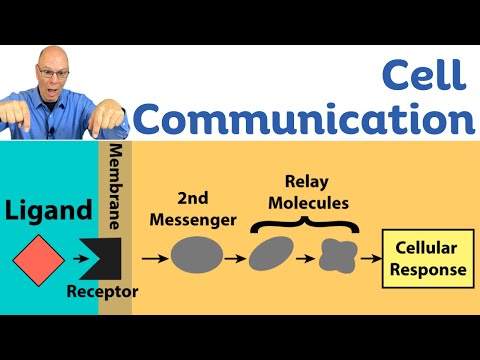
You know, I once tried to explain to my dog why he can’t eat the neighbor’s pizza leftovers. It was like talking to a wall! But it got me thinking about how we communicate. Humans have words, gestures, and even emojis. But what if I told you that cells have their own language too?
Yeah, that’s right! Cells are constantly chatting away, sending messages to each other like it’s an intense group text. They’re all about signaling – telling one another when to grow, divide, or even go into hibernation mode. Imagine the drama!
So buckle up! We’re diving into the fascinating world of cell signaling in AP Biology. It’s not just science; it’s life’s hidden conversational dance that keeps everything running smoothly. Ready? Let’s break it down!
Cell Signaling: The Language of Life in AP Biology – Comprehensive PDF Guide
So, let’s talk about cell signaling, which you could say is like the conversation happening inside and between cells. Imagine your body as a bustling city, and each cell is like a tiny community communicating with each other to keep everything running smoothly. Sounds cool, right?
At the heart of this communication process are signaling molecules. These are the “words” or “messages” that cells send out. They could be hormones, neurotransmitters, or even little peptides. When they reach another cell, it’s kind of like ringing someone’s doorbell—if you get the right response from that cell, it opens up and listens.
Now, there are a couple of main types of signaling we should touch on:
- Endocrine signaling: This is when hormones travel through the bloodstream to distant target cells. Think about adrenaline kicking in when you’re excited or scared; it spreads through your body to help you react.
- Paracrine signaling: Here, cells communicate with nearby ones using local signals. It’s like having a neighborhood gossip session—quick and efficient!
- Synaptic signaling: This happens between neurons and their target cells (like muscles). Neurotransmitters are released across synapses—imagine passing a note in class that starts a chain reaction!
- Autocrine signaling: In this case, a cell talks to itself. It’s almost like whispering your own secret; sometimes you just need to reassure yourself!
Each type plays an important role in how our bodies function daily. For instance, during stressful situations, the adrenal glands pump out adrenaline into your bloodstream (that’s the endocrine way). Your heart rate increases as those signals reach muscle cells—talk about teamwork!
Alrighty then! Let’s chat about how these signals actually work at a deeper level. Basically, it all comes down to receptors. Think of them like locks on doors; only specific keys can open them (those keys being our signaling molecules). When a signal molecule binds to its receptor on the target cell’s surface (the lock), it triggers a series of reactions inside that cell—a process called signal transduction. It’s kinda like playing dominoes; one little push can set off an entire chain reaction!
The outcome? Well, it depends on what kind of signal was received. Sometimes you get changes in gene expression (the instructions for making proteins), leading to growth or healing. Other times, it may lead to immediate responses—like muscle contractions when neurons fire!
And here’s where things get even more interesting: not every signal leads down the same path! Different types of receptors can activate different pathways within the same cell. So depending on what mood they’re in or what they need at the moment—the responses can change dramatically.
It might sound complex sometimes, but think of it this way: every single interaction between cells contributes to who we are as living organisms—from how we grow and heal to how we respond to our environment.
To sum it all up:
– Cell signaling is basically how cells talk.
– There are various methods—like endocrine for long-distance communication.
– Receptors play crucial roles in determining what happens when signals arrive.
– The outcomes can vary widely based on context and type of receptor involved.
Pretty wild stuff if you ask me! Understanding this language helps us grasp how life functions at its most fundamental level—and that’s pretty cool in itself!
Understanding Cell Signaling: Key Concepts and Notes for AP Biology Success
So, let’s chat about cell signaling, okay? This is like the secret language of cells, helping them communicate with each other. It’s not just crucial for your body; it’s foundational for all living things. You know how we use words to express our feelings? Cells do that too, just with chemical signals instead.
Cell signaling can seem complex at first glance, but it breaks down into a few key components. Think of it as a relay race: information gets passed along from one part of the cell to another, which leads to some kind of action. Let’s look at the main types of signaling:
- Autocrine signaling: Here, a cell sends signals to itself. Imagine telling yourself to get up and grab a snack. That’s how cells can regulate their own behavior.
- Paracrine signaling: This is when cells communicate with nearby cells. Kind of like gossiping with your friends across the table at lunch. They share info through short-range signals.
- Endocrine signaling: Now we’re talking long distance! Hormones are like messages sent through your bloodstream from one part of your body to another—like an email flying across town.
- Synaptic signaling: This one is specific to nerve cells communicating across synapses. Think of it as sending texts really fast between friends!
The steps in this communication process are pretty neat too! First off, there’s usually a signal molecule, often called a ligand. This could be a hormone or neurotransmitter that binds to a receptor on the target cell’s surface—kind of like putting the right key into a lock.
Once that ligand binds, it triggers changes within the target cell—a process known as signal transduction. You can imagine this as flipping switches inside your house when you want different lights on; it activates pathways and causes cellular responses.
A classic example is insulin—it helps cells take in glucose after you’ve eaten something sweet. Just picture this: you’ve had cake at a birthday party (yum!), and insulin gets released into your bloodstream to help sugar enter your cells for energy. So tasty!
Then there are secondary messengers involved in amplifying these signals once they get inside the cell’s interior—think cAMP or calcium ions buzzing around like little helpers getting everything set up for action.
So why should this matter for your AP Biology studies? Understanding these concepts lays down the foundation for grasping bigger ideas in biology, like how organisms maintain homeostasis or respond to environmental changes.
To wrap it up, remember that cell signaling isn’t just some science vocabulary; it’s literally how life talks and keeps everything running smoothly under the surface.. Just picture all those tiny conversations happening every millisecond! Isn’t that something?
Cell Communication: A Comprehensive AP Biology Guide in PDF Format
Sure thing! Let’s chat about cell communication, which is like the super important language of life. Cells are constantly talking to each other, you know? They need to coordinate their activities to keep everything running smoothly in living organisms. So, what’s going on with these tiny chatterboxes? Here’s a breakdown.
What is Cell Communication?
It’s all about how cells send and receive signals. This signaling helps them respond to changes in their environment – like when your body reacts to a cut or when plants grow towards light. Think of it as a concert where every instrument has to be in sync for the music to sound good.
Types of Cell Signaling
There are a few main ways cells communicate:
- Autocrine Signaling: This is when a cell sends signals that affect itself. It’s like giving yourself a pep talk!
- Paracrine Signaling: Here, signals affect nearby cells. Imagine shouting across the street to your friend.
- Endocrine Signaling: This one involves hormones traveling through the bloodstream to reach distant cells. Think of it as sending a letter far away.
- Juxtacrine Signaling: In this case, cells must be touching each other to communicate. It’s like passing notes in class – you gotta be close enough!
The Process of Signal Transduction
So, how do these signals actually work? Once a signal reaches a cell, it binds to a receptor on the surface or inside that cell. This process triggers changes inside the cell – called signal transduction – leading to responses such as gene expression or even activating enzymes!
For instance, think about when adrenaline (a hormone) enters our bloodstream during a stressful moment. It binds to receptors on muscle and heart cells, making them react quickly—you get energized!
The Importance of Receptors
Receptors are crucial for understanding cell communication—they’re like locks that only specific keys (signals) can open. When something binds correctly, it causes changes in the cell’s behavior.
There are different types of receptors:
- Ion channel receptors: These change shape when a signal binds, allowing ions in or out of the cell.
- G-protein coupled receptors: These activate proteins inside the cell that then trigger various responses—like starting up a game console and launching your favorite game!
- Enzyme-linked receptors: When activated, they act as enzymes themselves or activate enzymes within the cell for further action.
Anecdote Time!
I once watched my mom trying to talk through an open window while I was outside playing with friends. She’d shout things like “Dinner time!” The way my friends and I responded was similar to how cells react: sometimes we would hear her clearly if she spoke loudly enough (stronger signals), but at times if we were too far away or distracted (missing signals), we wouldn’t respond at all! It made me realize just how important clear communication is—just like cells!
The Takeaway
Cell communication isn’t just vital; it’s fascinating! It keeps everything from our heartbeats to plant growth finely tuned and perfectly coordinated. And next time you hear about hormones or nerve impulses firing off signals—just remember there’s an entire world of tiny conversations happening constantly that’s keeping life ticking along!
You know, cell signaling is something that can sound super complex, but when you really think about it, it’s like the universe chatting with itself. Imagine your body as a bustling city. Cells are the citizens, each with their own role, and they need to communicate to keep everything running smoothly. Without this communication, chaos would ensue—it’s just not an option.
In AP Biology, they throw around terms like “ligands” and “receptors,” which can feel a bit heavy. But really, it’s all about messages being sent and received. Picture this: one cell releases a signaling molecule, kind of like sending a text or making a phone call. The receptor on another cell picks up that message and reacts—maybe it triggers growth, or tells the cell to divide or even die off when it’s time. It’s wild how these tiny molecules can make such big decisions!
I remember one time in lab class when we were studying how cells respond to different signals. We set up some experiments with yeast cells and added various concentrations of sugar. Watching them respond was eye-opening! The way they adapted and shuttled resources was like watching a dance unfold in slow motion; each step was beautifully coordinated by countless signals working together.
And here’s where it gets even cooler: these signaling pathways can get super intricate. Like imagine a whole chain reaction—one signal triggering another until you’ve got this massive response brewing inside the cell. It sounds complicated at first, but think of it as teamwork on steroids! They work together to make sure your body functions properly.
But here’s the thing: sometimes things go wrong in these signaling pathways. If there’s a glitch in communication—like if someone were to miss an important text—it could lead to serious problems like cancer or diseases like diabetes where signaling goes haywire.
So wrapping your head around cell signaling isn’t just about memorizing facts for that AP exam; it’s also thinking about how life itself operates at such a fundamental level. It’s kind of poetic when you realize that life is continuously communicating through this beautiful language of signals—it’s not just science; it’s elegance in motion!