You know what’s wild? If you’ve ever looked up at the night sky and thought it was just pretty stars and a bright moon, there’s a whole universe of stuff going on that you can’t even see. Seriously! About 85% of the matter in the universe is dark matter. Yeah, that’s right—dark matter! It’s like the universe is hiding its secrets behind a cosmic curtain.
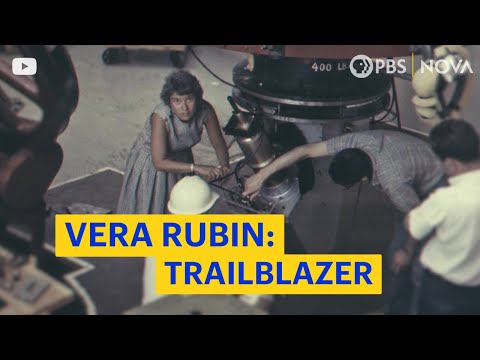
Now, let me tell you about Vera Rubin, an absolute rockstar in astronomy. Picture this: she’s there in her lab, with her telescope, peering into space when everyone else was too busy dismissing her ideas just ’cause she was a woman. I mean, come on! Talk about determination.
Rubin wasn’t just any astronomer; she was on a mission to unmask this mysterious dark matter. Her work changed how we think about galaxies and their motions. So grab your favorite snack and let’s dig into the world of Rubin’s legacy because this stuff is mind-blowing!
Exploring the Contributions of Euclid to Modern Science: The Legacy of Geometry and Mathematical Principles
So, let’s talk about Euclid, the dude who really put geometry on the map, literally! You might know him from your high school math class. His work laid down the foundations for how we think about space and shapes, and surprisingly enough, even in modern science, his ideas still pop up all over the place.
First off, Euclid lived way back in ancient Greece—around 300 BCE. He’s best known for his book called The Elements. It’s like the ultimate math textbook of its time. The Elements isn’t just a dry collection of formulas; it’s all about deriving complex ideas from simple principles. This method is pretty much how we still learn math today. You could say Euclid was one of the first to teach us how to build knowledge step-by-step!
The thing is, what Euclid did wasn’t just about shapes and lines. He established a whole system of logic that influenced not just math, but also fields like physics and computer science. He used axioms and postulates—basically rules that are taken as true without proof—to build more complex ideas. Here’s an example: if you accept “a straight line can be drawn between any two points,” you can get into all kinds of geometric wonders from there.
You might be asking yourself—“Okay, but what does this have to do with dark matter?” Well, it relates closely! When scientists like Vera Rubin were studying galaxies, they used geometry to understand how stars move within them. The traditional models predicted certain behaviors based on visible matter, but observations showed unexpected patterns that led to discovering something mysterious—what we now call dark matter.
Rubin’s observations highlighted that galaxies were spinning at such speeds that they should be tearing apart! But they weren’t. This implied there had to be some unseen mass holding them together—an idea deeply rooted in geometrical concepts that Euclid helped popularize.
Here are some key contributions from Euclid that echo through time:
- Axiomatic method: The way he approached proving things logically paved the path for scientific methods.
- Geometric principles: These are foundational for understanding celestial movements.
- Influence on algebra: His geometry influenced later mathematicians who merged geometry with algebraic equations—even contributing indirectly to modern physics!
The beauty of Euclidean geometry lies in its simplicity; it allows for complex thought processes around things we can’t see or touch directly—like dark matter! So while he didn’t deal with space-time or gravity as Einstein did later on, his influence is part of a chain reaction leading right up to these modern theories.
It’s pretty amazing when you think about it: thousands of years ago, this guy wrote stuff down that still matters today! It shows how interconnected knowledge can be through history and across disciplines—a long legacy indeed!
So next time you’re calculating angles or pondering over how galaxies spin around unseen forces in the universe, remember it’s a beautiful blend of past wisdom and future exploration. You follow me? That’s something worth celebrating!
Exploring the Vera Rubin Observatory: Pioneering Advances in Astronomy and Cosmic Discovery
The Vera Rubin Observatory is like this amazing new eye on the universe, you know? It’s not just another telescope. It’s a game changer, designed to help us explore the cosmos in ways we haven’t been able to before. The observatory is located in Chile, and it’s named after the pioneering astronomer Vera Rubin, who played a huge role in uncovering the mysteries of dark matter.
One of its coolest features is the Large Synoptic Survey Telescope (LSST). This monster of a telescope will have the power to capture images of the entire sky every few nights! Can you imagine that? It’s like having a time-lapse movie of our galaxy. The LSST will produce around 20 terabytes of data each night—enough to fill thousands of DVDs! That means astronomers will have tons of information to work with as they search for cosmic wonders.
Now, let’s talk about dark matter for a sec. You might know it as that mysterious stuff that makes up about 27% of our universe—but we can’t see it or touch it. It’s like this invisible glue holding galaxies together. What Vera Rubin discovered back in the day was pretty groundbreaking: she noticed that galaxies were spinning way faster than they should be if we only counted visible matter. That led her to suggest something unseen was at play—hello, dark matter!
With the Vera Rubin Observatory, researchers are hoping to learn even more about dark matter by mapping out billions of stars and galaxies over ten years. Here’s what I think is super exciting: they’ll be looking for tiny changes over time because these changes can hint at how dark matter affects visible matter.
Also, keep an eye out for transient events. This is when something happens out there in space—like a supernova or a gamma-ray burst—and those events usually don’t last long. The LSST will help scientists catch these phenomena, giving us more clues about how our universe works.
In addition to dark matter and transient events, there’s also going to be a focus on near-Earth objects. These are asteroids and comets that could potentially come close to our planet. Knowing their paths helps keep us safe—you wouldn’t want any surprises from space, right?
And let’s not forget about citizen science! With all this data coming in, regular folks like you and me can get involved too! There will be opportunities for people to help identify objects and analyze data through online platforms.
So all in all, Vera Rubin’s legacy continues through this observatory and its drive for discovery. It’s an exciting time for astronomy—who knows what secrets the universe holds just waiting for us to uncover them? Honestly, I can’t wait to see what comes next!
Alright, so let’s talk about dark matter and the amazing Vera Rubin. You know, when you think about astronomy, you might picture telescopes peering into the vastness of space or scientists analyzing data from light years away. But behind all that glam and glitter of the stars is this mysterious substance called dark matter. It’s like the ultimate cosmic enigma, right?
So here’s where Vera Rubin comes in. She was this brilliant astronomer who kinda threw a curveball at how we understand the universe. Back in the ’70s, she started studying galaxies and noticed something strange: galaxies were spinning way faster than they should be based on the visible matter we could see. Picture this: it’s like trying to balance a bowling ball on a tightrope—something just isn’t adding up. The thing is, most of the mass that affects those galaxies isn’t even visible to us! It’s there, but it’s like trying to find a black cat in a dark room; you know something’s there, but you can’t quite see it.
Her work showed that up to 85% of the mass in these galaxies was made up of this elusive dark matter. So basically, she played a huge role in reshaping our understanding of the cosmos and proving that there’s way more going on out there than meets the eye.
A little while ago, I was chatting with my friend who loves stargazing. He shared how awe-inspiring it is to look at constellations and feel connected to everything in the universe. That moment reminded me of Rubin’s impact—her discoveries have opened up an entire realm of possibilities for exploring what lies beyond our sight.
But let’s be real for a second: working in a male-dominated field back then couldn’t have been easy for her. Despite all odds—like not getting enough recognition initially—she kept pushing forward with her research. That resilience really gives me chills! Rubin showed us that curiosity can lead us down paths we didn’t even know existed.
So now when I look up at those distant stars twinkling down on us, I can’t help but think about all that hidden stuff out there—the vast majority of our universe! Vera Rubin didn’t just leave behind findings; she left us with questions about existence itself and challenged generations to dig deeper into astrophysics.
In reflecting on her legacy, it’s clear that science is not just about answers; it’s also about embracing mystery and wonder—and maybe even taking some risks along the way. That’s what makes it so beautifully human, don’t you think?