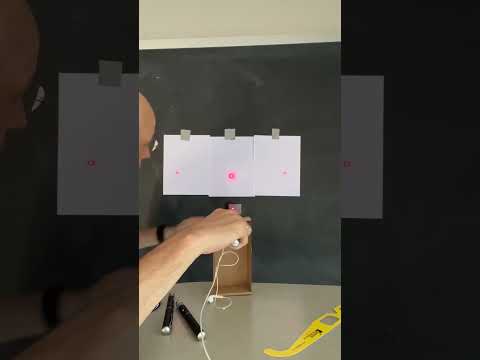
So, picture this: you’re at a concert, and the lights start flashing all around. It’s all glowy and mesmerizing, right? But have you ever stopped to think about how those colors play out? That’s where diffraction grating comes in!
Okay, so here’s the deal: a diffraction grating is like a fancy light filter. It splits light into this beautiful spectrum—kind of like a rainbow! But it’s not just about parties or concerts; it’s serious science, too.
Whether it’s figuring out what stars are made of or even identifying that cool new paint color you saw on TikTok, diffraction gratings are behind the scenes doing some wild work.
Interested yet? Let’s chat about how these nifty gadgets make sense of light in ways that can totally blow your mind!
Understanding Diffraction Grating Spectroscopes: A Comprehensive Guide to Optical Science
Diffraction grating spectroscopes are pretty cool instruments that help us understand the nature of light. Just imagine looking at a rainbow through a special tool and seeing all its colors spread out. That’s essentially what these devices do!
So, what’s a diffraction grating anyway? Well, it’s a surface with many closely spaced lines or grooves. When light hits it, the light waves bend in different directions. This bending is called diffraction, and it separates incoming light into its various colors. The result is a beautiful spectrum, kind of like how you see different shades when you shine a beam of light through a prism.
Now let’s get into how this works. Light is made up of tiny particles called photons that can also behave like waves. When these waves encounter the grooves of the grating, they overlap and interfere with one another. This interference creates bright and dark spots which correspond to different wavelengths (or colors) of light.
In practice, here’s how you might use one: let’s say you’re peering into the night sky with your diffraction grating spectroscope aimed at a star. The device will collect light from that star, diffract it through its grating, and project the resulting spectrum onto a screen or camera sensor. You can then analyze this spectrum to learn about what elements are present in that star based on the colors you see!
But here’s where it gets even cooler: each element has its own unique spectral fingerprint made up of specific wavelengths of light absorbed or emitted by those atoms! For instance:
- Hydrogen
- Sodium
- Helium
: It shows distinct lines in the spectrum due to its electron transitions.
: You’ll spot two bright yellow lines known as the D-lines.
: Discovered by observing sunlight; it’s got very specific lines too!
You know, every time you look at stars or even simple street lamps with these tools, you’re not just seeing pretty colors—you’re unlocking secrets about their composition!
What I find particularly fascinating is how diffraction gratings aren’t limited to fancy telescopes in observatories—they’re everywhere! They’re used in labs for chemical analysis and even in devices like CD players where they read data off discs based on interference patterns.
In summary, diffraction grating spectroscopes are essential for both amateur stargazers and professional scientists alike. Whether you’re peering at distant galaxies or examining materials in a lab, understanding how light interacts with these gratings reveals incredible insights into our universe! And isn’t that just amazing?
Exploring the Use of Diffraction Gratings as Spectrometers in Scientific Analysis
So, let’s chat about diffraction gratings and how they turn into these super cool tools called spectrometers. You might be like, “What even is a diffraction grating?” Well, it’s basically a surface with a ton of tiny lines or grooves that help split light into its different colors, kinda like what happens in a rainbow. Pretty neat, right?
Now, the amazing thing is that these diffraction gratings can actually be used to analyze different types of light. When light hits the grating, it bends or diffracts at various angles depending on its wavelength. This means we can see all the colors in the light spectrum! You follow me? So instead of just seeing a blank white light beam, we get a beautiful spread of colors.
Here’s how it goes down:
- Light Source: You start with some light – could be anything from sunlight to the light from a distant star.
- Incident Light: This light hits our trusty diffraction grating.
- Diffraction: As it strikes those tiny grooves, the individual wavelengths bend differently. Some bend more than others.
- Detection: Finally, we capture this separated light using detectors or cameras that can measure where each color lands.
This process is what lets scientists determine everything from chemical compositions to physical properties of distant celestial bodies! Imagine being able to identify elements in a star that’s millions of light-years away! It’s kinda mind-blowing!
A little story for you: I once visited an observatory and saw this massive telescope with a diffraction grating attached. The astronomer pointed to some bright lines on their screen and casually mentioned they were observing the chemical elements in that star. That moment really clicked for me—the idea that we can basically read the universe like it’s an open book just blew my mind!
The accuracy and detail obtained through these spectrometers are outstanding. They help us study things like star temperatures, distant galaxies, and even the composition of gases in our atmosphere. It’s all about how finely those grooves are made; smaller distances between them lead to higher resolution measurements!
You might also be wondering: what kind of materials are used for making these gratings? Well, they’re often made from glass or plastic coated with reflective materials. Some use metals too! The choice of material affects how well they work across different wavelengths.
If you want to dig deeper into practical applications—scientists also use these devices in labs to analyze chemicals in various substances. Whether it’s identifying toxic pollutants or checking on pharmaceutical compounds for quality control—diffraction gratings come through like heroes!
The bottom line is: diffraction gratings essentially help us understand our world better—whether it’s beneath our feet or out among the stars! It’s fascinating how something so seemingly simple can open so many doors in scientific analysis.
Understanding Grating Spectroscopy: Principles, Applications, and Advances in Scientific Research
Grating spectroscopy is like a magic trick with light. Imagine you’ve got a flashlight and you shine it through something like a CD. That light splits into a rainbow of colors! That’s basically what happens in grating spectroscopy, and it all comes down to something called diffraction. Let’s break this down, alright?
When light hits a surface with lots of tiny grooves—like those on a CD—it bends, or diffracts, as it passes through. This is super important because different colors of light bend at slightly different angles. So, when you shine white light on the grating, it separates into its component colors. Pretty neat, huh?
Now, let’s talk about the principles. A diffraction grating has many closely spaced lines or grooves—usually thousands per millimeter! When light hits these grooves, it gets scattered in many directions. By measuring the angles at which different colors come out, scientists can figure out where each color comes from in the original light source.
Moving on to applications. Grating spectroscopy isn’t just for fun; it has real-world uses! For instance:
- Chemical analysis: Scientists use spectrometers to identify substances by examining their unique spectral fingerprints.
- Astronomy: By analyzing the light from stars and galaxies, astronomers can determine their composition and movement.
- Medical diagnostics: Grating spectroscopes can assist in analyzing blood samples for diseases.
You see how diverse this is? Each application takes advantage of how some materials absorb specific wavelengths of light.
Now let’s chat about recent advances in scientific research. There are always cool new things happening! For example:
– Researchers have developed more efficient gratings that can collect more light without losing detail.
– Advances in computer algorithms help analyze complex spectra much faster than before.
– There are even discussions around using these techniques for detecting exoplanets by studying their atmospheres through star-light analysis!
Each step forward means we can learn more and unlock new mysteries of our universe.
Finally, an emotional note: I remember watching an experiment where students used a grating spectroscope to view the spectrum from a simple LED bulb. Their faces lit up with awe as they saw vibrant colors appear like magic right before their eyes! It’s that same wonder that drives scientists to explore further.
So, now you know how grating spectroscopy works—its principles, applications, and the exciting strides being made in research. Seriously fascinating stuff if you ask me!
So, light, huh? It’s pretty amazing how something we can’t even touch plays such a big role in our lives. I mean, think about it—we see the world around us thanks to light bouncing off everything and hitting our eyes. But what if you could take that light and really break it down? Like, get into its secrets? That’s where diffraction grating spectroscopes come into the picture.
I remember the first time I saw one of these cool gadgets. It was during a high school science fair, and my buddy Alex had set up this awesome little booth. He had a spectroscope made from an old CD (yeah, a CD!). When he pointed it at a light source, and we saw those colors fanning out like a rainbow on the wall… man, it blew my mind! I never thought about how light could be split apart like that before.
So here’s the deal with diffraction gratings: they’re basically surfaces with lots of tiny grooves or slits—think of them as super narrow roads for light waves. When light hits these grooves, it bends or diffracts (that’s just a fancy word for bending). The result? A spectrum—a beautiful display showing all the colors of the rainbow!
But why does this matter? Well, each element emits or absorbs specific wavelengths of light. So when you use a spectroscope to analyze starlight or even light from distant galaxies, you get clues about what those stars or planets are made of. It’s like peeking into their chemical makeup without leaving Earth! Pretty wild when you consider how much we can learn just by analyzing colors.
And here’s something emotional to think about: every time astronomers look through their spectroscopes at the night sky, they’re connecting with the universe in an intimate way. They’re not just observing; they’re unraveling mysteries that have existed for eons. That feeling of exploring the unknown? It gives me chills!
In essence, diffraction grating spectroscopes don’t just help us see pretty colors—they open our eyes to deeper truths about the world around us and beyond. Isn’t science just amazing like that?