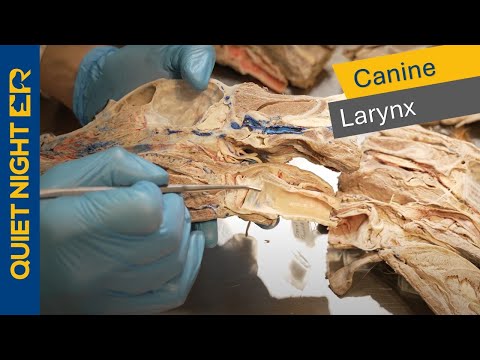
So, you know how your dog seems to have a million different barks? Sometimes they sound like a tiny gremlin, other times like a fierce lion. It’s wild! Well, what’s going on in their throat is pretty amazing, too.
Let’s talk about the larynx—yeah, that’s the fancy term for the voice box. You’d be surprised at how much this little structure impacts their vocal skills.
I remember my buddy’s dog, Max. One minute he was barking his head off at the mailman, and the next he let out this squeaky noise that made everyone crack up. I had to wonder: what gives?
Stick around; you’re gonna find out all about how that cool canine larynx works!
Understanding Canine Anatomy: The Physiology of Dog Swallowing Mechanisms
Understanding how dogs swallow might sound simple, but it’s actually pretty cool when you break it down. Dogs have a lot going on in their bodies, especially in their throat and mouth when they eat. The process of swallowing involves several parts working together, especially the **canine larynx**. This little structure is vital, and here’s why.
First off, let’s talk about the **mouth**. When a dog eats, it uses its tongue to bring food to the back of its mouth. The tongue is super strong and flexible. It’s like a pick-up truck for their food! The moment the dog has chewed enough (and sometimes they can be a bit messy about it!), the tongue pushes the food towards the pharynx.
Now, once that food gets to the back of their throat, it’s a big cue for the larynx to kick into action. The larynx is more than just vocal cords – it’s also like a gatekeeper for air and food. So here’s what happens:
- Closure of the Larynx: When the dog swallows, that little flap called the epiglottis covers the larynx to make sure food doesn’t go down into their windpipe.
- Pharyngeal Phase: This part is super quick! The muscles in the pharynx contract to push food down into the esophagus.
After that, you might think it’s all done, but not quite yet! There’s still another party involved – *the esophagus*. It’s that long tube connecting your dog’s mouth to its stomach.
- Esophageal Phase: This phase swings into gear once food hits that tube. Muscles in the esophagus contract in waves (a fancy term called peristalsis) to push everything along toward their tummy!
It’s kind of like watching a rollercoaster where everything moves in smooth motion until it gets to its destination.
Now here’s something interesting: dogs do this so quickly they hardly seem to breathe while swallowing! You might see them gulp down some kibble or treats without pausing much at all. That’s because their bodies are designed for efficient eating—especially when they’re super excited or hungry!
Wanna know an emotional little story? I remember my friend’s golden retriever named Buddy. He used to inhale his meals as if they were going out of style! I mean seriously – we joked he was part vacuum cleaner. But then one day we noticed he started gagging a bit after eating too fast… poor guy! Turned out he wasn’t allowing his body enough time for all those mechanisms—the tongue moving food around and larynx protecting his air passages—to do their jobs properly.
So basically, understanding how dogs swallow gives us insight not just into how they eat but also how we can help them stay healthy while munching away on their favorites! Keeping things slow during mealtime can make all that anatomy work like it should without any hiccups… literally!
To wrap this up: dogs’ swallowing mechanisms are fascinatingly complex yet beautifully efficient. If you ever catch your pup gazing at dinner with those big eyes full of hope, remember all that’s happening behind that adorable face when they dive headfirst into chow time!
Understanding Normal Laryngeal Movement in Dogs: Insights from Veterinary Science
Understanding the normal movement of a dog’s larynx is pretty important in veterinary science. The larynx, or voice box, plays a big role in breathing and vocalization. You might be surprised how this little structure affects so much.
So, what exactly is the larynx? Well, it’s located at the top of the trachea and connects to the throat. It’s made up of cartilage, muscle, and tissue. When dogs breathe in or out, their larynx moves to allow air to pass through without any trouble. And guess what? When they bark or make other sounds, it’s all about that movement.
Let’s break down some key points about normal laryngeal movement:
Now, let’s not forget about the muscles involved in all this action. The cricoarytenoid muscles are super important for adjusting tension on the vocal cords. Basically, when these muscles contract or relax, they change how tight those cords are—affecting sound quality quite a bit.
But why does this matter? Well, if there’s an issue with a dog’s laryngeal movement—for example, if it doesn’t open properly—it can lead to serious breathing problems or even choking! Imagine seeing your furry friend struggling to breathe; that would be terrifying!
Veterinarians use various methods to assess laryngeal function in dogs. They might do endoscopy, where they look inside the throat with special tools while anesthetizing your pup (don’t worry; they make sure it’s safe). Observing how well everything works can reveal underlying issues like laryngeal paralysis, which can happen as dogs age.
In conclusion (well not really “conclusion” since we’re just chatting), understanding how a dog’s larynx moves helps us keep them healthy and respond quickly when something goes wrong. So next time your dog lets out that signature bark or playful growl, think about all that amazing anatomy at work! Isn’t it cool how every little part serves such an essential function?
Understanding Canine Throat Anatomy for Effective Intubation: A Scientific Overview
So, let’s chat about doggos and their throats for a minute. You know, when a vet needs to put a tube down a pup’s throat—like, for surgery or emergencies—they gotta understand the canine throat anatomy really well. It’s super important because, let’s face it, no one wants to mess that up!
The larynx, which is basically the voice box of the dog, is located just above the trachea (the windpipe). It has several functions: it helps with breathing, makes sounds (you know when your dog barks), and protects the airway during swallowing. If you think about it, that’s a lot of pressure on one little area!
Structure of the Larynx: The larynx in dogs features some cool parts:
- Epiglottis: This little flap covers the larynx when the dog swallows food or water. Imagine it like a door that closes to keep stuff from going down the wrong way.
- Arytenoid Cartilages: These are paired structures that help control vocal cord tension and are key for making sounds.
- Vocal Folds: When air passes through these folds, sound is produced. Yup, that’s why your furry friend can bark or howl!
Now here’s where it gets juicy—intubation! When performing intubation on dogs, you need to navigate through this laryngeal landscape carefully. The trick is knowing where everything is and how those parts work together.
When you’re trying to insert an endotracheal tube (that tube we’re talking about), positioning matters a lot. The epiglottis has to move out of the way. This can be tricky if you don’t maneuver correctly since any wrong turn could lead to squishing something vital.
There’s also variation in throat anatomy among different breeds. For example, brachycephalic breeds like Bulldogs have shorter snouts and may have unique challenges when being intubated due to their flat faces and narrow airways. This totally calls for extra attention from the vet!
And here’s a thought: dogs don’t give verbal signals like humans do when something feels off in their throats. So understanding their anatomy not only helps during surgery but also allows vets to assess conditions like laryngeal paralysis or other disorders more effectively.
One time I saw my friend at her vet clinic struggling with an intubation on a particularly squirmy Beagle who wasn’t having any of it! She had this moment where she paused and took a deep breath—not just for herself but also for her patient—to re-evaluate how she was positioning that tube given all her knowledge of canine throat anatomy.
So yeah, whether you’re working with high-energy puppies or seasoned rescue dogs who’ve been through it all before—in-depth knowledge of their throat structure can be game-changing when it comes time for medical procedures.
In short: canine throat anatomy isn’t just fascinating; it’s crucial for keeping our four-legged pals safe during medical procedures! Understanding every little piece helps ensure they get the best care possible while making sure they’re comfortable too. That’s always the goal—compassionate treatment coupled with solid scientific knowledge!
You know, when you think about dogs, you probably picture their wagging tails and goofy grins. But if you dig a little deeper, there’s some truly interesting stuff happening inside them—like in their larynx. Yeah, that’s right! The structure that helps them bark, howl, and maybe even wheeze a bit when they’re excited or chasing squirrels.
So, what’s the deal with the canine larynx? Well, it’s more than just a vocal box. It’s like a gatekeeper for air going in and out of their lungs. You see, the larynx is made of cartilage and muscle. It opens when your pup breathes in fresh air but closes when they swallow to stop food from going down the wrong pipe. Seriously! Imagine trying to eat your favorite snack while someone is also trying to talk to you—it just wouldn’t work out.
I remember my childhood dog, Max. He was this big fluffy mutt who had quite the bark. One time I was sitting on the porch with him while he watched a squirrel scampering up a tree. Out of nowhere he let out this hilarious deep bark that echoed through our neighborhood. It cracked me up! Little did I know back then that his impressive voice came from that intricate laryngeal system helping him express himself.
The canine larynx has several important parts: the epiglottis protects the airway during swallowing; the vocal cords are responsible for sound production; and those vocal cords can stretch or tighten depending on how much air is pushed through them. This is why some dogs have deeper barks than others—like my Max compared to a tiny chihuahua down the street!
And here’s something cool: it doesn’t just help with barking. The larynx also plays a part in how dogs regulate their breathing during physical activities—like running after that squirrel! You can actually see it moving as they pant after fetching a ball, which is essential for cooling down their body.
So next time you’re out walking your dog and they decide to let loose with a big bark or two at passing cars or other animals, take a moment to appreciate all that hard work happening within that little part of their body! It’s not just noise; it’s communication rooted deep in canine anatomy—a mixture of biology and personality coming together in one glorious woof!