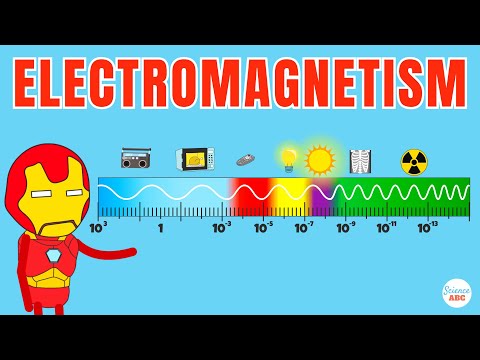
So, picture this: you’re at a party, and someone starts talking about how electric fields can bend light. You’re probably thinking, “What?! How does that even work?” Well, grab your drink because we’re diving into something super cool—Griffiths Electromagnetism.
This isn’t just a textbook; it’s like the secret sauce that makes modern physics tick. Seriously! Just the thought of all those tiny particles zipping around with electric and magnetic forces is kind of mind-blowing, right? You’ve got everything from lightning strikes to the latest tech gadgets hanging on this framework.
But here’s the deal: Griffiths makes it all feel less like a wild mystery and more like an engaging story. His approach turns complex ideas into something approachable. So basically, whether you’re a physics junkie or just casually curious, there’s something here for you. Let’s untangle this electrifying world together!
The Significance of Electromagnetism in Modern Society: Innovations and Applications in Science
Electromagnetism is one of those things that’s just everywhere in our lives. Seriously, every time you turn on a light, charge your phone, or hop on the internet, you’re using principles of electromagnetism. It’s kind of like the invisible glue holding together the gadgets and services we take for granted.
So, let’s break it down a bit. Electromagnetism is the force that affects charged particles. You know how magnets work? Well, they create magnetic fields which can influence other magnets or charged objects. This interplay between electricity and magnetism is what drives so many modern technologies.
You might have heard of Maxwell’s equations. These four equations describe how electric and magnetic fields interact with each other. They’re central to understanding electromagnetism and were even a huge influence on Albert Einstein when he developed his theory of relativity! If you want to get technical for a second, these equations show how changing electric fields produce magnetic fields and vice versa. Mind-blowing stuff!
Let me tell you about an everyday application: wireless communication. Every time you send a text or stream music, electromagnetic waves are carrying that information through the air. It’s not magic; it’s all those electromagnetic principles at work! For instance, radio waves (which are basically long-wavelength electromagnetic waves) allow us to listen to our favorite stations while driving or at home.
Now think about medical imaging technology. Electromagnetism shines here too! Take MRI machines for example; they use powerful magnetic fields and radio waves to create images of the inside of your body without any invasive procedures. Can you imagine how revolutionary this is? Just lying still while doctors get an in-depth look inside your body—no slicing involved!
Plus, don’t forget about energy generation. The electricity you’re using right now might be generated by electromagnetic induction—the same principle that drives those bicycle dynamos! Turbines in power plants rotate within magnetic fields to convert kinetic energy into electrical energy. So much science just powering your lights!
Of course, electromagnetism isn’t just about convenience; it’s also essential for scientific research. Particle accelerators like the Large Hadron Collider use strong magnets to steer particles at incredible speeds close to the speed of light! This is crucial for studying fundamental particles and unraveling mysteries about our universe.
But hey, let’s not sidestep some challenges either! With all this progress comes issues like managing electromagnetic interference (EMI). Devices can sometimes interfere with each other’s signals because of overlapping frequencies—think cell phones buzzing when you stand too close to certain speakers.
In summary, if you think about it, electromagnetism is literally woven into the fabric of modern society—from communication systems and medical technology to energy production and scientific exploration. It’s amazing how these principles can affect both our daily lives and our understanding of the universe as a whole!
Evaluating Griffiths Electrodynamics for Effective Self-Study in Physics
Getting into Griffiths Electrodynamics can feel a bit like jumping into the deep end, but don’t sweat it. The book is a staple among physics students and anyone who’s serious about understanding electromagnetism. It’s not just some dusty textbook; it’s like a treasure chest full of knowledge waiting for you to explore.
First off, the basics: Griffiths covers the foundations of electromagnetism really well, which is essential. We’re talking about electric fields, magnetic fields, and how they interact. If you don’t have a firm grasp on these concepts, you might struggle later on. Think of it as building blocks—if the bottom ones are shaky, what you build on top will topple over.
Here are some key points to consider when studying:
- Read Actively: Don’t just skim through the pages hoping things will stick. Engage with the material—underline key points or jot down notes in the margins. When I was studying, I found that explaining concepts to a friend (even an imaginary one!) helped me internalize them better.
- Tackle Problems Early: Griffiths includes tons of problems at the end of each chapter. Start working on them as you go along rather than waiting until you’ve finished reading everything. It’s kind of like seasoning food while cooking; it helps things blend better!
- Dive Into Derivations: The derivations in Griffiths teach you how to think like a physicist. Don’t shy away from them! Each equation has a story behind it that can deepen your understanding.
- Utilize Supplementary Resources: Sometimes you’ll hit a wall with certain concepts; that’s natural! Find online lectures or other textbooks that explain difficult topics in different ways.
You know what really helped me? Forming or joining study groups was a game changer! Talking through complex topics with peers can spark new insights and keep you motivated.
A vital aspect is consistency: Try setting aside specific times each day or week dedicated to studying electrodynamics. It’s easy to let life get in the way if you’re not disciplined about it.
If you’re feeling overwhelmed, remember that it’s okay to take breaks. Studying hard is important, but exhaustion won’t do your brain any favors when trying to grasp something as intricate as electromagnetism.
The challenges are real but consider this: every time you solve a problem or understand a concept better, it’s like leveling up in your personal video game of physics knowledge! So gear up and take your time with Griffiths Electrodynamics; it’s totally worth it in the long run!
Evaluating Griffiths Electrodynamics: A Graduate-Level Text in Physics
The study of electromagnetism is like learning a new language, and Griffiths’ Electrodynamics is one of the most popular textbooks for graduate students. You know, it’s not just a book; it’s almost a rite of passage for anyone who really wants to dive into the deep end of physics.
Griffiths presents electromagnetism in a way that feels engaging yet challenging. The book is structured clearly, making complex ideas more approachable, which is essential when you’re navigating through topics that can get pretty tricky. The math isn’t just thrown at you; it’s woven into the narrative, helping you see the connections between concepts.
One thing that stands out is how conceptual understanding is emphasized alongside mathematical rigor. For instance, Griffiths doesn’t just give you equations; he encourages you to visualize electric fields and magnetic forces. It’s about creating mental images rather than rote memorization.
Here are some key aspects of Griffiths’ text:
One thing I personally appreciate about this book is its problem sets. They strike a nice balance between challenging and accessible. Some problems make you scratch your head while others can boost your confidence. It feels good to tackle those tough questions!
I remember sitting at my kitchen table late one night with my friend while we worked through some problems together—it was frustrating at times, but also so rewarding when we finally solved them! Those moments really solidified our understanding.
Another aspect worth mentioning is the clarity of writing. Griffiths has this knack for explaining complicated concepts in plain English, which helps avoid getting lost in jargon or overly complex language. This makes it easier for students from various backgrounds to grasp important ideas without feeling overwhelmed.
So, overall, Griffiths’ Electrodynamics plays a crucial role in shaping how we understand modern physics today. It serves as both a learning tool and a reference that you’ll likely return to long after you’ve finished your studies.
In summary, if you’re looking for an approachable yet comprehensive guide into the world of electromagnetism and you’re willing to put in the work, Griffiths’ text can become your best friend in graduate school adventures!
Alright, so let’s chat about Griffiths’ Electromagnetism. Now, if you’ve ever had to get your head around how electric fields and magnetic fields play off each other, you know it can be a bit of a puzzle. I remember my first time trying to wrap my mind around Maxwell’s equations while holding Griffiths in one hand and a coffee in the other—the textbook just looked back at me, like, “Good luck, buddy!”
The thing is, Griffiths makes this complex world a lot more digestible. He doesn’t just throw equations at you and expect you to swim; he guides you through the thought processes. It’s kind of like having a patient friend explaining something tricky over coffee—so refreshing! And honestly? That approach has influenced tons of students who went on to shape modern physics.
Think about it: electromagnetic phenomena are everywhere. You can’t escape it—your phone relies on these principles! From the moment we flick the light switch to when we microwave our leftovers, electromagnetism is at play. It’s not just theoretical fluff; it’s real-world stuff that we live with every day.
Griffiths’ book isn’t merely a collection of formulas; it mirrors the beauty of nature itself. It captures how electricity moves and how magnets interact with materials—all evident in our daily life but hidden under loads of advanced math. This interconnectedness sparks curiosity and pushes researchers to explore further, maybe uncovering new aspects or technologies that could change our future.
Oh! And I should mention an emotional tale I once heard about a physicist who was super inspired by Griffiths’ work. He struggled in his early courses but found a mentor who guided him through Griffiths’ explanations. Eventually, he went on to contribute significantly to wireless technology—proof that sometimes all it takes is one good book (and maybe some great guidance) to spark innovation.
So yeah, if you’re diving into electromagnetism for the first time or revisiting it after years away and feeling lost, don’t fret too much! You’re part of a long tradition where many have grappled with its mysteries—and thanks to resources like Griffiths’ text, there are paths out there to understand this fascinating field better than ever before.