You know, when I was a kid, I thought telescopes were just for spying on my neighbors. Seriously! But as I got older, I realized there’s way more to them than that.
Imagine looking up at the stars and actually seeing what’s out there. Crazy, right? Well, thanks to some pretty cool advancements in electronic telescope technology, we can do just that!
These days, you don’t need to be a rocket scientist to explore the cosmos. You’ve got high-tech scopes that can pick up distant galaxies and even exoplanets—those are planets outside our solar system! Isn’t it wild how far we’ve come?
And it’s not just about the tech. There’s a whole movement around getting people involved in astronomy. They’re making it easier for regular folks—like you and me—to get our heads in the stars. So let’s chat about what’s new and how we’re all part of this stellar journey!
Revolutionary Advances in Telescope Technology: Enhancing Astronomical Performance Through Innovation
Revolutionary advances in telescope technology have completely changed the way we look at the universe. Honestly, it’s pretty mind-blowing to think about how far we’ve come since Galileo first pointed his telescope at the stars. Now, we’ve got some seriously high-tech gadgets out there that allow us to peel back layers of the cosmos like never before.
First off, let’s talk about **optics**. The lenses and mirrors used in telescopes are getting sharper and more efficient all the time. Modern telescopes use advanced glass that minimizes distortions and allows for clearer images. This means when you look up at planets or distant galaxies, you’re not just seeing blurs; you’re looking at stunning details. Isn’t that wild?
Then there’s **adaptive optics**, which is like giving telescopes a pair of fancy glasses. The atmosphere can really mess with stargazing by making everything appear wobbly and blurry. With adaptive optics, telescopes can compensate for these disturbances by adjusting their mirrors in real time. So when you’re watching a supernova explosion light up light-years away, you’re seeing it in its full glory!
Another big thing is **digital imaging**. Old-school telescopes would use photographic plates to capture images of celestial objects; now we have CCDs (charge-coupled devices) that are incredibly sensitive and can take pictures faster than you can blink! These sensors turn light into digital signals, giving astronomers a chance to analyze data that was just impossible before.
Then there’s the rise of **remote observing** technologies! Picture this: instead of flying off to a mountaintop observatory, you can control powerful telescopes from your own couch through the internet! It opens up so many doors for collaboration among scientists around the world. You could be sitting in your living room while someone else on another continent is adjusting settings on equipment just for you.
The software side of things has also leaped forward, enhancing our ability to process vast amounts of data quickly. With machine learning and artificial intelligence, we’re improving how we analyze images or even searching for new planets among millions of stars by looking for specific patterns or anomalies.
Sure, all these advancements are exciting for astronomers, but they also have an impact on everyone interested in space—hey, that’s you possibly! Public outreach programs using these technologies are popping up everywhere. Ever been to a science night where they set up big telescopes? Well now they can show live feeds from remote observatories too! It makes learning about space interactive and thrilling.
In summary, innovations in telescope tech aren’t just about making better tools; they’re changing how we engage with our universe on both scientific levels and public interest too! So next time you’re gazing at the night sky—remember there’s a lot more happening out there than meets the eye! And isn’t it amazing to think about what might come next?
Key Scientific Advancements That Led to the Invention of the Telescope
Sure, let’s chat about the key scientific advancements that paved the way for the telescope.
First off, we gotta travel back in time. The **concept of magnification** starts with simple lenses around as early as the 1st century AD. Ancient Romans were using polished crystals to help people see better. Can you imagine how exciting it must have been to see things up close for the first time? But that’s just the beginning.
Then came the **Middle Ages**. This period didn’t see much scientific progress in Europe, but in the Islamic world, they really kept things moving forward. Scholars like Alhazen made significant contributions to optics. He was one of those guys who said light travels in straight lines and explained how lenses could bend light—super important stuff!
When we hit the late 13th century, another big step was taken with **the development of concave and convex lenses**. Basically, they figured out that by combining these types of lenses, you could create stronger magnifications! Imagine trying to read a book from across a room—those big letters would be a game changer!
Fast forward to the 17th century when we meet **Galileo Galilei**. He took those earlier ideas and built one of the first real telescopes in 1609. His version used glass lenses and allowed him to discover four moons of Jupiter! Like, can you believe? That must’ve blown his mind!
But it wasn’t just Galileo; others jumped on this bandwagon too. Around that same time, there was **Johannes Kepler**, who had his own ideas about telescope design. He proposed using two convex lenses instead of a concave one at the eyepiece—which improved image quality significantly.
Then came **Isaac Newton** in 1668. He wasn’t only busy inventing calculus but also developed the reflective telescope using mirrors instead of lenses! Mirrors don’t distort colors as much, so this advancement made telescopes even better for stargazing.
In short:
- Concept of Magnification: Early examples with simple lenses by Romans.
- Middle Ages Innovations: Alhazen’s foundational work on optics.
- Lens Development: Concave and convex lens improvements around late 13th century.
- Galileo’s Telescope: First functional telescope allowing significant discoveries.
- Kepler’s Design: Improved image quality with double convex lens system.
- Newton’s Reflective Telescope: Use of mirrors enhanced color accuracy and clarity.
These advancements set the stage for modern telescopes and opened our eyes (literally!) to exploring space. It’s like each step built upon what came before it, creating this amazing tool that has transformed our understanding of the universe.
So next time you look through a telescope or even at photos from space telescopes today—think about all those brilliant minds throughout history who played a part in making it possible! Cool stuff, huh?
Exploring the Cosmos: The Impact of Advanced Telescope Technology on Our Understanding of the Universe
So, let’s talk about the cosmos! It’s like, this huge, mind-blowing place filled with stars, galaxies, and all sorts of cool stuff. And you know what’s been a real game changer for our understanding? Advanced telescope technology. Seriously, it’s like giving humanity a superpower to peek into the universe’s secrets.
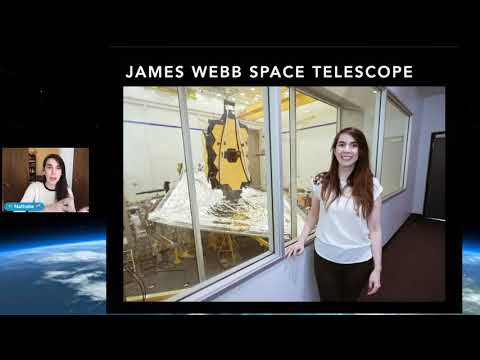
First off, these new telescopes can see way better than the old-school ones. I mean, can you imagine trying to spot a distant star with just your eyes? It’s like trying to find a needle in a haystack. But now? Telescopes like the James Webb Space Telescope (JWST) are letting us see things in ways we never thought possible. This thing uses infrared light to look at cool cosmic phenomena. It’s kind of like putting on night vision goggles.
And here’s where it gets really exciting: with these advanced instruments, we can explore things that were previously hidden from view, like exoplanets. These are planets outside our solar system. The JWST can actually analyze the atmospheres of some of these distant worlds! It’s wild thinking about how we might one day find life out there.
You may be wondering how this affects us here on Earth. Well, put simply: it inspires curiosity! When people see images from telescopes, it stirs up interest in science and space exploration. I remember feeling totally awestruck when I first saw those stunning images from Hubble; they ignited my passion for learning more about the universe.
- Crowdsourcing Science: You’d be surprised by how many people get involved in analyzing data from these telescopes through citizen science projects. It’s like everyone gets to play detectives of the cosmos!
- The Role of Outreach: Organizations often run events or educational programs around new findings from telescopes. Just think of those school field trips where kids get excited about what lies beyond our planet; that’s outreach making an impact!
- The Art Side: The images produced aren’t just scientific; they’re beautiful pieces of art! This blends science and creativity together in ways that captivate and inspire.
The advancements don’t stop with just better images or clearer views; they also allow us to observe phenomena in real-time. Like when a supernova explodes millions of light-years away—thanks to modern telescopes, we can catch that spectacular event almost live!
This constant evolution in telescope technology not only helps answer profound questions but also raises new ones. For instance: What else is out there? How did everything start? These inquiries engage our imagination as much as our intellect.
But here’s the kicker: all this tech doesn’t come cheap! Building and maintaining such advanced instruments takes big bucks and teamwork across countries and institutions—like one big cosmic family working together for knowledge.
You know what? The universe is pretty vast and mysterious. But with advanced telescope technology lighting up parts of it we’ve never seen before, it’s like we’re piecing together a gigantic cosmic puzzle one discovery at a time.
You know, when I think about telescopes, I can’t help but remember the first time I looked through one. It was at a friend’s house, and we were huddled outside on a chilly night, staring at the moon. I was blown away by how close it felt! All those craters and shadows – it was like peeking into another world. Fast forward to today, and wow! The advancements in electronic telescope tech are seriously mind-blowing.
So, what’s the deal with these advancements? Well, modern telescopes are now equipped with fancy sensors and software that let you capture images of distant galaxies and nebulas in full color, like you’re taking a selfie with them! And get this: some telescopes can even track moving objects in real-time. That’s right; no more struggling to find that twinkling star with your eyes crossed. It’s like having a superpower!
But it’s not just about seeing faraway stuff; electronic telescopes are also changing how we share all this knowledge. With online platforms and social media, astronomers can livestream discoveries to an audience of passionate stargazers around the world. Imagine tuning in to watch a supernova go off like it’s on Netflix or something! This outreach is not only making science more exciting but also bringing communities together.
And then there’s citizen science. People like you and me can get involved too! Some projects let us help classify galaxies or monitor asteroid movements right from our living rooms. It makes astronomy feel more accessible—like you’re actually part of something big. Seriously, that sense of connection is pretty awesome.
Of course, there are challenges too. Not everyone has access to the latest tech or internet connectivity. And sometimes it feels overwhelming when you see all those complex charts and data coming your way—like trying to read an alien language! But that’s where outreach becomes crucial—you know? By simplifying things and sharing enthusiasm for outer space with everyone, we keep curiosity alive.
When you think about it, these advancements in telescope technology aren’t just about bigger lenses; they’re about opening doors for everyone to explore the universe together. And honestly? That really fires me up! Who knows what we’ll discover next while looking up at that endless sky? So let’s keep watching and learning together because there’s so much more out there waiting for us!