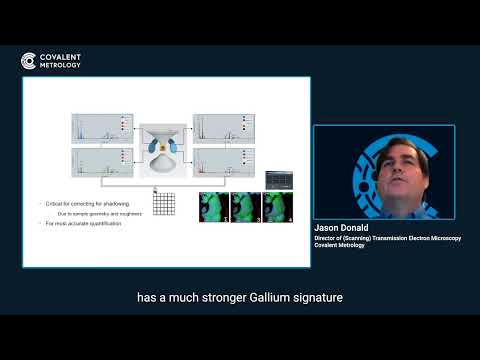
You know, it’s kind of funny how we often think of science as all lab coats and serious faces. But let me tell you, sometimes it’s just a bunch of really cool gadgets that make scientists go “Whoa!”
Take Energy Dispersive Spectrometry, or EDS for short. Sounds fancy, huh? Well, it’s basically like having super-special glasses that can see the hidden elements in stuff. Imagine being able to peek into a rock and see what it’s made of—like it’s revealing its secrets!
I remember the first time I saw an EDS setup. The colors, the sounds—it felt like I was in a sci-fi movie! And honestly, the way EDS helps researchers shine light on so many fields is pretty mind-blowing. From materials science to geology and even art conservation—it’s all about understanding what makes things tick.
So stick around, because this little tool packs quite the punch in modern research!
Evaluating the Impact of EDX Technology: A Scientific Perspective on Its Destructive Potential
Energy Dispersive X-ray Spectroscopy, or EDX, is a technique used in science to find out what elements are present in a sample. It sounds super complex, but it’s a really nifty method that helps researchers understand materials at a microscopic level. You might be wondering about its destructive potential. Well, let’s unpack that.
First off, EDX works by bombarding a sample with high-energy electrons. These electrons knock out inner shell electrons from atoms in the sample. When those outer shell electrons drop down to fill the holes left behind, they release energy in the form of X-rays. Those X-rays are what we analyze to figure out which elements are present!
So, concerning its destructive potential: EDX can be considered non-destructive for many applications because it allows analysis without ruining the sample. But there’s a catch! In some cases, depending on things like the energy levels of those incoming electrons and the nature of your sample, you could end up altering or damaging the material.
- Irradiation Damage: Prolonged exposure can lead to changes at the atomic level.
- Sensitivity: Some soft materials might show significant alterations after analysis.
- Aging: Historical artifacts can lose integrity if EDX is not carefully managed.
This leads me to a rather interesting anecdote. I once read about researchers who were analyzing ancient pottery using EDX. They were thrilled that they’d found traces of rare pigments! But soon enough, they realized that their method had altered some colors in the glaze due to excessive exposure to radiation from their equipment. A total bummer! They learned that even such high-tech methods needed careful handling and planning.
The thing is, while EDX technology provides invaluable insights into material composition—think everything from semiconductor development to studying archaeological finds—it comes with responsibilities too! The balance between gaining knowledge and preserving samples can be delicate.
Certainly, there are other analytical techniques available that might not have this potential for alteration. But when used wisely and with caution, EDX remains an essential tool for modern scientific research. It’s like having a powerful microscope: super beneficial but requiring care to avoid unintended fallout!
In sum, while evaluating EDX’s impact on sample integrity highlights its practical advantages and risks, it reminds us how important it is to handle powerful tools responsibly in our quest for knowledge!
Exploring the Limitations of Scanning Electron Microscopy Energy Dispersive Spectroscopy (SEM EDS) in Scientific Research
Scanning Electron Microscopy Energy Dispersive Spectroscopy, or SEM EDS for short, is a fascinating tool in scientific research. But, like anything worthwhile, it has its limitations. You know how sometimes a really cool gadget doesn’t work quite as well as you’d hoped? That’s kinda how SEM EDS operates.
To start with, resolution is a big deal. While SEM can give you stunning images of surfaces, the energy dispersive spectroscopy part might not always capture elements at low concentrations accurately. It’s like trying to hear someone whisper in a loud room—sometimes you just miss the details.
Then there’s the issue of sample preparation. Depending on what you’re looking at—a metal surface versus some biological material—the preparation methods can change drastically. Some samples need to be coated with a conductive layer to prevent charging under the electron beam. Imagine getting ready for a party but only being able to wear one outfit; that’s kinda what happens here!
Also, let’s talk about overlapping peaks. When two or more elements have similar energy levels in their X-ray emissions, they can make it tough to tell them apart—like two friends who always wear the same shirt. It becomes harder to pinpoint exactly what you’re looking at when those peaks overlap.
You can’t forget about depth of analysis, either. The method generally looks at very thin layers of material—like peeling an onion, where each layer reveals something new but also makes it tricky to see everything underneath. If you want information from deeper layers, you’ll need other techniques in conjunction.
Some other things that come into play include
In practice, researchers often combine SEM EDS with other methods like X-ray diffraction (XRD) or atomic force microscopy (AFM) to cover each other’s weaknesses. So even though SEM EDS is super useful—giving us insights into materials at the micro-scale—it’s essential for scientists to remember its quirks and embrace a multifaceted approach.
In short, using SEM EDS in scientific research means navigating some tricky waters! You’ve got awesome capabilities at your fingertips, but there are some hurdles you gotta jump over too!
Exploring the Limitations of EDX in Scientific Analysis: Key Insights and Challenges
Alright, let’s chat about Energy Dispersive X-ray Spectrometry (EDX or EDS, you might see it called both ways). This technique is kind of like a super detective for materials, helping scientists figure out what stuff is made of. However, it’s got its quirks and limitations. Here’s what you should know.
Resolution Limits
First off, one big challenge with EDX is its spatial resolution. You see, EDX operates at the micron scale. This means that if you’re dealing with really tiny features—like those less than a micron—EDX may struggle to give accurate readings. Imagine trying to read tiny text from far away; it just doesn’t work too well, right?
Detection Limits
Next up are the detection limits. EDX can be pretty good at identifying elements in a sample but has trouble with light elements. Elements like lithium and beryllium? Yeah, they can be tricky. They often require special techniques or alternative methods to get reliable data because their X-ray signals are weak compared to heavier elements.
Quantitative Analysis Challenges
Now, let’s talk numbers. While EDX can provide qualitative information (like what elements are there), getting precise quantitative results can be tough. You really have to know your sample and apply correction factors to account for things like absorption and fluorescence. Without that info? Your results could be all over the place.
Sample Preparation Issues
Sample prep is another area where things can get dicey. If your sample isn’t prepared correctly—like being too rough or having contaminants—your EDX results might not reflect reality. It’s sort of like trying to bake a cake without measuring the ingredients properly; the final product is probably not gonna taste great.
Poor Spatial Distribution Data
And then there’s the challenge of spatial distribution data. EDX gives you a bulk average across the analyzed area but doesn’t excel at mapping how elements are distributed within that area. If you’re looking for something specific or need detailed maps of element locations? Well, good luck with that!
Anecdote Time!
Once during my lab days, we were examining a new alloy for aerospace applications using EDX. The goal was to detect trace amounts of an element essential for strength but within those pesky light element borders I mentioned earlier! After hours of analysis—and some head-scratching moments—we ended up confirming its presence through another method instead. It was such a bummer wasting time on something so simple yet complex!
So yeah, while Energy Dispersive X-ray Spectrometry is seriously cool and useful in materials science and beyond, it does have limitations that we need to keep in mind. Understanding these challenges helps researchers choose when and how to use this technique effectively.
In summary:
- Spatial Resolution: Limited for tiny features.
- Detection Limits: Struggles with light elements.
- Quantitative Analysis: Requires correction factors.
- Sample Preparation: Must be done carefully.
- Poor Spatial Data: Average readings without detailed maps.
So there you have it! A little rundown on EDX limitations in scientific analysis. Hope this helps clarify some things!
Okay, so let’s chat a bit about Energy Dispersive Spectrometry, or EDS for short. It’s one of those tools that helps scientists dig deeper into the materials they’re studying. You know how sometimes you wonder what’s really inside that cool-looking rock or maybe that weird metal from an old gadget? Well, EDS can help answer those questions!
The basic idea is pretty neat. EDS uses X-rays to figure out what elements are in a sample. When you hit a material with high-energy electrons, it spits out X-rays specific to the elements present. By measuring these X-rays, scientists can create a sort of fingerprint for the materials they’re analyzing. It’s like being a detective but for atoms—how cool is that?
I remember a time when I was visiting a lab during college and saw this amazing work being done with EDS. The researcher pulled out this tiny speck of something from an ancient artifact. It looked ordinary but was actually packed with history! They used EDS to reveal trace elements that told stories about where the material came from and how it was made. I watched their eyes light up as they pieced together clues—it felt like I was watching history come alive!
But here’s the thing: while EDS is powerful, it’s not perfect. It has some limitations in terms of sensitivity and the types of samples that can be analyzed effectively. You can’t just throw any old piece of material in there and expect magic to happen—there’s some science behind figuring out what will work best.
In today’s world, where everything seems to move at lightning speed, tools like EDS are crucial for advancing research across various fields—from geology and archaeology to materials science and nanotechnology. They help us understand everything from ancient artworks to cutting-edge electronics by revealing details we wouldn’t otherwise see.
So yeah, while it might seem super technical at first glance, the heart of Energy Dispersive Spectrometry is about curiosity and discovery—qualities we all share! And remembering how that researcher lit up when their findings connected pieces of our past? That’s really what scientific research is all about—uncovering stories hidden in plain sight!