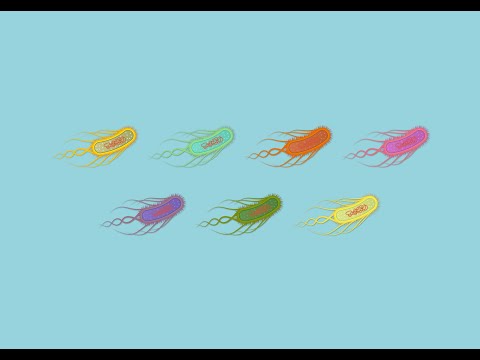
So, let me tell you about E. coli. You know that time you had that delicious burger, and then you were worrying it was undercooked? Well, that’s E. coli for ya. It’s like this tiny little bacteria that’s gotten a bad rap over the years.
But here’s the thing. E. coli isn’t just a villain in food safety horror stories; it’s actually a superstar in the world of science! Yeah, seriously! This little guy is everywhere—on your hands, in the soil, even floating around in your gut, helping with digestion.
What’s wild is how scientists keep diving deeper into understanding its different strains. Some are harmless, while others can cause major health problems. So let’s break it down together! This journey through the taxonomy of E. coli might surprise you—it’s like a whole bizarre family reunion in the microscopic world! Ready to unpack this?
Exploring the Taxonomy of Escherichia coli: Insights and Advances in Modern Science (PDF)
Escherichia coli, or E. coli for short, is a fascinating little bacterium that lives in our intestines. Most strains of E. coli are harmless, but some can cause serious foodborne illness. So, what’s the deal with its taxonomy? Let’s break it down!
First off, taxonomy is basically how scientists categorize living things. It’s like organizing your closet but for all organisms! E. coli belongs to the Enterobacteriaceae family within the order Enterobacterales. This family includes other well-known bacteria like Salmonella and Klebsiella.
Now, here’s where it gets interesting: there are many different strains of E. coli. Some are beneficial—like those helping in digestion—and others can be downright nasty and responsible for infections or food poisoning, you know? The most famous harmful strain is E. coli O157:H7, which has made headlines for causing outbreaks.
You might be surprised to learn that genetic analysis has really changed our understanding of these bacteria! Basically, modern science uses techniques like whole-genome sequencing to look at the DNA of different E. coli strains carefully. This way, researchers can pinpoint exactly how similar or different they are from each other.
Also, scientists divide E. coli into groups based on their characteristics and behavior—like how they react to certain antibiotics or what kind of diseases they cause. Some classifications include:
- Pathogenic: These strains can cause disease.
- Non-pathogenic: Most strains in your gut fall into this category.
- Commensal: These live peacefully with us without causing harm.
When you look closely at their classification system, it reveals not just how they interact with humans but also their evolutionary history! Isn’t that pretty neat?
If you think about it, knowing more about these bacteria helps us develop better treatments and strategies to prevent infections—especially in food safety! With issues like antibiotic resistance on the rise, understanding taxonomy helps scientists keep one step ahead when devising new approaches.
A friend once told me about a time he spent an entire week sick after eating undercooked food at a local BBQ joint. He learned about E. coli the hard way! It made him realize just how crucial it is to study these tiny organisms—not just for science’s sake but for real-world implications too.
In short, the taxonomy of Escherichia coli is an evolving field that reflects advances in modern science and our growing understanding of bacteria’s role in health and disease—trust me; this stuff matters! Scientists keep digging deeper into their genetics and relationships while helping us stay safe from those tricky pathogens lurking around us everyday.
Understanding the Scientific Name of E. coli: Insights into Microbiology and Pathogenicity
Alright, let’s talk about *Escherichia coli*, often just called *E. coli*. This little guy is a type of bacteria that lives in your intestines. Most strains are harmless, but some can really mess with you. Seriously, understanding its name gives us a peek into the world of microbiology and the science that keeps everything in check.
The name *Escherichia coli* has a cool backstory. It’s named after Theodor Escherich, the German scientist who discovered it in 1885. He was studying the delicate balance of bacteria in our guts, which are crucial for digesting food. The “coli” part comes from *colon*, indicating where it’s typically found—your large intestine.
Now, let’s break down the classification of *E. coli*. In biological taxonomy, organisms are grouped based on their shared characteristics and evolutionary history. Here’s how it goes:
- Domain: Bacteria – This is the broadest group, meaning these organisms are single-celled and lack a nucleus.
- Kingdom: Eubacteria – This includes all true bacteria.
- Phylum: Proteobacteria – A large group with many different types that can be found almost anywhere.
- Class: Gammaproteobacteria – They’re known for being diverse and include many pathogens.
- Order: Enterobacterales – These are mainly enteric bacteria, meaning they live in guts.
- Family: Enterobacteriaceae – This family not only includes *E. coli* but also *Salmonella*, *Shigella*, and others that can cause illness.
- Genus: Escherichia – Named after Escherich himself!
- Species: coli – This is the specific strain we’re discussing.
You see how specific it gets? Each level narrows down what it is and where it fits in the grand scheme of life on Earth. And here’s where it gets real interesting: while most strains of *E. coli* help you out by producing vitamins and keeping bad bacteria at bay, some strains—like O157:H7—can lead to severe food poisoning! Yikes!
The pathogenicity—or ability to cause disease—of certain strains lies in their genetic make-up. Pathogenic strains have specific genes that allow them to attach to your gut lining or produce toxins that make you sick. It’s kind of like they’ve got their secret weapons! So when you hear about an outbreak linked to contaminated food or water, chances are it’s one of those nasty strains doing its thing.
A fun little anecdote? When I first learned about *E. coli* in school, I remember being grossed out thinking about all those tiny bugs hanging out in my intestines! But then I learned how essential they are for digestion—and suddenly I felt a lot better knowing they were there working hard for me!
The bottom line is this: understanding the scientific name of *Escherichia coli* is like mapping its journey through taxonomy—it shows us how interconnected life is and reminds us that even tiny creatures can have a huge impact on our health. So next time you hear about this bacterium, think about all those layers behind its name—it tells quite the story!
Comprehensive Guide to E. coli Classification: Understanding Strains and Their Implications in Microbiology
Sure! Let’s chat about E. coli classification and why it matters in microbiology. You probably know E. coli as that sometimes troublesome bacteria, but there’s so much more to it than that.
First off, **Escherichia coli** (that’s the full name) is a type of bacteria that lives in the intestines of humans and animals. It’s actually quite important for our digestion. However, the thing is, not all E. coli strains are created equal.
Let’s break down some points about its classification:
- Taxonomy Basics: E. coli belongs to the family Enterobacteriaceae, which includes lots of other bacteria you might find in our guts or environments.
- Different Strains: There are hundreds of different strains of E. coli, and while most are harmless, some can make you really sick.
- Pathogenic Strains: The harmful ones fall into various categories. For example:
- Enterotoxigenic E. coli (ETEC): This strain causes traveler’s diarrhea.
- Enterohemorrhagic E. coli (EHEC): This one can cause severe foodborne illness and is often linked to undercooked beef.
- Enteroinvasive E. coli (EIEC): Similar to Shigella, this strain invades intestinal cells and causes dysentery-like symptoms.
An interesting tidbit: I once read about a person who got sick after eating an undercooked burger at a backyard barbecue; it turned out they had been infected by an EHEC strain! It just shows how crucial it is to be aware of which strains are around.
So, what happens during classification? Well, scientists use different methods like genetic sequencing to figure out which strain of E. coli they’re dealing with. This helps them understand how dangerous it might be and how to deal with it effectively.
And let’s not forget about **serotyping**—this process helps identify specific antigens on the surface of the bacteria. These antigens can change based on the strain, helping folks in labs pinpoint which one they’re looking at.
In microbiology, understanding these classifications plays such a huge part! It influences how we treat infections and even shapes public health policies related to food safety—like why we have those beef cooking guidelines!
And here’s something cool: Studying these bacteria also gives us insights into antibiotic resistance, a big issue nowadays! Some strains adapt and become superbugs that don’t respond well to treatment.
In summary, understanding **E. coli** classification isn’t just for lab geeks; it’s vital for keeping everyone safe from foodborne illnesses and improving our overall health strategies against bacterial infections! So next time you hear someone mention E. coli, you’ll know there’s a whole world behind that little name!
You know, every time I think about bacteria, I can’t help but imagine those tiny creatures just hanging out. It’s easy to forget how complex and diverse they really are. Like, take Escherichia coli, or E. coli as most of us call it. This little guy is way more than just a pesky bug that can cause food poisoning! Seriously, it has a whole taxonomy—like a family tree that explains what kind of bacteria it is and where it fits in the big picture.
E. coli belongs to the Enterobacteriaceae family, which is pretty impressive because this family includes other notorious members too—think Salmonella and Shigella. Can you believe that within E. coli itself, there are different strains? Some are harmless and even live in our guts helping with digestion. But then there are those sneaky pathogenic strains that can make us sick. It’s kind of like having cousins who are all different: some are totally chill while others might get you into trouble!
When scientists explore the taxonomy of E. coli, they’re not just playing around with fancy names; they’re actually trying to understand how these bacteria behave and interact within ecosystems—both in nature and in our bodies! This exploration helps pinpoint potential health risks or even uncover new antibiotics. And hey, it’s happening right now! Just the other day I was reading about how researchers were using advanced technologies like whole-genome sequencing to identify bacterial strains more precisely than ever before.
I remember my very first biology class when we talked about the importance of understanding microorganisms—the excitement was palpable! A lot of students were curious but also scared because “bacteria” seemed terrifying at the time. But once you peel back those layers, you see this amazing world thriving around us that plays an essential role in everything from our health to environmental balance.
So yeah, diving into the taxonomy of E. coli not only showcases the complexity of life at the microscopic level but also reminds us how interconnected everything really is! It makes me think about all those little critters hanging out in our gut doing their thing every single day while we go about ours—pretty wild when you think about it!