You know, the other day I was trying to remember my best friend’s birthday. Seriously, it almost gave me a panic attack. It got me thinking about how our DNA carries so much information about us—way more than just when we were born!
Now, imagine diving deep into that DNA and discovering secrets hidden within. It’s wild, right? Well, that’s where advancements in DNA sequencing come in. Think of it as peeking into a treasure chest full of your genetic info!
With companies like Eurofins shaking up the game, we’re talking about some seriously cool tech that can read our genetic code faster and cheaper than ever before. This stuff isn’t just for scientists in lab coats anymore—it’s more accessible and relevant to us regular folks!
So grab a snack and let’s chat about how these advancements are changing the way we understand who we are.
Exploring the Latest Advancements in DNA Sequencing: Innovations Shaping the Future of Genomics
So, let’s chat about the latest advancements in DNA sequencing. It’s honestly amazing how fast things are changing in the world of genomics. You see, just a few years ago, sequencing DNA was a complicated and expensive process. Now? Well, it’s becoming more accessible and efficient every day.
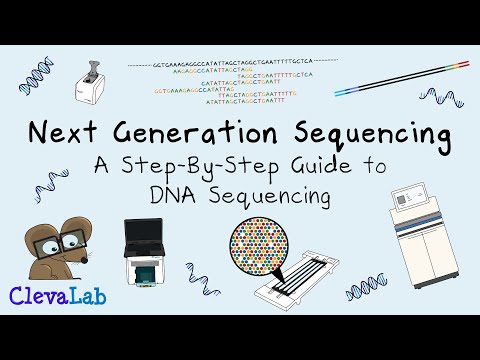
Next-Generation Sequencing (NGS) has really been a game changer. This technology allows scientists to sequence millions of DNA strands simultaneously. Imagine trying to read a really long book—now picture having an entire library opened up at once! That’s what NGS does for DNA. It speeds things up and lowers costs significantly.
One compelling advancement includes what’s called single-cell sequencing. This lets researchers look at the genetic material inside individual cells rather than averaging data from a bunch of cells together. Why is this important? Well, think about it: our bodies are made up of trillions of cells, each doing its own thing. Understanding individual cell behavior can lead to breakthroughs in personalized medicine and cancer research.
Another interesting tech is long-read sequencing. Traditional methods sometimes struggle with complex regions of DNA that are hard to read in shorter fragments. Long-read sequencers fix this by capturing longer segments at once, making it easier to piece together the complete picture of our genomes. You can imagine this like putting together a jigsaw puzzle; longer pieces make it simpler to see how everything fits.
Now let’s talk about real-time sequencing. This nifty approach allows researchers to obtain data while they’re actually processing the sample! So, instead of waiting weeks for results, you can get insights almost instantly. This can be super beneficial during disease outbreaks or when diagnosing patients quickly—time is often critical!
A.I. is also stepping into the realm of genomics by helping analyze vast amounts of sequencing data. Machines can detect patterns much faster than humans ever could. With A.I., we’re not just looking at genetic sequences; we’re understanding their implications on health and disease with new depth.
All these innovations aren’t just cool tech—they promise real-world impacts too! For instance, improved genetic testing can help families understand hereditary conditions better or help farmers develop crops that are more resilient to climate change.
So yeah, advancements in DNA sequencing are shaping not just science but everyday life as well! You know it’s exciting when you realize that we’re still at the beginning stages of what this all means for medicine, agriculture, and beyond! Just imagine where we’ll be in another decade!
Exploring Advanced DNA Sequencing Techniques: Innovations and Applications in Genomic Science
Let me tell you about the fascinating world of **advanced DNA sequencing techniques**. It’s like looking at the instruction manual for life itself, and there’s so much to unpack! You see, DNA sequencing is all about figuring out the order of nucleotides in a strand of DNA. Think of these nucleotides as the letters in a long book. The order matters because it tells our bodies how to function.
One major innovation in this field is **next-generation sequencing (NGS)**. NGS has made waves by allowing scientists to read millions of strands of DNA simultaneously, which is just incredible! Basically, it’s like having a super-fast photocopier that can handle loads of pages at once instead of one at a time. This technology has helped researchers tackle complex questions in genomics, like understanding diseases better.
And then there’s **single-cell sequencing**. Imagine pulling apart each tiny cell and reading its unique DNA all on its own. This technique reveals how individual cells might behave differently even if they’re part of the same tissue. It’s kind of like discovering that two twins have very different preferences despite their similar looks!
Another exciting development is **long-read sequencing** technology, which allows scientists to read longer stretches of DNA without interruption. It helps with identifying larger genetic variations more easily compared to traditional methods that tend to get tangled up with short sequences.
These advanced techniques have applications that extend far beyond just curiosity or research papers. For example, they play a crucial role in personalized medicine where doctors can tailor treatments based on an individual’s genetic makeup. If you think about it, knowing someone’s specific genetic information could help predict how they’ll respond to certain medications.
Moreover, these technologies also find their way into agriculture and environmental science. They assist scientists in creating crops with better yields or resilience against pests, contributing to food security as populations grow.
And let’s not forget about their role in understanding infectious diseases—like tracking the mutations that allow a virus to spread. Knowing exactly what mutations are occurring helps health officials respond more effectively.
In summary:
- Next-generation sequencing (NGS): Allows for high-throughput analysis.
- Single-cell sequencing: Reveals cellular diversity.
- Long-read sequencing: Reads longer fragments for better accuracy.
- Application across fields: From medicine and agriculture to tracking disease outbreaks.
When you consider all these innovations together, it’s clear how much we’re learning about our lives at a molecular level! Each advance opens new doors, allowing us to ask questions we never thought we could answer before. Isn’t it amazing how far science has come?
Exploring Eurofins Genomics Competitors in the Genomic Services Landscape
Exploring the genomic services landscape can be a bit like wandering through a massive forest with tons of different paths. There’s a whole bunch of companies out there, and Eurofins Genomics is just one of them. They’ve made some big strides in DNA sequencing tech, but they’ve got competitors doing impressive stuff too.
So let’s break it down.
1. Illumina is probably one of the biggest names in the game right now. They specialize in next-generation sequencing (NGS) and their platforms are known for being super efficient and reliable. Researchers around the world use their machines to decode genomes faster than ever before, which is crucial for everything from personal genomics to cancer research.
2. Thermo Fisher Scientific offers a range of genomic services as well, including sequencing and genotyping solutions. Their Ion Torrent technology has made waves by providing rapid sequencing capabilities at a relatively lower cost, which is pretty attractive to many labs looking for budget-friendly options.
3. BGI, based in China, is another player worth mentioning. They’re the ones behind some of the largest genomic projects globally and have developed their own sequencers that are both affordable and scalable. This means they can handle huge amounts of data without breaking a sweat—ideal for large studies.
Remember that time when you were trying to choose between vanilla or chocolate ice cream? Picking a genomic service provider can feel similar! Each company has its unique flavors, so to speak, when it comes to pricing, technology, and speed.
Then there are more niche players like Genomatix, who focus on bioinformatics solutions and analysis tools tailored specifically for genomics data interpretation and management. It’s not just about getting the sequence; understanding what to do with that data is crucial too!
4. Agilent Technologies also cannot go unmentioned here; they’re big in microarray technology but have been stepping into the NGS realm as well with robust solutions that support both targeted sequencing and whole-genome analyses.
Look, all this competition pushes innovation forward really fast! You’ll often see companies collaborating or sharing discoveries because science thrives on teamwork—even if they’re competitors at times.
Plus, with advancements happening constantly—like those new techniques in CRISPR gene editing—the landscape keeps changing rapidly. Being aware of these competitors helps you understand what options exist beyond Eurofins Genomics while considering costs, turnaround times, or specific technologies needed for a particular project.
In summary—there’s no shortage of choices out there when it comes to genomic services! Each player offers something different—from speed hurdles to price points—that could make or break your research project depending on what you need at any given moment!
So, let’s talk about DNA sequencing for a sec. I mean, DNA is like the blueprint of life, right? It’s in everything—from you and me to those adorable little puppies we can’t resist. And as science rolls on, the ways we can read and interpret this genetic code keep getting better and better.
I remember a while back when I had a biology class that focused on genetics. My mind was blown! The idea that tiny molecular structures could tell us about inherited traits blew my adolescent brain. Fast forward to now, and the advancements in DNA sequencing technologies are taking that whole concept to an entirely new level.
Now, Eurofins is one of those companies that has really pushed the envelope in this field. They’ve been working on improving techniques that make sequencing faster, cheaper, and way more accurate. Can you imagine how groundbreaking this is? With quicker data processing times, researchers can now analyze large genomic data sets without pulling their hair out over endless hours of waiting.
And speaking of accuracy, some of these new methods can identify genetic variations with incredible precision. That means when scientists are searching for mutations linked to diseases or trying to trace ancestry lines—yeah, it’s actually possible! It feels kind of magical thinking about it; you send your saliva off in a little tube and before you know it, they’re breaking down your biological history right before your eyes.
But here’s where it gets even cooler: with these advancements also comes an ethical responsibility. Who gets access to this information? How do we protect people’s privacy? It’s not just about getting results; it’s about understanding what those results mean for individuals and society as a whole.
You follow me? The way we sequence DNA now isn’t just a lab exercise—it’s turning into something that can shape health policies or provide insights into population genetics. The future feels tightly intertwined with our genetic understanding.
It really makes me think about how far we’ve come since the first human genome was sequenced back in the early 2000s. What will be next on this path? New treatments for genetic disorders? Personalized medicine tailored just for you based on your unique DNA makeup? Seriously exciting stuff!
So yeah, keeping up with these advancements isn’t just fascinating from a scientific standpoint—it becomes part of our everyday lives as well!