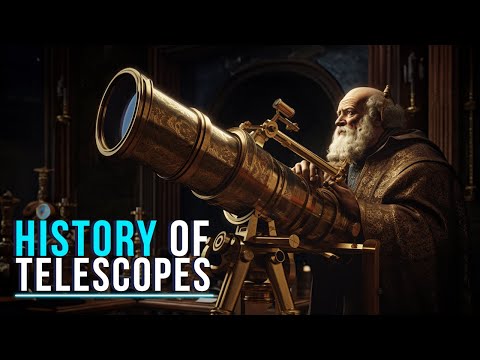
Okay, picture this: it’s the early 1600s. Imagine some curious folks in Europe looking up at the night sky and thinking, “There’s gotta be more to that big black thing than just twinkly dots!”
Then, bam! Along comes a dude named Galileo. He basically took a tube and some glass and changed the whole game. With his first telescope, he turned the night sky into an open book!
Suddenly, people were seeing moons orbiting Jupiter like they were part of a cosmic dance party. It was mind-blowing! Seriously, it made folks rethink everything about our place in the universe.
But hey, it wasn’t just about spotting celestial bodies; it opened doors to a ton of scientific discoveries. Buckle up because this is just the beginning of an epic story involving curiosity, drama, and some serious revolutions in science!
Exploring the Cosmos: Groundbreaking Discoveries of the First Telescope in Astronomy
The cosmos has always been a source of wonder for humans, right? Like, staring up at the stars, we’ve often asked ourselves questions about what’s out there. And then came this game-changer: the telescope. The first telescope in astronomy, invented in the early 17th century, opened the door to a brand-new view of the universe.
So, who gets the credit for this fascinating invention? Well, it was actually **Hans Lippershey**, a Dutch eyeglass maker who created the first known telescope around 1608. He didn’t realize at that moment just how much this would change our understanding of space.
When it comes to **groundbreaking discoveries**, one name stands out: **Galileo Galilei**. He wasn’t the inventor but he took that telescope and ran with it! In 1609, he improved on Lippershey’s design and pointed it towards the heavens. Can you imagine his excitement? Through his telescope, he discovered **Jupiter’s moons**—four of them! Suddenly, we weren’t just Earth-centric anymore; we saw that other celestial bodies could have their own satellites.
Now let’s talk about another major find: Saturn’s rings. Galileo noticed something strange about this planet; he couldn’t quite see its rings clearly due to limitations of his scope. He described Saturn as looking like a “triple planet.” But still! The fact that he observed something unusual stirred curiosity which later led to deeper investigations with better telescopes.
And you know what else is cool? Galileo also peered into our Moon’s craters and mountains! Before him, people imagined a perfect celestial sphere; however, he revealed our Moon was rough and scarred—just like Earth. This challenge to existing beliefs really shook things up!
Over time, telescopes became even more advanced. In the late 1600s came **Isaac Newton**, inventing the first reflecting telescope using mirrors instead of lenses. This made images clearer and opened up new possibilities for viewing distant objects without distortion from glass lenses.
Fast forward to today and we have these amazing observatories equipped with massive telescopes that can see light from billions of years ago! These modern devices explore everything from distant galaxies to exoplanets (that’s just fancy talk for planets outside our solar system).
To sum up:
- The first telescope changed everything by allowing humans to look beyond Earth.
- Galileo Galilei made significant discoveries like Jupiter’s moons and lunar features.
- Isaac Newton improved telescope design with mirrors.
- Modern telescopes continue exploring deep space.
So yeah, without that initial spark of curiosity and ingenuity back in the day with Lippershey’s scope, who knows how different our understanding of the cosmos would be now? That humble little device seriously set off a chain reaction leading us into an era where we can probe far beyond what anyone could have imagined!
Unveiling the Cosmos: The Pioneering Scientist Who First Utilized a Telescope in Astronomy
Unveiling the Cosmos has always been like a wild adventure, right? So, let’s chat about one of the coolest chapters in this cosmic journey. We’re talking about that moment when someone first pointed a telescope at the sky. Spoiler alert: it was Galileo Galilei, and he really rocked the scientific world!
Galileo was an Italian guy living in the 1600s. Picture him, sipping coffee in Florence, thinking about the stars. He heard about this new thing—a telescope! The story goes he got so excited that he made his own version. Imagine a long tube with some glass pieces. That’s pretty much what he did, and then he aimed it at the night sky.
Now, what’s truly mind-blowing is how much **Galileo discovered** with his telescope! Before him, people mostly relied on their naked eyes to look up. They thought everything revolved around Earth; you know, humankind at the center of it all—classic! But Galileo turned that idea upside down.
- He spotted **the moons of Jupiter**—four of them! Can you believe it? He named them after lovers of Zeus.
- He also observed **the phases of Venus**, kind of like how we see different shapes of the Moon.
- And let’s not forget **sunspots**! Yep, he noticed dark spots moving across the Sun’s surface.
These findings were huge game-changers! They challenged those old beliefs and boosted support for Copernicus’ heliocentric model—the idea that planets orbit around the Sun instead of Earth.
But here’s where it gets even juicier: Galileo faced serious backlash from some powerful cheeseheads (like religious figures) who didn’t want their comfy worldview shaken up. They called him out for his ideas and put him on trial for heresy! Seriously intense business there.
Yet through all this drama, his discoveries sparked an interest in science that rippled through time. It made folks want to look deeper into space and understand more about our universe.
So yeah, telescopes became essential tools for astronomers afterward—like keys to unlock secrets hidden in celestial realms. Thanks to Galileo’s curiosity and courage to challenge norms, we now have a treasure trove of knowledge about our cosmos.
In conclusion—or whatever you wanna call it—Galileo Galilei didn’t just invent a telescope; he opened up a whole new way for humanity to look at what’s beyond our little blue planet and ask questions that may never stop being asked.
The First Telescope: Pioneering Scientific Discoveries and Transforming Our Understanding of the Universe
So, let’s talk telescopes. When you think about it, they’re pretty amazing tools. The first telescope really kicked off a whole new way of looking at our universe. You might not expect it, but this invention wasn’t just about looking at the stars; it was like opening a door to new scientific discoveries.
The first known telescope was made in the early 1600s by a Dutch spectacle maker named Hans Lippershey. He crafted something that could magnify distant objects, which is pretty cool when you consider how that changed everything! Imagine for a moment standing on Earth and suddenly being able to see Jupiter’s moons or the rings of Saturn. That’s exactly what this little invention allowed.
Once word spread about the telescope, Galileo Galilei got his hands on one and took it to another level. He didn’t just point it at stars; he actually documented what he saw. He discovered four of Jupiter’s largest moons, now called the Galilean moons: Io, Europa, Ganymede, and Callisto. This was huge because it supported the idea that not everything orbits around Earth—something that challenged old beliefs.
The thing is, his observations didn’t just change astronomy; they also stirred up quite a bit of controversy! Galileo faced a lot of backlash from those who thought the Earth was at the center of everything. But his findings pushed science forward in ways people weren’t ready for. And that’s important—having your ideas challenged can lead to more discoveries!
Fast forward a bit and telescopes kept evolving. They went from simple lenses to complex instruments with multiple lenses and mirrors as scientists learned more about optics. For example, by the 17th century, people like Isaac Newton were experimenting with reflecting telescopes using mirrors instead of glass lenses to avoid distortions—talk about innovation!
These advancements meant we could look even deeper into space! Telescopes today can capture light across various wavelengths—like infrared and ultraviolet—that our eyes can’t see. This ability lets us explore everything from distant galaxies to nearby planets in ways Galileo couldn’t have imagined.
One remarkable example is the Hubble Space Telescope. Launched in 1990, it’s helped us understand things like dark matter and has given us breathtaking images of nebulae and other celestial bodies. Hubble proves how far we’ve come since those early designs!
But it’s not only about seeing faraway places; telescopes have also contributed significantly to our understanding of fundamental physics. For instance, through studying supernovae (which are massive explosions when stars die), astronomers have gathered evidence for dark energy—the stuff that’s causing our universe to expand faster than ever.
So yeah, when you look up at the night sky now—with all its beauty—you’re getting an experience shaped by centuries of discovery thanks to that first little telescope crafted by Lippershey. Isn’t it wild how one invention can ripple through time like this? It’s all part of humanity’s quest for knowledge—a journey fueled by curiosity and imagination!
Imagine being in the early 1600s. People are gazing up at the night sky, wondering about those twinkling lights, thinking they might be angels or gods. Now, picture a guy named Galileo Galilei who gets his hands on this new gadget called a telescope. It’s like when you finally get to try on those fancy glasses and suddenly see the world in high definition—everything changes.
So, telescopes were these pretty nifty tools invented around that time, giving us a broader view of the universe. The first versions were simple tubes that made distant objects appear closer. But it was Galileo who really kicked things into gear by turning one toward the heavens. He wasn’t just looking at stars—he discovered moons orbiting Jupiter! Just think about how mind-blowing that must have been! For centuries, folks believed everything revolved around Earth. Then here comes Galileo with his telescope saying, “Hey everyone, look! Those little lights have their own worlds!”
This moment was huge for science. Those discoveries challenged long-held beliefs and paved the way for modern astronomy and physics. I mean, can you imagine how exciting it must’ve felt to know that there’s so much more out there? Just like when you land on a new game level or open up an extra folder on your computer that holds secrets you never knew existed.
And not only did telescopes expand our understanding of space, but they also brought about this ripple effect in scientific inquiry. People started realizing that observation was key! If you could just look closely enough, maybe you could figure things out about nature and reality itself—how cool is that?
Galileo’s work didn’t come without its challenges; he faced backlash from people who didn’t want to let go of old ideas—like trying to convince your stubborn friend why pineapple belongs on pizza (but please don’t fight over that one!). The thing is though, he kept pushing forward because he believed in what he saw through that telescope.
Today we have massive observatories and fancy space telescopes peering into the farthest corners of our universe. But it all began with a simple idea: to look beyond what’s right in front of us. Let’s not forget how powerful curiosity can be and how one small tool changed everything we thought we knew about our place in the cosmos.