So, picture this: you’re lying on your couch after a long day, munching on some chips. Suddenly, you wonder why those pesky chips always seem to float away when you open the bag upside down. Well, that’s gravity for you! The invisible force keeping everything in check and, let’s be honest, making snacks a bit more of a challenge.
Now, gravitation’s not just about your snacks. It’s the force that keeps us glued to Earth and planets spinning in space. But it gets wild when you throw in Einstein’s General Relativity. Seriously, we’re talking about bending time and space like an artist with a canvas.
You might not realize it, but every time you look up at the stars or feel your weight at the grocery store checkout, you’re seeing gravitation in action. And trust me, it’s not as boring as it sounds! So grab your favorite drink and let’s jump into this cosmic dance of forces and theories together!
Exploring Gravitation and General Relativity: Foundations of Modern Physics
Alright, let’s chat about gravitation and general relativity! It’s a big topic, for sure, but we’ll break it down. You’ll see how intriguing and crucial these concepts are for understanding our universe.
First off, **gravitation** is the force that pulls objects toward each other. It’s what keeps us on the ground and makes things fall when you drop them. Imagine dropping your favorite snack—don’t you just hate it when that happens? But seriously, gravity is not just about falling fries; it governs the motion of planets, stars, galaxies, and even light!
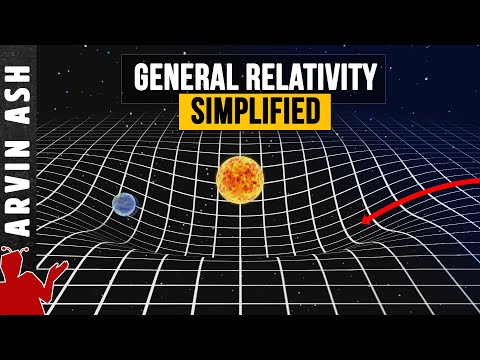
Now, let’s get into **general relativity**. This theory was introduced by Einstein in 1915 and is all about how gravity works in a deeper way. Basically, he suggested that mass doesn’t just pull objects towards it; instead, mass bends the very fabric of space and time around it. Can you picture a trampoline? If you place a heavy ball in the center, the fabric dips around it. If you then roll a smaller ball near this dip, it’ll spiral inward instead of rolling straight off. That’s kind of how planets orbit stars!
Here are some key points about general relativity:
- Space and Time Are Interconnected: Rather than separate entities, they form what’s called *spacetime*. When an object with mass moves or accelerates, it affects the shape of spacetime.
- Mass Causes Curvature: The more massive an object is (like Earth), the more it warps spacetime. That’s why planets revolve around stars—because they’re following paths through this warped spacetime.
- The Speed of Light: According to Einstein’s theory, nothing can travel faster than light in a vacuum (about 299,792 kilometers per second!). This limit plays a crucial role in how we understand everything from black holes to cosmic expansion.
- Time Dilation: This mind-bending phenomenon means time runs slower in strong gravitational fields compared to weaker ones. For instance, at sea level (where gravity is stronger), time ticks ever so slightly slower than say on top of Mount Everest!
And speaking of black holes—wow! These are regions where gravity is so strong that nothing can escape once it’s crossed what we call the event horizon. You could say they’re like cosmic vacuum cleaners!
To add some emotional context here: think back to when you first gazed up at the night sky as a kid. Those twinkling stars seem so far away yet so mesmerizing. Understanding gravitation and general relativity gives us tools to decode mysteries like why those stars twinkle or how galaxies formed after the Big Bang.
Now…
You might wonder why all this matters today. Well, without these theories helping us understand forces at play in our universe—from GPS satellites orbiting Earth to predicting solar eclipses—we’d be lost (literally). So next time you’re outside enjoying a clear night sky or even just using Google Maps to navigate home… thank gravitation and general relativity for making all that possible! Our universe is filled with wonders shaped by these foundational concepts—it’s pretty mind-blowing stuff when you sit down and think about it!
Exploring Weinberg’s Gravitation and Cosmology: Comprehensive PDF Resource for Theoretical Physics
You know, the universe is an incredible place filled with mysteries. One of the biggest puzzles in theoretical physics is understanding how gravity works on a cosmic scale. That’s where Weinberg’s work comes into play. Steven Weinberg was a brilliant physicist, and his contributions to gravitation and cosmology have influenced how we think about the universe.
General relativity, which was developed by Einstein, is the foundation of modern physics when it comes to gravity. It’s all about how mass can warp space and time, like putting a heavy ball on a trampoline. When you do this, the surface bends, creating a dip that other smaller balls will roll into. This analogy helps explain why planets orbit stars; they’re following paths in this warped spacetime.
Now, Weinberg took this idea further by exploring cosmology, which studies the universe’s origin and structure. He wrote extensively about the early universe and how things expanded after the Big Bang. Here are some key points:
- Quantum Field Theory: Weinberg integrated ideas from quantum mechanics with general relativity. This was vital because both theories describe different aspects of nature.
- The Electroweak Theory: He helped formulate this theory that unifies two fundamental forces: electricity and magnetism with weak atomic interactions.
- Cosmic Microwave Background: His work led to insights about this faint glow left over from the Big Bang, providing us clues about the universe’s infancy.
His books and papers offer extensive resources for anyone diving into these topics—seriously packed with information! You might find PDFs floating around that detail his theories and mathematical models.
What’s cool is that all his complex ideas can seem intimidating at first glance, but they’re not impossible to grasp! The way he approached gravitation was like trying to make sense of a giant puzzle piece by piece. It’s fascinating when you think about how everything we see—the stars twinkling at night or galaxies colliding—is tied back to those same fundamental principles.
So, whether you’re just curious or deep into theoretical physics, exploring Weinberg’s insights can be an adventure worth taking! You’ll find yourself thinking about every star in the sky just a bit differently after learning how gravity ties it all together with cosmology.
Understanding Einstein’s Theory of Gravity: Key Formulas and Implications in Modern Science
Einstein’s theory of gravity, which you might have heard of as general relativity, totally changed the way we view the universe. Before Einstein, people thought gravity was just a force pulling things together. Like, when you drop a ball, it falls because Earth is tugging on it. But Einstein took that idea and flipped it on its head. He said that gravity isn’t just about forces; it’s all about how massive objects warp space and time around them.
Imagine placing a heavy bowling ball on a rubber sheet. The sheet dips where the ball sits, right? Now, if you roll a marble nearby, it spirals toward the bowling ball because of that dip. That’s kind of what happens in space! Massive objects like planets and stars create curves in spacetime, making other objects “fall” toward them without any direct pull.
Key formulas relating to this theory include:
- E=mc²: This is probably one of the most famous equations ever. It tells us that energy (E) and mass (m) are interchangeable; they’re two sides of the same coin.
- G = 6.674 × 10⁻¹¹ N(m/kg)²: This is Newton’s gravitational constant but plays into Einstein’s equations indirectly by helping us understand gravitational forces in simple terms.
- Rμν – 1/2 gμν R + gμνΛ = 8πGTμν: This complex-looking equation is Einstein’s field equations for general relativity! It describes how matter and energy influence spacetime curvature.
Now let’s break down what these formulas mean for modern science.
First off, **E=mc²** shows up everywhere: in nuclear energy plants and even in understanding how stars shine. When stars fuse hydrogen into helium in their cores, they release an enormous amount of energy thanks to this equation!
Then we have behind-the-scenes stuff like gravitational waves. Yeah, that’s right! Two colliding black holes or neutron stars create ripples in spacetime that scientists can detect with devices like LIGO. This wasn’t even a concept before Einstein laid down his ideas.
The implications stretch far beyond just understanding gravity or black holes, though. Think about GPS satellites—they need to account for both special relativity (how time moves differently at high speeds) and general relativity (how gravity affects time). If they didn’t consider these factors? Your GPS would be off by kilometers!
Before I forget! There’s this story where astronauts on the International Space Station experience less gravity than we do here on Earth—about 90% less! They float around freely because they are essentially in free fall all the time while orbiting our planet. Isn’t that something?
Each discovery rooted in Einstein’s theory opens up new questions about space-time holes or dark matter and energy—things we’re still trying to put our heads around today.
In summary: Gravity isn’t just an invisible hand pulling things down; it’s a complex relationship between mass and spacetime itself—one that’s still redefining our understanding of physics day by day!
You know, when you think about the universe and all its wonders, it’s pretty mind-blowing to realize that gravity is one of the biggest players in this cosmic game. Like, have you ever just stared up at the night sky and wondered why the stars are where they are? Or why we don’t float off into space while binge-watching our favorite shows? That’s gravity for you—holding everything together in a massive cosmic dance!
Now, let me take you back for a sec. I remember this one night as a kid; I was camping with my family. We were lying there, staring up at a blanket of stars. I asked my dad how come we don’t just fall off the Earth. He smiled and explained gravity in such simple terms—it’s like an invisible string tugging us towards the center of our planet. At that moment, it clicked for me! It wasn’t just about falling apples or planets spinning in circles; it was about this force that keeps everything connected.
But fast forward to Einstein and his theory of General Relativity—wow! The way he flipped our understanding upside down is just incredible. Before him, people thought space and time were separate things. But Einstein came along and said, “Nah, it’s all one big stretchy fabric.” Imagine if space were like a trampoline; when you put something heavy on it (like our Earth), it creates a dip! That’s how gravity works—objects bend the fabric of spacetime around them, pulling anything nearby into their orbit.
Isn’t it wild to think that what we perceive as “gravity” isn’t just some magical force but rather a result of these massive objects influencing spacetime? Seriously! And this idea leads to so many other mind-bending concepts—like black holes sucking everything in or how light bends around massive celestial bodies. You start realizing that gravity doesn’t just keep your feet on the ground; it’s woven into every aspect of our existence.
It’s kind of humbling when you think about it—you’re part of this grand scheme where tiny particles interact with massive forces across unimaginable distances. So next time you look up at those twinkling stars or feel your feet firmly planted on solid ground, remember there’s a lot more going on than meets the eye! It’s not just science; it’s part of who we are.
And honestly? Even with all this knowledge we’ve gained over centuries of study, there’s still so much left to explore about gravity and general relativity. It kind of feels like we’re still kids at camp gazing at those stars—full of wonder and only beginning to scratch the surface. Don’t you think?