Alright, picture this: you’re at a party, right? And someone starts talking about how graphs aren’t just for math nerds anymore. I mean, who would’ve thought?
But seriously, graph convolutional neural networks, or GCNs, have been shaking things up in science lately. It’s like they took a regular ol’ graph and decided to level up—kind of like putting on a superhero cape.
They’re helping us understand everything from social networks to proteins! Can you imagine that? Those tangled webs of data are now being unraveled like spaghetti at an Italian restaurant.
So grab your snacks and let’s chat about why these advancements are kinda cool and important for science. You’re gonna want to keep reading!
Exploring the Future of Graph Neural Network Research: Trends and Innovations in Scientific Advancements
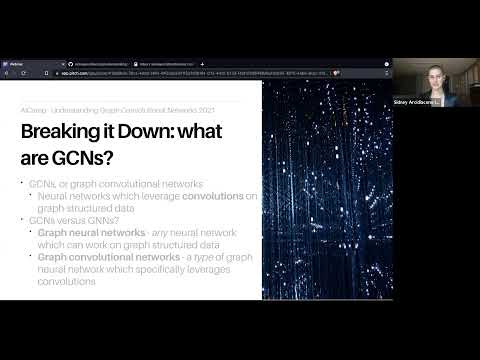
Graph neural networks (GNNs) are like the cool kids on the block in the field of machine learning. They’re all about dealing with data that’s structured as graphs, which basically means connecting a bunch of points (or nodes) with lines (edges). Think of social networks, where you have friends linked up. GNNs do this by leveraging relationships and the structure within the data to make predictions or understand patterns.
One major trend we’re seeing in GNN research is scalability. Traditional models sometimes struggle when faced with ginormous datasets. Researchers are working hard to create methods that can effectively handle these larger datasets without sacrificing accuracy. Imagine being able to analyze social media interactions among millions of users! That’s the goal.
Another hot area is spatio-temporal graph neural networks. These bad boys consider both space and time, which is super important for applications like traffic prediction or weather forecasting. By looking at how things change over time and where they happen, these models can provide more accurate insights. It’s like having a crystal ball for predicting traffic jams!
Now, let’s talk about multi-modal learning. This approach involves integrating different types of data—like combining images with text or graphs—into a single model. For example, if you’re trying to identify plants using pictures, a GNN could help by also analyzing their scientific descriptions from databases. This integration allows for richer understanding and better results.
Also, there’s something exciting happening with self-supervised learning. Instead of needing tons of labeled data to train models—which can be a pain—researchers are looking at ways to let models learn from unlabeled data by creating their own labels during training. It’s more efficient and could open doors for GNNs in areas where labeled data is scarce.
Lastly, interpretability in GNNs is becoming crucial too. As these networks become more complex, we need ways to understand why they make certain predictions or decisions. Imagine you’re using a model that predicts cancer risk based on gene expressions—it better be clear why it says what it does! Researchers are developing tools and methods to make GNN decisions more transparent.
In short, exciting advancements in graph convolutional neural networks are making waves across various fields—from social science to healthcare. The trends point towards making these networks faster, smarter, and more interpretable while handling complex real-world data effectively.
So yeah, as we explore the future of GNNs—expect killer innovations popping up left and right! It’s an exciting time for researchers and practitioners alike.
Deep Learning in 2025: Its Enduring Relevance in Scientific Research and Innovation
When we talk about Deep Learning, it’s like peeking into the future of technology, especially in fields like scientific research. By 2025, this tech will still be rocking it, evolving and adapting as it meets new challenges.
Now, let’s zoom in on one of the coolest aspects: Graph Convolutional Neural Networks (GCNs). These networks have become a vital tool for analyzing complex data structures. You see, many real-world problems can be represented as graphs—think social networks, molecular structures in chemistry, or even neural connections in the brain. GCNs are designed to work with these graphs efficiently.
- Integration with Scientific Research: In fields like biology and physics, GCNs can help predict how molecules will interact based on their structural features. Imagine researchers studying proteins—they can use GCNs to figure out how changes in a protein’s structure might impact its function.
- Data Efficiency: One of the standout traits of GCNs is their ability to learn from less data while still making accurate predictions. This is crucial because collecting large datasets can be super costly and time-consuming!
- Real-World Applications: By 2025, we could see GCNs being used for drug discovery. Imagine a small biotech firm using these networks to streamline finding new treatments by quickly analyzing combinations of compounds.
- Collaboration Across Disciplines: As scientists from different fields team up, GCNs will help bridge gaps between disciplines—like connecting psychology and neuroscience through shared graph models related to cognition.
A little story here: A friend of mine recently got into bioinformatics. He was all about crunching numbers from DNA sequences but felt overwhelmed by data analysis. Enter GCNs! He found that using them helped him visualize complex relationships in genetic data without losing his mind over spreadsheets!
You know what’s interesting? Deep Learning isn’t just about fancy algorithms; it’s transforming how we think about innovation itself! Scientists are starting to ask questions they never thought possible before because they can model complex systems more effectively.
The landscape is definitely changing. Researchers are becoming more comfortable with machine learning techniques, often collaborating with computer scientists to refine these tools for specific applications. So when you think about Deep Learning in 2025—or even beyond—you’ll notice its relevance can’t be overstated!
This whole combination makes Graph Convolutional Networks a game-changer for scientific research moving forward. Whether it’s environmental science tracking changes in ecosystems or medicine developing personalized treatments based on patient data, expect them to stick around making waves!
If you think about it: as technology progresses and our understanding deepens through tools like GCNs, who knows what groundbreaking discoveries await us? Just remember—this is just the beginning!
Understanding Graph Neural Networks (GNNs) in Biological Research: Applications and Implications in Science
Graph Neural Networks, or GNNs for short, have become quite the buzz in biological research. If you’re thinking, “What on earth is a GNN?” don’t worry. I got you covered! At its core, a GNN is a type of artificial intelligence designed to handle data structured as graphs. Imagine trying to study a city layout with streets and buildings; that’s kind of like what we do with biological data using GNNs.
So, why use graphs? Well, biological systems—like proteins, genes, or brain cells—are interconnected in complex ways. It’s not just a bunch of individual parts; they’re all talking to each other! By using graph structures, researchers can better capture these relationships. Pretty insightful, right?
Let’s break this down into some key points:
- Applications in Protein Structure Prediction: GNNs can predict how proteins fold and interact with each other. This is super crucial for drug discovery because knowing how proteins behave can lead to better medicines.
- Gene Interaction Networks: Researchers leverage GNNs to analyze gene interactions and regulatory pathways. They can visualize how different genes talk to one another—think of it like charting a conversation at a party!
- Brain Connectivity: In neuroscience, GNNs help map out how neurons connect in the brain. Understanding these connections can shed light on various mental disorders and neurological diseases.
- Drug Discovery: By modeling the interactions between drug compounds and their molecular targets using graphs, scientists use GNN methodologies to identify promising new drugs more quickly than traditional methods.
Now, let me share something personal that illustrates this whole idea. When I was learning about biological systems back in school, I once got frustrated trying to understand how different components worked together as part of larger networks. It seemed chaotic! But then I stumbled upon graph theory—it felt like someone handed me glasses to see everything clearly! Things clicked when the interconnectedness clicked.
But there are implications here too; it’s not just about applications but also about ethics and responsibilities as we advance our abilities with technology. As we make breakthroughs with tools like GNNs in biology, we need to consider privacy issues or potential misuse of genetic information.
Overall, the world of Graph Neural Networks in biological research is like opening an unexpected door into the universe’s inner workings—a mix of math and messy life that intertwines beautifully! Using these stunning techniques helps us get closer to understanding those connections that make life tick—and isn’t that what science is all about?
You know, it’s pretty amazing how technology keeps pushing boundaries, and one area that’s been buzzing with excitement lately is graph convolutional neural networks, or GCNs for short. I mean, just think about it: we’re talking about a way to analyze complex data structures like social networks, molecular structures, or even brain connectivity. It’s like having a secret weapon for understanding complicated relationships in science!
So, picture this: when I first stumbled upon GCNs, I was sitting in my friend’s apartment and we were sharing ideas over some late-night snacks. He was diving into data science and trying to explain how traditional neural networks struggle with non-Euclidean data. Seriously, it sounded super technical at first. But then he showed me these beautiful visualizations—like how molecules can be represented as graphs with atoms as nodes and bonds as edges. That clicked! It felt like a light bulb went off in my head.
What’s cool about advancements in GCNs is that they can learn from the structure of these graphs rather than just the raw features alone. It’s like having a conversation that flows naturally instead of just spitting out facts! These networks have made it easier for scientists to predict properties of new materials or understand diseases at a molecular level. You’ve got the power of connectivity driving insights that were previously out of reach.
And let me tell you, there have been some real game changers in recent years. Researchers are continually tweaking algorithms to make them faster and more efficient. They’re applying these advancements to everything from drug discovery to predicting protein interactions—it’s kind of mind-blowing! The collaborations between computer scientists and biologists have really ramped up; after all, science doesn’t happen in isolation.
If you follow me here, what I love most about this field is not just the tech itself but how it brings people together to tackle real-world problems. When scientists use GCNs for environmental studies or public health initiatives—wow! You realize the impact goes beyond just numbers on a screen; it touches lives.
In the end, it’s all about nurturing curiosity and finding creative solutions together. Thinking back on that night with my friend always reminds me why we push for innovation in science—it’s not merely about creating fancy algorithms but about unearthing new paths toward understanding our world better! So here’s to more breakthroughs in the realm of graph convolutional neural networks!