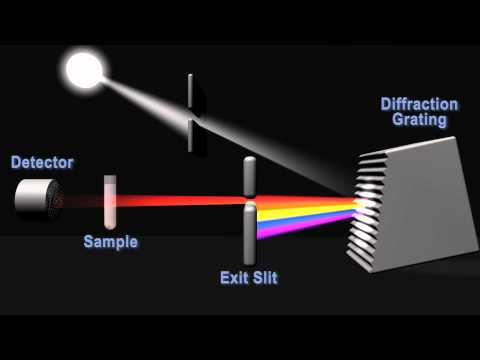
You know that feeling when you walk into a room and just know something’s off? Like, maybe your friend’s been cooking something weird, or the cat’s looking guilty ’cause it knocked over a plant? Well, scientists kind of have their version of that intuition—it’s called IR spectrophotometry.
Imagine being able to sniff out what’s happening on a molecular level, just like that. Intrigued? You should be! These nifty tools help researchers identify compounds by measuring how they absorb infrared light. Seriously cool stuff!
So next time you hear about an IR spectrophotometer, just remember: it’s like having a superpower for detecting the invisible. Come on, let’s unravel this story together!
Exploring Real-Life Applications of IR Spectroscopy in Scientific Research and Industry
So, let’s chat about IR spectroscopy. You know, it’s that cool technique scientists use to figure out what substances are made of based on how they absorb infrared light. The thing is, this method isn’t just some academic fancy stuff—it has real-life applications that touch tons of industries and research areas.
First off, let’s break down how this works. When you expose a material to infrared light, the molecules in that material start vibrating. Each type of bond between atoms vibrates at specific frequencies. By measuring the light that gets absorbed, you can create a unique “fingerprint” for different substances. This helps identify what’s in your sample.
Now, think about the food industry for a sec. They often need to check if their products are safe and up to standard. IR spectroscopy comes to the rescue there! For example, it can help detect adulterants in oils or sugars by identifying differences in molecular composition. Imagine a chocolatier wanting to make sure their chocolate is pure; they could use IR spectroscopy to confirm there aren’t any unwanted fillers snuck in there.
Moving onto pharmaceuticals—this is where things get even spicier! When developing new drugs, scientists must ensure each ingredient is just right. They use IR spectroscopy during quality control checks to verify that chemical compounds have formed correctly. It’s like having a reliable buddy who always double-checks your homework.
Then there’s the field of environmental science. Here, researchers utilize IR spectroscopy to analyze air and water samples for pollutants. For instance, if they suspect certain chemicals are leaking into a water supply, they can quickly identify them using IR methods. This way, they keep our environment a bit cleaner!
For those into materials science or even art conservation—you know how important it is to understand what materials you’re working with? Well, IR spectroscopy helps characterize new materials or even ancient artifacts without damaging them! Pretty neat, huh? Museums can find out more about their exhibits without needing intrusive techniques.
Also worth noting: in forensic science! Investigators use IR spectroscopy on evidence from crime scenes—like analyzing residues from drugs or toxins found on surfaces—without much hassle at all. It’s pretty incredible how a few drops of something can lead investigators right back to the source.
So yeah, whether through spotting harmful ingredients in food products or identifying vital compounds in pharmaceuticals and environmental testing—the applications of IR spectroscopy are vast and diverse! And as technology advances further—and trust me, it will—we’re bound to see even more innovative uses popping up across various fields.
Understanding IR Spectroscopy: Its Role and Importance in Modern Pharmaceutical Analytical Techniques
Alright, let me break down IR spectroscopy for you in a way that’s easy to digest.
So, what is IR spectroscopy? Basically, it’s a technique used to study the interaction between infrared light and matter. When you shine infrared light on a sample, certain wavelengths are absorbed depending on the molecular structure. This gives scientists a unique fingerprint of the molecules in the sample.
Now, let’s talk about its role in pharmaceuticals. Modern drug development relies heavily on precise analysis of compounds. Why? Because even a tiny change in a molecule can affect how well a drug works. Here’s where IR spectroscopy shines! It helps identify functional groups—like alcohols or amines—in compounds quickly and accurately.
Imagine you’re working in a lab and you’ve just synthesized a new compound. You’re excited to see if it has potential as a new medication. You run an IR spectrum on it and voilà! You can confirm that this compound has that oh-so-important functional group you were hoping for. It’s like checking off boxes on your dream list.
Another thing about IR spectroscopy is its ability to analyze solid, liquid, or gas samples without needing extensive preparation. That’s pretty cool when you’re short on time or resources!
Now, let’s get into some key points regarding its importance:
- Quick Identification: With IR spectroscopy, you get results fast! It’s often much quicker than other methods like NMR.
- Quality Control: In pharmaceuticals, consistency is key. IR spectroscopy ensures that every batch of medicine is up to par.
- Purity Testing: You can detect impurities in samples easily, which is super important because impurities can mess up drug efficacy.
- No Need for Complex Prep: Unlike some techniques that require lots of steps before testing, this one is pretty straightforward.
Let me throw in an anecdote here: I remember chatting with a chemist who was working late into the night analyzing drug formulations. She told me how much easier her job got once they adopted IR spectroscopy in their lab. That crucial moment when she realized they could streamline their process made all the stress worth it!
Let’s not forget about the future potential. As technology advances, so does our understanding of these techniques. With improvements in computational chemistry and machine learning integration into IR analysis, we might just stumble upon breakthroughs we never dreamed possible.
In short: If you’re looking at modern pharmaceutical analytics, ignoring IR spectroscopy would be like trying to bake without knowing how to measure ingredients properly—totally messy! It’s essential for ensuring quality control and understanding complex molecular structures as we move forward.
So yeah, that’s essentially what you need to know about IR spectroscopy’s role and importance today! It’s this remarkable tool that helps us understand drugs at their core—and trust me; that’s crucial for anyone diving into pharmaceuticals!
Understanding the Applications of IR Spectrophotometers in Scientific Research
Alright, let’s break down what IR spectrophotometers are and how they’re shaking things up in the world of scientific research. You’ve probably seen scientists in lab coats peering into high-tech gadgets, right? Well, one of those gadgets might be an IR spectrophotometer.
So, what is it? Basically, an IR spectrophotometer is a tool that measures how much infrared radiation a substance absorbs. Remember how we sometimes feel warmth from the sun even when we can’t see it? That’s infrared radiation! This tool helps us understand what a material is made of by analyzing its absorption patterns.
Now, why is this important? Well, this technique has tons of applications across different fields:
- Chemistry: In chemistry labs, these devices help identify compounds in mixtures. Let’s say you have an unknown liquid; running it through an IR spectrophotometer can reveal whether it’s water, alcohol, or something else entirely by looking at its unique absorption signature.
- Environmental Science: Researchers often use IR spectroscopy to analyze air quality. By checking the levels of pollutants like carbon dioxide or methane in samples, scientists can monitor climate changes and validate environmental policies.
- Pharmaceuticals: The drug development process relies heavily on IR spectrophotometers. It ensures that active ingredients and excipients interact as expected during formulation. Imagine a new medicine that doesn’t work properly because its ingredients don’t mix well – not cool!
- Forensics: In crime labs, these instruments are used to analyze substances found at crime scenes—it can tell whether a powder is illegal drugs or harmless baking soda.
Here’s where it gets interesting: the way molecules absorb infrared light can tell you about their structure. Picture this—you’re trying to understand someone by listening to them talk. Each word gives you clues about who they are. In the same way, different bonds between atoms vibrate differently when hit with infrared light. This gives scientists valuable information about chemical structures.
But wait! There’s more than just identifying substances—these measurements also help in monitoring reactions in real time. Imagine cooking and constantly checking if your dish is cooking just right; you’d want to know if things are developing properly without ruining the whole meal! In labs, researchers use real-time monitoring with IR spectroscopy to adjust conditions as necessary for optimal results.
And while this tool sounds fancy—because it kinda is—the technology isn’t outta reach for regular folks anymore. Many educational institutions now incorporate IR spectrophotometers into their curriculum so students can play with them and learn firsthand all the cool stuff they do.
Remember that time you were puzzled over why your favorite shirt shrunk after one wash? It could be all about those fibers reacting differently under heat! With IR spectroscopy techniques analyzing such materials—even textiles—researchers can better understand interactions between different components.
So next time you hear someone mention IR spectrophotometers, think about all those layers of understanding they help peel away in scientific research—and how that knowledge might someday impact our everyday lives! Who knew a little bit of invisible light could unlock so many secrets?
So, let’s chat about infrared (IR) spectrophotometers. You might be rolling your eyes, thinking they’re just some fancy lab equipment. But honestly, these devices are like the superheroes of scientific research. They quietly do their thing to help us unravel the mysteries of matter in ways that are super valuable.
Picture a moment when I was in a chemistry class, and we had this project where we had to identify unknown substances. We got to use an IR spectrophotometer for the first time. It felt like magic as I watched those graphs pop up on the screen showing peaks and valleys. Each peak represented a specific bond or functional group in the molecule! It was like deciphering an ancient language; thrilling and mind-blowing at once.
So here’s the deal: IR spectrophotometers work by sending infrared light through a sample and measuring how much light gets absorbed at different wavelengths. This absorption happens because molecules vibrate in response to the light—like when we dance to our favorite song, right? Different bonds (like carbon-hydrogen or oxygen-hydrogen) absorb specific wavelengths based on their unique vibrational frequencies.
But wait, there’s more! These instruments aren’t just limited to academics—they’ve made waves in pharmaceuticals, environmental studies, and even food safety. Think about it; researchers can analyze everything from testing drug purity to identifying pollutants in water with just one piece of equipment. It’s like having a detective tool at your fingertips!
What I find really cool is that IR spectroscopy can help discover new materials or compounds too. Imagine developing new drugs that could save lives or creating eco-friendly alternatives that could reduce pollution! The potential is huge and exciting!
And as technology advances, so do these machines. They’ve gotten smaller and more user-friendly over the years. I remember feeling slightly intimidated by all those buttons on older models. Nowadays, though? They’re often connected to computers that make it easy for anyone—even someone new to science—to get useful data quickly.
In modern research, especially where quick results matter—like analyzing COVID-19 samples—these devices shine bright! They gather crucial information rapidly without needing complicated sample prep.
So yeah, while they might seem mundane if you’re not in scientific circles or bored of seeing them in movies set in labs, IR spectrophotometers are essential tools that keep pushing boundaries. They uncover truths hidden away within substances all around us—it’s actually pretty amazing when you think about it!