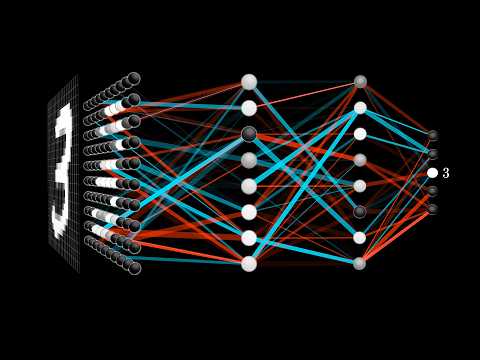
You know that moment when your phone suddenly recognizes your face, even in the weirdest angles? Like, one minute you’re just scrolling through memes, and the next, bam! Tech magic! That’s deep learning for you.
So, what is deep learning anyway? It’s this super cool slice of artificial intelligence that mimics how our brains work to learn from data. Feels like sci-fi, right? But it’s not just about tech. This stuff is shaking up the way we do science.
Imagine researchers uncovering hidden patterns in mountains of data. Or figuring out complex structures in proteins, all thanks to algorithms that can “think” a bit like us. Pretty wild!
Stick around, and let’s unpack this fantastic journey into the world of deep learning together. Who knows? You might find yourself wanting to dive deeper!
Evaluating the Relevance of Deep Learning in Scientific Advancements: A 2025 Perspective
Deep learning has been one of those buzzwords flying around in the scientific community lately. As we slip into 2025, it’s hard not to notice how integral it has become in shaping research and innovation. Imagine a tool that can analyze massive amounts of data, find patterns you would totally miss, and even predict outcomes! That’s essentially what deep learning does.
First off, it’s all about neural networks. You know how our brains work with neurons firing off signals? Deep learning mimics that process. These artificial neurons take in information, like images or text, and learn from it by adjusting connections as they go along. So cool, right?
One area where deep learning shines is medical research. Think about it: doctors have tons of patient data to sift through. Traditionally, this takes ages! But with deep learning, algorithms can quickly spot anomalies in scans or predict disease outbreaks by analyzing trends in health data. Last year, for example, some studies highlighted how deep learning helped improve the accuracy of early cancer detection. Imagine catching something like that before it gets serious!
Then there’s climate science. We’ve all seen crazy weather changes lately; that’s no surprise. Deep learning is being used to analyze climate models and predict future patterns more accurately than ever before. By processing massive sets of environmental data—like satellite images—scientists are starting to understand complex interactions in our climate system that would’ve been nearly impossible to grasp before.
Now let’s talk about challenges for a sec because no tech is perfect! The reliance on large datasets means if there’s bias or errors in the data, the conclusions will likely be skewed too. If we’re working with flawed information about social issues or healthcare disparities? Well, you can see how that could cause some serious problems down the line.
Another thing to consider is interpretability. Deep learning models can sometimes feel like black boxes; they work great but don’t always explain why they make certain predictions. This lack of transparency can be super frustrating when scientists need to justify their findings or decisions based on these algorithms.
Here’s a side note: remember when AI was all about replacing human jobs? Now it’s more like enhancing what we do best! Scientists aren’t handing over their authority; instead, they’re teaming up with these advanced tools to push boundaries further than ever before.
In summary—deep learning isn’t just a hype machine; it’s genuinely opening new doors in multiple scientific fields as we peek into 2025 and beyond. While there are challenges ahead regarding bias and transparency—there’s also so much potential waiting for us once we tackle them head-on! The journey is just beginning—you excited too?
Exploring Deep Learning in Science: Applications, Techniques, and Future Trends
Deep learning, huh? It’s one of those buzzwords that you hear all over the place lately. But what is it, and how’s it changing science? Well, let’s break it down.
Deep learning is like teaching a computer to learn from data in a way that kinda mimics how humans learn. It’s part of artificial intelligence (AI), and it uses something called **neural networks**. Imagine your brain with neurons firing off signals; that’s how these networks operate but, you know, on a machine level. So, yeah, it’s about recognizing patterns.
Now, when we talk about applications, deep learning is making waves in various fields:
- Medicine: AI can analyze medical images like X-rays or MRIs super quickly to spot things like tumors. One study found that these systems sometimes catch what even experienced doctors might miss.
- Environmental Science: From predicting air quality to monitoring climate change impacts, deep learning helps in analyzing massive datasets from sensors all over the world.
- Astronomy: Telescopes gather astronomical data at an astonishing rate. Deep learning assists in classifying galaxies or detecting exoplanets based on light patterns.
- Genomics: With the human genome mapped out, now we need to understand it! Deep learning analyzes genetic data to find links between genes and diseases.
So that’s just a taste of where deep learning shines in science. But what about the techniques? Well, there are several ways researchers use deep learning:
- Convolutional Neural Networks (CNNs): These are especially good for image-related tasks—like spotting anomalies in medical scans or even identifying species in wildlife photos.
- Recurrent Neural Networks (RNNs): Ideal for working with sequences of data like time series—think stock prices or climate patterns over time.
- Denoising Autoencoders: These help clean up noisy data by using learned representations; great for improving image quality or enhancing signals from experiments.
The cool thing is we’re just scratching the surface here. The future looks promising! As technology improves and more data becomes available, we can expect a few trends:
- Bigger Datasets: More accessible data means better training for models. This leads to more accurate predictions and results.
- Tighter Collaboration: Scientists will work hand-in-hand with AI developers to create tools tailored to their specific needs—super exciting!
- Sustainable Solutions: Deep learning might help us tackle some major global issues—from healthcare access inequalities to climate change solutions through smart resource management.
Reflecting on this whole journey of deep learning kind of reminds me of watching my kiddo try to stack blocks for the first time. She’d knock them down and build again until they stood tall! Each attempt taught her something new, just like each iteration helps refine deep learning models.
In the end, exploring deep learning means delving into an incredible realm where technology meets humanity’s quest for knowledge. It’s not just about coding or algorithms; it’s about understanding our world better—and who wouldn’t want that?
Exploring Deep Learning Frontiers: Innovations and Applications in Scientific Research (PDF)
Deep learning is like giving computers a brain of their own, letting them learn from data, recognize patterns, and make decisions. It’s a pretty cool field that’s taken off over the last few years. The innovations in this area are seriously shaking things up in scientific research.
What is Deep Learning?
So, deep learning is a subset of machine learning. It’s inspired by how our brains work—using networks of artificial neurons to process information. Imagine layers and layers of these neurons working together to figure things out. It’s like peeling an onion; each layer reveals more details until you reach the core understanding!
Innovations in Deep Learning
The advancements here are mind-blowing! From improving image recognition techniques to enhancing natural language processing, researchers are constantly pushing boundaries. You can find deep learning algorithms being used in areas like:
- Medical Imaging: Deep learning helps radiologists detect diseases earlier by analyzing scans with incredible accuracy.
- Genetic Research: These algorithms can sift through massive amounts of genetic data, helping scientists understand complex traits and diseases.
- Astronomy: Astronomers use deep learning to classify galaxies and identify exoplanets faster than ever before.
Isn’t it wild how deep learning can spot things that humans might miss? Just think about how it can save lives or advance our understanding of the universe!
The Application Spectrum
In scientific research, the applications are vast and varied. Deep learning actually changes the game for countless fields:
- Climate Science: By analyzing climate models, researchers can better predict weather patterns and track climate change impacts.
- Chemistry: Scientists leverage deep learning to predict molecular properties—speeding up drug discovery processes!
- Molecular Biology: AI models help decipher structures of proteins which could lead to breakthroughs in medicine.
Imagine trying to find a needle in a haystack! That’s what researchers used to face when dealing with complex data sets. But now? They’ve got robust tools that help them zoom right in on what they want.
Anecdote Time!
A friend who’s a biologist once told me about her struggles with analyzing genetic sequences. She would spend hours sifting through data, feeling lost amidst piles of information. Then she started using deep learning models. Suddenly, she could detect patterns she never saw before! Her excitement was infectious—it felt like having superpowers!
The Future Ahead
Looking ahead, the potential seems limitless! With ongoing developments like reinforcement learning and unsupervised techniques, we’re at the edge of new discoveries every day. Seriously though—what if we could even apply this stuff to solve global challenges? That would be rad!
Deep learning is not just a techy buzzword; it’s reshaping how we approach scientific inquiries across domains. And who knows? The next big breakthrough might be just around the corner thanks to this transformative technology!
So, deep learning, huh? It’s kinda like that super-intelligent friend you wish you had, but instead of acing exams and winning debates, it’s crunching numbers and analyzing data faster than we can blink. Seriously, this stuff is changing the game in science. I mean, think about it: from predicting weather patterns to identifying diseases earlier than ever—it’s pretty mind-blowing.
I remember chatting with a buddy who’s a researcher. He told me about this project where they used deep learning to analyze images of cells. They wanted to identify certain types of cancer cells faster than traditional methods. And guess what? Deep learning algorithms processed those images in ways humans couldn’t even keep up with! It was like watching a magic show unfold before my eyes. The potential is just… wow.
Now, don’t get me wrong; it’s not all sunshine and rainbows. There are definitely some bumps on this road. For one, you’ve got the whole issue of bias in training data, which can lead to skewed results—yikes! And as brilliant as these systems are at pattern recognition, they don’t always understand the ‘whys’ behind what they’re doing. That means there’s still a lot we need to figure out about how to use them responsibly.
The thing is, we’re now at this unique crossroads where human creativity meets machine efficiency. Scientists are like kids in a candy store, leveraging deep learning for everything from exploring the depths of our universe to decoding human genetics. It’s exhilarating but also a little daunting.
So yeah, navigating these frontiers isn’t just about chasing after shiny tech for the sake of it. It’s about asking ourselves how we can harness its power for good and make meaningful strides in our understanding of science and life itself. We’re basically charting unknown territories here—like explorers setting sail for lands uncharted! And while there might be storms ahead, it’s that thrill of discovery that keeps us pushing forward. Who knows where we’ll end up next?