You know what’s funny? The universe is like one giant cosmic puzzle, and honestly, no one really knows how many pieces are missing. Seriously! It’s wild to think that every time we look up at the stars, there’s a whole story unfolding that we barely understand.
Modern cosmology is all about trying to figure out the mysteries of our universe. You might ask, “Why should I care?” Well, it’s not just for the nerds in lab coats; it’s for all of us.
When scientists share their findings, they’re not just throwing fancy words around. They’re inviting you into this incredible adventure where black holes and dark matter are characters in a story that affects us all.
So, let’s chat about how modern cosmology fits into the grand scheme of scientific outreach. Spoiler alert: It’s more exciting than you might think!
Exploring Career Opportunities: 5 Exciting Jobs in Cosmology and the Science Field
Ever sat outside at night, gazing at the stars, and thought about what’s out there? Yeah, it’s pretty mind-blowing! Well, that feeling has led many people to exciting careers in cosmology and beyond. Let’s look at some fantastic job options that let you explore the universe while sharing the coolness of science with others.
- Astronomer: These folks study celestial bodies—think stars, planets, and galaxies! They use telescopes and other tools to gather data. It’s like being a detective for space. Astronomers often share their discoveries through articles or public talks, sparking interest in the cosmos.
- Astrophysicist: You know how we always ponder “what if” questions about black holes or dark matter? Astrophysicists dig deep into those mysteries! They apply physics to understand how the universe works. Plus, they sometimes work with educators to explain complex ideas in simple ways for everyone.
- Science Communicator: If you have a knack for storytelling, this could be your jam! Science communicators take complicated concepts and make them relatable. They write articles, create videos, or even organize events to engage the public. It’s all about bridging the gap between scientists and everyday people.
- Planetarium Educator: Imagine showing people a simulated night sky in a planetarium! Educators here design programs and presentations that teach visitors about astronomy. It’s hands-on learning with a sprinkle of magic—who wouldn’t want to inspire awe about space?
- Space Mission Scientist: Working on missions like sending rovers to Mars sounds thrilling! These scientists are involved in planning experiments that help us learn more about our solar system. And they get to share their findings with the world—talk about an adventure!
The thing is, whether you’re peering through a telescope or educating folks on cosmic phenomena, these careers let you explore amazing questions we haven’t yet answered. Every role plays a part in making cosmology accessible and exciting!
I remember going to a science center as a kid; I was mesmerized by an exhibit on black holes. The enthusiastic educator explained things so simply but made me feel like I was on an epic quest through space. That moment stuck with me—it showed how powerful science outreach can be!
If any of this resonates with you, maybe it’s time to consider joining one of these fields! The universe is waiting for curious minds like yours to explore its wonders.
Exploring Modern Scientific Insights into the Origins of the Universe
Sure, let’s chat about the origins of the universe! It’s one of those epic topics that can blow your mind if you think about it for too long. I mean, we’re all curious about where we came from, right? And modern cosmology has been making some serious strides in answering those big questions.
First off, let’s get a little background on what cosmology actually is. Basically, it’s the study of the universe as a whole: its structure, its history, and everything in between. So think galaxies, stars, and all that cosmic dust floating around. What scientists do is look at this massive puzzle and try to piece together how it all started.
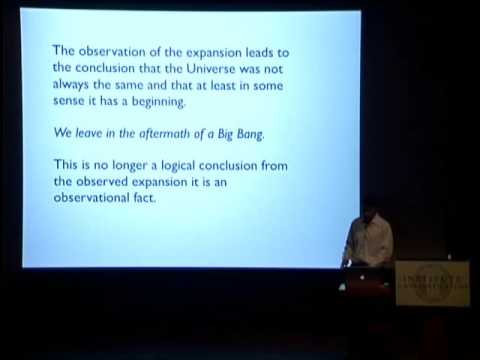
One of the major turning points for understanding our universe’s beginnings was the **Big Bang Theory**. Imagine this—about 13.8 billion years ago, everything was crammed into an impossibly small point. Then it just… exploded! And when I say exploded, I don’t mean like fireworks on the Fourth of July; I mean an expansion that sent energy and matter racing outwards at incredible speeds.
But wait, there’s more! This isn’t just some ancient history lesson; there are modern tools helping us verify this theory. Thanks to telescopes like Hubble and observatories scattered around our planet (and even in space), we can observe distant galaxies moving away from us—an effect called **redshift**. It’s like watching cars zoom away from you on a highway; they seem to go faster as they get farther away.
So what does this tell us? Well, it reinforces that initial explosion idea because if galaxies are moving apart now, they must have been much closer together at some point in time—a kind of cosmic peek into our past!
Another fascinating upgrade to our understanding comes from studying cosmic microwave background radiation (CMB). Think of CMB as the remnants of that explosive event—a faint glow filling every corner of the universe left over from the Big Bang itself! It was first observed in 1965 by two scientists who were just trying to investigate static on their radios. Can you imagine stumbling upon such a revelation?
Now let’s talk about how all this scientific exploration translates into outreach—basically sharing these discoveries with everyone else! Researchers use visuals like **infographics**, animations, and social media posts to explain complex concepts simply. And seriously, who doesn’t love a good space meme once in a while?
Additionally, public talks and workshops allow average folks to engage with these topics directly. Like that time I went to a stargazing night hosted by a local university—it was surreal looking up at constellations while listening to scientists share their stories.
In summary:
- Cosmology helps us understand not just stars but the entire universe.
- The Big Bang Theory is foundational for explaining our universe’s origin.
- Redshift shows how galaxies are moving away from us—evidence of expansion!
- CMB gives us insight into what happened right after the Big Bang.
- Scientific outreach makes sure everyone gets to marvel at these discoveries!
The journey through cosmology is exciting because it’s more than facts; it’s about exploration and wonder! When you think about the vastness out there—and how we fit into all this—it really makes you feel connected to something way bigger than yourself. So next time you’re gazing up at a starlit sky or scrolling through cool space facts online, remember: we’ve come a long way in uncovering our cosmic story!
Exploring Cosmology: Philosophical Perspectives and Scientific Insights into the Universe
Cosmology is like that endless, deep rabbit hole where science and philosophy shake hands. It’s all about understanding the universe and our place in it, you know? So, let’s break this down. First off, cosmology is essentially the study of the universe’s origins, structure, evolution, and eventual fate. Think of it as trying to piece together a gigantic puzzle that doesn’t even have all its pieces.
Now, when we talk about modern cosmology, we’re diving into stuff like the Big Bang theory and cosmic inflation. The Big Bang theory suggests that around 13.8 billion years ago, everything we see today was squished into a super tiny point before exploding outward. Crazy stuff! And cosmic inflation—well, that’s when the universe expanded really fast right after it was born.
On the philosophical side of things, there are big questions flying around like space debris. For instance: What does it mean for something to exist? Just because we can measure something doesn’t necessarily mean we understand its true nature or significance. Philosophers ponder these things while scientists work with data from telescopes and satellites.
Here’s where it gets interesting: some philosophers argue that our perspective on the universe shapes our understanding of reality itself. Like, if you’re standing on Earth talking about stars—your viewpoint is limited compared to what you’d see from outside Earth’s atmosphere! This sparks discussions on subjectivity vs objectivity. Do we really grasp what’s out there if our senses are so limited?
- The concept of time is another philosophical nugget cosmologists chew on. Is time linear? Cyclical? Some theories suggest time could bend or loop back on itself!
- The nature of space is equally fascinating! What if space isn’t just an empty void but filled with fields or dimensions we can’t perceive?
- Then there’s the whole “Are we alone?” question. The vastness of the universe might suggest life exists elsewhere. But how do we define life anyway?
The role of scientific outreach here cannot be overstated! Bringing these complex ideas to folks who might not be knee-deep in science helps everyone reflect on their existence in this giant cosmos. Imagine gathering around with friends discussing black holes or dark matter over coffee—like a casual jam session for ideas!
A great example is how organizations use planetarium shows or public talks to engage people with cosmological concepts. These outreach efforts help demystify scientific findings while encouraging curiosity and critical thinking.
If you think about it, grappling with cosmological ideas makes us re-evaluate our beliefs and values too! It’s kind of emotional when you realize how small we are compared to everything else out there—all those stars are like ancient memories shimmering in the night sky.
: So whether it’s through science fairs or casual conversations at home over pizza (yup!), embracing both science and philosophy opens up a world—or should I say universe—of possibilities for everyone!
So, let’s chat about modern cosmology and how it plays into the whole idea of scientific outreach. I mean, wow, isn’t it just mind-blowing to think about the universe? Like, when you look up at the stars on a clear night, what crosses your mind? Is it just pretty lights, or do you find yourself wondering what’s really out there?
I remember a night camping with friends under a vast sky, all those twinkling stars above us. We started talking about black holes and galaxies. Honestly, we were just a bunch of regular folks throwing around ideas like we were experts or something! But that’s the magic of cosmology—it’s not just for scientists in lab coats. It has this way of bringing people together to wonder and ponder life’s big questions.
Modern cosmology digs deep into the fabric of our universe. We’re talking about everything from the Big Bang to dark matter—stuff that can sound super complicated but is totally fascinating once you break it down. The cool part is that this information doesn’t have to stay locked away in scientific journals; it can reach everyone.
You see, outreach is essential because it takes these complex ideas and makes them accessible to everyone—like translating fancy science talk into everyday language. When people understand concepts like how galaxies formed or what dark energy might be doing to our universe, they feel more connected to the cosmos. Picture kids excitedly asking questions about space after visiting a planetarium or reading a fun book on astronomy! It sparks curiosity!
But there’s more to it than just excitement; it’s also about fostering critical thinking skills. When people learn how scientists uncover these cosmic mysteries—through observation and experimentation—it encourages them to ask questions in their own lives too. It nudges us all toward becoming curious little detectives of our world.
Sure, there will always be those who think science is too dry or intimidating. But when you use stories from cosmology—the epic tales of exploding stars or swirling galaxies—you make the subject come alive! Every time we share these narratives with others, we’re inviting them into a conversation about existence itself.
So yeah, modern cosmology has this unique role in outreach; it acts as both a bridge and a beacon. A bridge connecting complex science with everyday life and experiences—a beacon shining light on our infinite curiosity about the universe around us. And honestly? That’s something worth celebrating together!