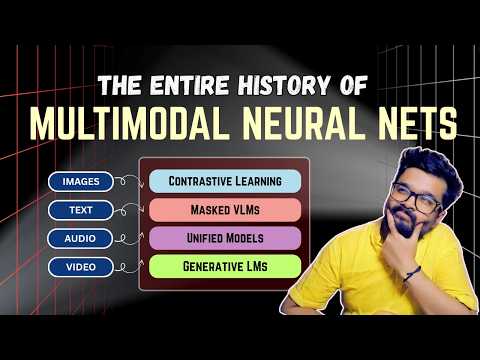
You know that feeling when you’re juggling a bunch of things at once, and somehow it all comes together? That’s kind of what multimodal deep learning is like. Imagine your brain taking in sounds, sights, and smells, all at the same time, fuzzing them together into a neat little package of understanding.
Now, picture computers doing the same thing! Crazy, right? They don’t just crunch numbers anymore. They’re diving into text, images, audio—you name it—learning to connect the dots in ways that can totally change scientific research.
I remember this one time I was trying to fix dinner while listening to a podcast and keeping an eye on my dog. I tripped over the dog but somehow managed not to drop my phone or the pasta. Multimodal deep learning is a bit like that: it’s all about balancing different information sources without dropping the ball.
So let’s chat about how this whole thing works in science. It’s pretty wild!
Exploring Multimodal Deep Learning: A Case Study in Scientific Applications
Multimodal deep learning is a super interesting area, let me tell you! Basically, it involves combining different types of data—like text, images, audio, and video—to create models that can understand more complex information. Think of it this way: if you just used one type of data, you might miss some important insights. But by mixing things up, the model gets a fuller picture.
Now, imagine you’re working on a medical project. You have patient records (text), MRI scans (images), and even audio from doctor-patient consultations (audio). By applying multimodal deep learning techniques, researchers can find patterns that help predict the best treatment options. It’s like piecing together a puzzle where each piece gives context to the others.
One big advantage of multimodal approaches is their ability to improve accuracy. When dealing with scientific applications, this accuracy is crucial. For example, in drug discovery, scientists can use data from chemical structures (images), research articles (text), and biological responses (numerical data) to create robust models that predict how new drugs will perform in real life.
But what are some specific applications? Let’s break it down:
- Healthcare: Analyzing electronic health records alongside imaging data helps improve diagnostics.
- Climate Science: Combining satellite imagery with climate models allows for better predictions of weather patterns.
- Astronomy: Using optical images and radio wave data helps astronomers understand celestial bodies more comprehensively.
You see how all these fields benefit? Each type of data enhances understanding in ways that single-modal approaches just can’t achieve!
Another cool thing about multimodal deep learning is the way it mimics human perception. We constantly integrate senses—like seeing a dog bark and hearing its bark at the same time to understand what’s going on. By building systems that work similarly, researchers aim to develop machines that “see” and “hear” like we do!
But let’s not forget about challenges! Merging diverse data types can lead to complications like alignment issues or varying quality levels among datasets. For instance, if an image has too much noise but the accompanying text is crystal clear, training a model could become tricky.
Despite these hurdles, we’re seeing exciting advancements. Researchers are creating new architectures designed specifically for multimodal tasks. These techniques are evolving rapidly! As they continue developing them further—for example using transformers or attention mechanisms—the possibilities seem endless.
In essence, multimodal deep learning isn’t just a trend; it’s reshaping how we approach scientific problems across various disciplines. It opens doors to richer analyses and deeper understandings than ever before! So next time you hear about this tech in scientific research context—you’ll know it’s more than just buzzword bingo; it’s paving pathways for discovery!
Evaluating the Relevance of Deep Learning in Scientific Advancements: A 2025 Perspective
So, deep learning, huh? It’s all the rage these days, and it keeps popping up in all sorts of scientific fields. But what’s the deal with it, especially when we think about a few years down the line, let’s say 2025? Well, buckle up! We’re going to explore how multimodal deep learning is stepping up its game in modern research.
To kick things off, you should know that deep learning is basically a subset of artificial intelligence that mimics how our brains work. It takes in loads of data—like pictures, sounds, or even text—and then learns from them to make predictions or decisions. Pretty neat! But when we throw in “multimodal,” we’re talking about using multiple types of data at once. This is like mixing different colors to create something totally new and vibrant.
So why is this important for science? Well, here are a few points to consider:
- Integrating Diverse Data: In fields like medicine or environmental science, you often have data from different sources—like imaging scans and genetic information. Multimodal deep learning can help scientists see patterns that they might miss if they looked at each type of data separately.
- Boosting Accuracy: Combining different modalities can improve predictions. Imagine training a model with both X-ray images and patient histories—it might catch things that would escape notice if you just relied on one type of data.
- Real-World Applications: Think about drug discovery. By analyzing chemical structures along with biological responses using a multimodal approach, researchers could potentially speed up the process of finding new treatments.
- User-Friendly Interfaces: The tech isn’t just for scientists in lab coats anymore; it’s becoming more accessible thanks to user-friendly interfaces. This means more people can contribute to research without needing a PhD!
Now let me share a little story—there was this team working on understanding climate change impacts on biodiversity. They used satellite images alongside local temperature records and species health reports. What happened next was amazing: their multimodal model crunched all this info together and spotted trends quicker than traditional methods. They came up with solutions faster than they imagined! It’s moments like these that make you realize just how powerful these technologies can be.
But it’s not all sunshine and rainbows. There are challenges too! Deep learning models require massive amounts of quality data to train effectively. If your input isn’t great or is biased (hey human error!), your results could go south pretty quickly.
Also, there’s this constant worry around transparency—like how do we really know what’s happening inside these “black boxes” of deep learning? Scientists need to keep finding ways to explain their models so that others can trust or build on their findings.
Looking ahead to 2025, I’d say that as tech evolves and more researchers jump into the deep learning pool (pun intended), we’ll likely see even more breakthroughs across various fields. You might find exciting innovations in healthcare diagnostics or new materials for renewable energy sources made possible by this tech!
In short, multimodal deep learning has the potential to revolutionize scientific research by integrating varied types of data and insights in ways we’ve only begun to scratch the surface of. Isn’t it cool how science keeps pushing boundaries? Just imagine what will come next!
Understanding the Multimodal Approach in Scientific Research: Integrating Diverse Methods for Enhanced Insights
So, let’s talk about this cool thing called the **multimodal approach** in scientific research. It sounds fancy, right? But really, it’s just a smart way of combining different methods to get a fuller picture of whatever you’re studying. Imagine trying to solve a puzzle; sometimes you need more than just one piece to see the whole image.
In essence, the multimodal approach lets researchers pull information from various sources and formats. For instance, you could be looking at data from numbers (like surveys), images (think brain scans), and even text (like interviews). When you mix all these together, you grab insights that none of those pieces could provide on their own.
Here are some key points about it:
- Combining Data Sources: Using multiple types of data helps in understanding complex issues better. Think of climate change: researchers study satellite images, weather data, and personal stories from those affected.
- Improving Accuracy: This method can lead to more reliable results. If one method has weaknesses—like biases in surveys—another method can fill those gaps.
- Enhanced Insights: When looking at something like human behavior, combining interviews with social media analysis gives a broader perspective than just one alone.
- Applications in AI: In the world of artificial intelligence (AI) and deep learning, models that process multiple types of data—like text and images—tend to perform better than those using only one kind.
You know what? There was a study on mental health that used this multimodal strategy recently. Researchers looked at medical records, self-reported questionnaires, and even social media activity. By blending these sources, they got a more comprehensive understanding of how different factors affect mental health over time.
But it’s not always as simple as throwing everything into one big pot. Integrating diverse methods can be tricky. You’ve gotta make sure that the different formats work well together. That means figuring out how to compare apples to oranges—or maybe even apples to kale!
Still though, this approach is super important for tackling multidimensional problems we face today—from healthcare to environmental science. By seeing things from various angles, researchers can create solutions that are much stronger and more effective.
And speaking of solutions—it’s kind of like building a house. You wouldn’t use just nails or just screws; you need both—and then some—to make it sturdy and secure! So remember: when scientists integrate diverse methods through a multimodal approach, they’re crafting well-rounded insights that can truly make an impact!
When you think about science these days, it’s like an endless canvas where new paint is splattered. So, multimodal deep learning? That’s just one of those cool techniques that scientists are using to enhance their work. Imagine if a detective could gather clues from different sources—like fingerprints, DNA samples, and even witness statements—at once to solve a case faster. That’s kind of what this is about.
Let’s break it down a bit. Multimodal deep learning refers to the ability of a model to process and analyze data from various formats—like text, images, or sound—all at the same time. Just think about how we learn. You might read something in a book, hear your friend explain it, and then see it in action in a TikTok video. Your brain combines all those inputs to get a clearer picture of what’s going on.
In research, this approach is starting to revolutionize fields like medicine or environmental science. For instance, imagine doctors using algorithms that analyze both medical scans and patient histories simultaneously. It could lead to quicker diagnoses or personalized treatments! When I first read about how AI could help detect diseases earlier by looking at both imaging data and patient symptoms together? I remember feeling that spark of hope; it feels like a game changer for so many people.
But it’s not all smooth sailing. There are challenges too—data privacy issues, the need for large datasets for training these models, and ensuring that the insights they provide are truly actionable rather than just flashy outputs that don’t really help anyone in real life. Seriously though, as much as tech can do amazing things, there’s always that nagging thought: How ethical is it all?
Also, it’s interesting how researchers have started collaborating more across disciplines because of multimodal deep learning. You’ve got computer scientists working with biologists or environmentalists all sharing their unique perspectives and knowledge—which can only lead to better solutions!
So yeah, next time you hear “multimodal deep learning,” think beyond just tech jargon. It represents not just a future filled with advanced algorithms but also teamwork across different fields aiming for impactful discoveries in real life. And who knows? Maybe one day you’ll be part of that innovative wave!