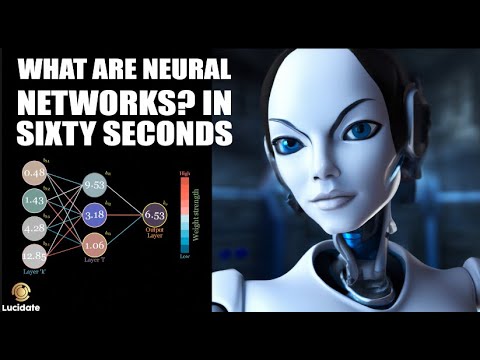
Alright, so picture this: you’re scrolling through your social media feed, and suddenly, there’s an ad for that weird plant you just Googled last week. Spooky, right? But also kinda cool?
That’s the magic of neural networks and machine learning. They’re like little digital brainiacs that learn from data. And man, they’re getting good at it!
From predicting your next favorite show to helping doctors diagnose diseases faster than ever, these technologies are everywhere. It’s not just science fiction anymore; it’s our everyday reality.
So let’s chat about how these advancements are shaking things up in all sorts of fields. You’ll be amazed at how much is happening behind the scenes!
Exploring the Latest Advancements in Neural Networks: Transformations in Scientific Research
The world of neural networks is evolving fast, seriously. These sophisticated systems mimic how our brains work, using layers of artificial neurons to process information. They’re like little brainy detectives, figuring out patterns in data and learning from it.
So what’s happening right now? One big advancement is the rise of transformers, a type of neural network architecture that has revolutionized how we understand and generate natural language. Remember the way your smartphone suggests replies to texts? Yeah, that’s transformer magic at play! It’s all about self-attention mechanisms that allow these models to focus on relevant parts of input data without getting bogged down by everything else.
Then there’s the use of transfer learning. Basically, this means taking a pre-trained model and fine-tuning it for specific tasks instead of starting from scratch. This saves time and resources while making it easier for smaller researchers to tap into advanced AI without needing supercomputers or a mountain of data.
In scientific research, neural networks are being applied everywhere! Take healthcare as an example; they’re helping doctors predict diseases by analyzing medical images or patient records. One interesting case was when researchers used deep learning to predict cancer outcomes more accurately than traditional methods ever could.
Another cool application is in environmental science. Neural networks help model climate changes by crunching massive datasets faster than any human could ever hope to do. They can analyze satellite images to track deforestation or assess the health of ecosystems—super essential stuff!
But it’s not all sunshine and rainbows; there are challenges too. Ethical concerns arise from biases in training data leading to skewed results—imagine relying on faulty AI interpretations in critical areas like law enforcement or hiring processes! That’s a big deal.
Finally, keeping track of these advancements isn’t easy but can be rewarding. The pace is rapid, but staying engaged can lead you into exciting realms you might’ve never expected! Just think about it: neural networks aren’t just tools anymore; they’re transforming the very fabric of research across various fields, changing how we understand our world one layer at a time.
Exploring the Applications of Neural Networks in Machine Learning Across Scientific Disciplines
Exploring the world of **neural networks** in machine learning is kind of like opening a box filled with fascinating tools. These tools can help solve complex problems across different scientific fields. It’s amazing how this technology mimics the way our brains work, and its applications are everywhere!
Medical Diagnosis
One of the coolest places neural networks are making waves is in healthcare. Imagine sitting in a doctor’s office, and they have an AI on their side that can analyze medical images faster than you can say “X-ray.” These networks can detect things like tumors in MRI scans with incredible accuracy. By learning from tons of previous cases, they get better at spotting issues that even trained professionals might miss sometimes.
Climate Modeling
Now let’s zoom out to something as big as our planet—climate change! Neural networks are being utilized to predict weather patterns and climate shifts. They analyze data from various sources like satellites and ocean temperatures to forecast future conditions. This helps scientists prepare for natural disasters or track changes over time. It’s like having a super-smart weather assistant who never sleeps!
Robotics
In the realm of robotics, these networks empower machines to recognize objects and navigate their surroundings. Think about robots that can assist during surgeries or those that help deliver packages in crowded cities. They learn from their environment using neural networks, continually improving their ability to make real-time decisions based on what they observe.
Astronomy
Ever looked up at the stars and wondered what’s out there? Well, neural networks have got astronomers covered too! They’re used to sift through massive amounts of data collected from telescopes looking for patterns or anomalies—like spotting new exoplanets or understanding galaxy formation. This tech helps us decode the universe’s stories buried within heaps of data.
Finance
In financial markets, these networks analyze stock trends and customer behaviors. By looking at past transactions and market changes, they can predict future movements with impressive accuracy. This kind of analysis helps banks make decisions faster than you can check your bank balance!
So basically, neural networks are reshaping how we approach problems across various scientific disciplines by providing tools that enhance accuracy, speed, and efficiency in research and application processes. Isn’t it amazing how something inspired by our brains can tackle such diverse challenges? Each advancement feels like stepping into tomorrow, don’t you think?
Exploring Future Applications of Neural Networks in Scientific Research and Innovation
Neural networks are like these super smart systems, imitating how our brains work, you know? They help machines learn from data, get better over time, and even make decisions without needing a human to hold their hand. It’s pretty wild when you think about it! Now let’s explore how they’re shaking things up in the world of scientific research and innovation.
First off, neural networks can analyze vast amounts of data way faster than humans. Imagine sifting through millions of medical records or research papers; that’d take ages! But with neural networks, this can be done in just minutes. For example, in healthcare, they might help identify patterns that predict diseases before symptoms even show up. That could literally save lives!
Then there’s the whole area of predictive modeling. Scientists are using neural networks to anticipate outcomes based on existing data. Take climate change for instance; researchers can input various environmental data and model future scenarios to see how our planet might change over time. It’s like having a crystal ball but way cooler!
On another note, neural networks are being used to enhance materials science. They help discover new materials for batteries or other technologies by predicting which combinations will yield the best results. This could mean more efficient energy storage or stronger materials for everything from buildings to planes.
Also worth mentioning is their role in genomics. Neural networks are diving into DNA sequences and helping researchers understand genetic variations linked to diseases. This is groundbreaking! It opens doors for personalized medicine where treatments could be tailored based on an individual’s genetic makeup.
When it comes to innovation, these systems do more than just crunch numbers; they’re actually helping generate ideas! You know those AI-generated artworks? Well, neural networks aren’t limited to visual stuff. They’re coming up with new theories or hypotheses in fields like physics and chemistry too. Imagine a machine suggesting experiments we humans might never have thought of!
Lastly, there’s this amazing potential for collaboration between humans and machines. Instead of replacing jobs, neural networks can assist scientists by taking over mundane tasks like data entry or analysis so that researchers have more time to be creative and think outside the box.
In summary, neural networks are not just a techy buzzword; they’re revolutionizing research across multiple fields by making data analysis faster and smarter while opening doors for innovations we haven’t even dreamed of yet! You see? The future looks bright!
Imagine you’re at a coffee shop, chatting with a friend about the latest tech trends. You sip your drink and your conversation drifts to neural networks and machine learning. It’s wild, right? I mean, just a few decades ago, we were still trying to figure out basic computer programming, and now we’ve got machines that can learn on their own!
So, think of neural networks as this intricate web of virtual neurons. It’s like how our brains process information but simplified for computers. They take in data—like photos or music—and start recognizing patterns. In a way, it’s kinda like when you hear a song so many times that you can’t help but sing along. At first, it’s just noise; after a while, bam! You’re belting out the lyrics.
I remember when I first tried using an app that used machine learning to suggest songs based on my mood—it was eerily accurate! One moment I was feeling laid-back with some jazz tunes playing; then suddenly it popped up with a perfect playlist for an evening chill session. That’s the beauty of these advancements: they make our lives easier in ways we might not even notice.
Now, let’s talk applications—these technologies are everywhere! From chatbots that respond to customer queries to those nifty recommendation systems on streaming platforms—seriously, can you imagine watching Netflix without personalized suggestions? No more endless scrolling! But there’s also the serious side to consider: how these algorithms can influence decisions in areas like job recruitment or even law enforcement.
But hold on—there’s this ongoing debate about biases in AI systems! Sometimes these neural networks can pick up on biases present in their training data. This means they might reinforce stereotypes if we’re not careful about how they’re programmed and what data we feed them.
It’s such an exciting time in tech—like being at the forefront of something big where each day brings potential breakthroughs. You know? While there are challenges ahead (because there always are), getting involved in discussions about these advancements feels really important for shaping their future responsibly.
In essence, basically everything around us is slowly getting smarter. Who knows what’s next—a smart fridge that suggests recipes based on what’s inside? Seems like we’re living right in the middle of science fiction! And maybe that’s just another reminder of how rapidly things can change around us… but hey, let’s make sure we’re leading those changes toward something good for everyone!