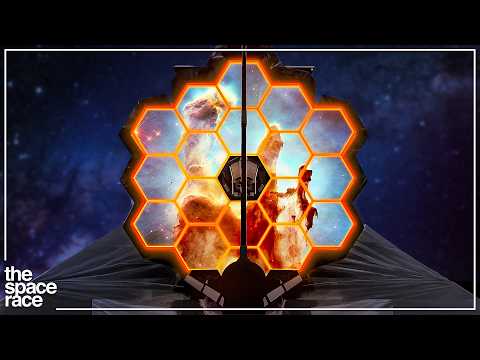
So, you know that feeling when you finally get a new gadget and can’t wait to show it off? Like, remember when your buddy got a fancy camera and wouldn’t stop snapping pics of everything? Well, the James Webb Space Telescope (JWST) kind of feels like that, but on a galactic scale!
Imagine this: we’ve built this incredible piece of technology that can look back in time. Seriously! It’s like peeking into the universe’s scrapbook from billions of years ago. How cool is that?
Since its launch, JWST has been taking some jaw-dropping snapshots of space. And trust me, these aren’t your average Instagram posts. We’re talking about discovering new galaxies and maybe even some hints about life beyond Earth.
People have been buzzing with excitement over what it’s finding. It’s not just science; it’s like the ultimate cosmic treasure hunt! So grab your popcorn, because there are some mind-blowing discoveries to unpack!
Unveiling the Cosmos: The Surprising Discoveries of the James Webb Telescope in Modern Astronomy
So, have you heard about the James Webb Space Telescope? It’s this incredible piece of technology that’s taking our understanding of the universe to a whole new level. Basically, it’s like someone handed us a super-duper pair of binoculars that let us see the cosmos more clearly than ever before. Seriously, it’s changing the game in modern astronomy.
One of the most exciting things that Webb has done is look back in time. You know how when you look at stars, you’re actually seeing them as they were years ago? Well, Webb can see galaxies from as early as just a few hundred million years after the Big Bang! That’s like peering into a time capsule and checking out what was going on when everything was still forming.
It also helps us study the atmospheres of exoplanets. These are planets outside our solar system, and some could potentially hold the key to life. Webb uses its fancy instruments to analyze light passing through these planets’ atmospheres. This means we get clues about their composition—like if they have water vapor or other chemicals that might hint at life. Pretty wild, right?
And let’s not forget about the stunning images Webb captures. You might have seen those vibrant photos floating around online. They’re not just pretty; they’re packed with information! The telescope can reveal details about cosmic structures, star-forming regions, and even black holes that we’ve never been able to see before. Each image tells a story about how galaxies evolve over time.
Another cool aspect is its ability to observe dusty regions where stars are born. Stars form in clouds of gas and dust—they’re like stellar nurseries! Webb’s infrared capabilities allow it to peek through all that dust and get a glimpse of what’s happening in there. We’re talking about spotting protostars emerging from obscured areas—it’s like finding treasure!
However, with all these discoveries come questions too. For instance, researchers are still trying to understand how fast some galaxies are forming stars compared to others. There’s still so much we don’t know! But that’s what really makes this an exciting time for astronomy.
Overall, the James Webb Space Telescope isn’t just revealing new wonders; it’s reshaping our understanding of the cosmos itself. So grab some popcorn and keep an eye out for what comes next—you won’t want to miss it!
Groundbreaking Discoveries of the James Webb Telescope in 2025: Unveiling the Mysteries of the Universe
In 2025, the James Webb Space Telescope (JWST) is really making waves in the world of astronomy. It’s like having front-row seats to a cosmic show that reveals deep secrets of the universe. You know, it’s just mind-boggling to think how far we’ve come with our understanding of the cosmos.
One of the standout discoveries from JWST is its ability to peer back in time. Seriously! When you look at distant galaxies, you’re not just seeing them as they are today but how they looked billions of years ago. It’s like flipping through a cosmic photo album, but instead of selfies, you’re getting images from the early universe.
- Uncovering Exoplanets: JWST has also been diving deep into exoplanet research. It’s been able to analyze atmospheres of some distant worlds.
- The cool part? It can detect elements like water vapor and even possible signs of life! How incredible is that?
One particular exoplanet that caught attention is TRAPPIST-1e. This little gem orbits a star about 40 light-years away and could potentially have liquid water on its surface—imagine if it hosts some form of life!
Now, let’s talk about galaxy formation. Think about how galaxies might have formed shortly after the Big Bang. The JWST has detected some truly ancient galaxies, which gives us clues about how the universe evolved over time. These ancient formations are showing us things we never knew existed!
- Stellar Nurseries: JWST is peeking into stellar nurseries where new stars are being born.
- You can actually see dust clouds giving rise to new solar systems! How cool is that?
Speaking of stellar nurseries, there was this moment when astronomers spotted a massive star forming right before their eyes in one such area. That kind of thing sends chills down your spine when you realize it’s happening out there in space.
Another exciting area JWST has tackled is dark matter and dark energy. Now, these aren’t exactly easy topics to grasp since they don’t interact with light like normal stuff does. But JWST’s observations are helping physicists piece together this cosmic puzzle bit by bit.
One more thing worth mentioning is how JWST’s intense infrared capabilities allow it to see through cosmic dust clouds that usually hide various celestial objects from view. This means we’re getting a clearer picture than ever before!
In short, all these groundbreaking discoveries paint a clearer picture not just about our universe but also about possibilities beyond Earth—what else might be out there waiting for us? Each finding feels like unwrapping a gift from space; it gets you excited for what lies ahead in exploration!
Exploring the Cosmos: Insights from the Spitzer Space Telescope’s Discoveries in Astrophysics
The cosmos has always been a realm of mystery and wonder, right? Well, the Spitzer Space Telescope, which has been operational since 2003, gave us a peek into those vast depths. It focused on infrared astronomy, allowing us to see things that regular telescopes couldn’t. So what did it really uncover?
One of the coolest discoveries from Spitzer was the insight into how stars form. Using its powerful infrared capabilities, Spitzer could detect warm dust clouds around young stars. Imagine being able to see baby stars in their cradles! This is key because understanding star formation helps us learn about the universe’s evolution.
And then there’s the discovery of exoplanets, or planets outside our solar system. Spitzer helped identify many of these worlds by detecting their atmospheric compositions. It found things like water vapor and even more complex molecules in some cases! Just think about it: spotting water on distant planets could mean they might (or might not) support life.
Now that we have the James Webb Space Telescope up and running, you might wonder how it relates to all this. Look, Webb is like Spitzer’s bigger sibling with even sharper eyes! It builds on what Spitzer began but can go deeper into space and further back in time—seriously mind-blowing stuff.
Some key points from Spitzer’s findings include:
You see? Each discovery leads to more questions and more excitement! The combination of data from both telescopes will give scientists an unprecedented view of how our universe ticks.
In essence, while Spitzer opened doors to understanding our cosmic neighborhood better, Webb is poised to take us even further down that path. It’s like a relay race where each telescope passes the baton but with shiny new insights every time!
In short, exploring the cosmos is a never-ending journey filled with discoveries from each telescope we launch. Who knows what secrets await in those distant galaxies? All we can do is keep looking up and asking questions!
So, you know how space has always been this big, mysterious thing? Like, we’ve been staring at the stars forever and asking ourselves what’s out there. The launch of the James Webb Space Telescope (JWST) was kinda like handing a really powerful flashlight to a kid in a dark room—they can finally see everything! When it blasted off in December 2021, I remember thinking, this is gonna be game-changing.
The thing about JWST is that it’s not just another telescope. It’s like the coolest binoculars for the universe! It can look back in time to see galaxies forming just after the Big Bang. Imagine that! Scientists have already started uncovering some incredible stuff. For instance, they’re spotting planets outside our solar system and even examining their atmospheres for hints of life. And when they said they found water vapor on some of these exoplanets? I mean, come on!
But sometimes it hits me hard how vast and empty space feels. Like, there’s this sense of loneliness when you think about billions of galaxies out there, each one holding untold stories. It makes our day-to-day worries seem so tiny by comparison. The excitement around JWST keeps growing though, as new images emerge and people dive deeper into what those images might mean.
I recently saw an image of some distant galaxy clusters forming—a cosmic dance taking place over billions of years—and I got chills. It’s wild to think that light from those galaxies has traveled for eons just to reach us now. You can’t help but feel a connection to everything out there; it’s like we’re all part of this giant cosmic puzzle.
So yeah, with JWST shining its light on new frontiers, it’s sparking curiosity in everyone—from seasoned astronomers to kids dreaming about space travel one day. And who knows what else we’ll find? Every discovery opens up more questions, and honestly? That’s what makes science so thrilling! Just when you think you understand something about the universe, it throws you another curveball—keeps us all guessing and learning!