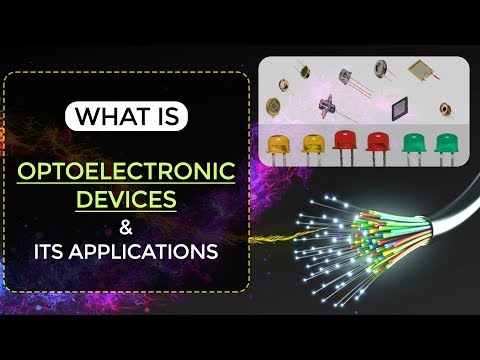
So, you know how when you click on your phone and the screen lights up? That little magic moment is thanks to optoelectronics. Seriously, it’s like a dance between light and electricity.
I remember back in the day, trying to explain lasers to my younger cousin. He thought they were like lightsabers! I mean, kind of close, right? But lasers are just one tiny piece of the optoelectronic puzzle.
Think of all those cool gadgets we use every day—smartphones, TVs, even those fancy gaming consoles. They all rely on these advancements that sound super sci-fi but are just brilliant science at work.
Optoelectronics isn’t just some nerdy topic; it’s a field that’s literally lighting up our world… and making life way more interesting. So let’s chat about what’s been brewing in this vibrant field and how it’s changing everything around us!
Exploring the Fascinating World of Optics: Principles, Applications, and Innovations in Science
Alright, let’s talk about optics! You know, the science that deals with light and how it interacts with matter? It’s super cool and honestly, it feels like magic sometimes. Imagine being able to manipulate light to create amazing visuals or even develop tech that changes how we communicate. That’s where optics comes in!
What are the Basics of Optics? First off, optics is all about understanding light. Light travels in waves, and it can behave like both a wave and a particle. This dual nature of light leads us into the world of refraction (bending of light), reflection (light bouncing off surfaces), and diffraction (spreading out of light waves). Ever seen a rainbow? That’s refraction at work when sunlight hits raindrops! Pretty neat, right?
Applications Galore! So, what can this knowledge do? A lot! Here are some key areas where optics plays a major role:
- Vision Correction: Think glasses or contact lenses! These tools correct the way light enters our eyes so we can see clearly.
- Cameras: They use lenses to focus light onto a sensor. The better the lenses, the better your pictures!
- Lasers: From barcode scanners to surgical tools, lasers are everywhere. They’re precise beams of light that can cut through materials or scan items quickly.
Just picture being at a concert—those dazzling lights and visuals? Yep, all thanks to optics working behind the scenes!
The Rise of Optoelectronics Now, let’s move on to optoelectronics. It’s this exciting field merging optics with electronics. You know how your phone has cameras and screens that use both electrical signals and light? Boom—optical technology combined with electronic systems!
This tech is transforming industries! For example:
- Sensors: Devices that detect changes in their environment using light signals; think smoke detectors or temperature sensors.
- Telecommunications: Fiber-optic cables transmit data as pulses of light over long distances. This means faster internet connections for you—yay!
- Solar Cells: These convert sunlight into electricity! You soak up rays at your beach day while helping power homes—talk about multitasking.
You know what I love? How these advancements lead to innovations every day. Just think about virtual reality headsets—they rely heavily on precise optical technologies for an immersive experience.
The Future Looks Bright Innovations keep rolling in too! Researchers are experimenting with new materials like metamaterials that bend light in unusual ways. Imagine invisibility cloaks someday—that’s literally being worked on! We might also see even more efficient solar panels popping up soon.
The thing is, optics isn’t just for science nerds in lab coats; it touches our lives daily through technology we often take for granted.
If there’s one takeaway here, it’s this: whether you find yourself admiring art through glass or just using your smartphone, remember—optics is silently enhancing those experiences every single day without you even realizing it!
Advancements in Optoelectronics Components: Exploring Innovations in Science and Technology
Optoelectronics is a super cool field that blends optics and electronics. It’s basically all about devices that can emit, detect, and manipulate light. With advancements in this area, we’ve seen some seriously exciting innovations. Let’s take a closer look at what’s going on!
The Basics of Optoelectronics
So, you might be wondering what optoelectronics really means. Well, think of it like this: it’s the science behind things like lasers, LEDs, and solar cells. These components use light to perform their functions and are super important in modern tech.
LEDs and Their Evolution
Light Emitting Diodes (LEDs) have come a long way since they popped onto the scene. Early on, they were mostly red and pretty dim. But now? You can find them in an array of colors and they’re brighter than ever! These little guys are energy-efficient too, which is great for saving power—and money—on your electricity bill.
Lasers: More Than Just a Cool Tool
Then you’ve got lasers! They’re not just for sci-fi movies or fancy presentations anymore. Now we’ll see them used in everything from cutting-edge medical equipment to telecommunications. For instance, laser surgery has advanced remarkably; it allows doctors to perform precise operations with minimal damage to surrounding tissues.
Sensors: The Eyes of Machines
Sensors are another big part of optoelectronics. You know those tiny cameras in your phone or the sensors in self-driving cars? They’re made possible by advancements in optoelectronic components. They can detect light or other signals, which is essential for taking pictures or navigating streets.
Photonic Integrated Circuits
Now let’s talk about something that’s pretty mind-blowing—photonic integrated circuits (PICs). Think of them as the brainy cousins of electronic circuits but instead of electrons zipping around, it’s all about photons (those are light particles!). These circuits can transmit data at incredible speeds with much lower energy consumption compared to traditional electronics. Imagine downloading your favorite show in seconds!
Solar Technology Innovations
And oh man, solar panels! They’re becoming increasingly efficient thanks to advancements in materials used within optoelectronic components. For example, researchers are exploring perovskite solar cells that could potentially make solar energy cheaper and more accessible for everyone.
The Future is Bright
The thing is, we’re just scratching the surface here when it comes to understanding what these advancements mean for our future lives! With research moving at such lightning speed (pun intended!), who knows what amazing applications we’ll see next? From better communication technologies to more effective renewable energy sources—the possibilities seem endless.
In summary:
- Optoelectronics combines optics with electronics.
- LED technology has evolved into efficient lighting solutions.
- Lasers serve various practical applications beyond entertainment.
- Sensors enhance the functionality of many devices.
- PICs enable fast data transfer with low energy use.
- The future holds even more potential innovations!
So yeah, optoelectronics is reshaping our world in ways we might not even fully appreciate yet! It’s an exciting time to be following this field—who knows what will light up next?
Exploring Optoelectronic Properties: Advances and Applications in Modern Science
Optoelectronics is this super cool field where you get to combine light and electricity. Basically, it deals with devices that either generate light or detect it. Like, think about the gadgets that use LEDs or solar cells—those are all part of optoelectronics! The advancements in this area have been pretty remarkable lately, and they touch everything from simple electronics to complex communication systems.
One of the biggest breakthroughs is in light-emitting diodes (LEDs). You know how we used to have those old-school light bulbs? Well, LEDs are way more efficient and last much longer. They work by electroluminescence, which sounds fancy but just means that when you apply electricity to certain materials, they emit light. These days, they’re not just for indicators; they’re being used in lighting for homes and streets too!
Another exciting development is in solar cells. These bad boys convert sunlight into electricity using the photovoltaic effect. Over the years, scientists have been working on different materials to make them more efficient. For instance, perovskite solar cells have been making waves because they’re cheaper and easier to produce compared to traditional silicon cells.
When we talk about applications, we can’t forget about fiber optics! This tech allows us to transmit data as pulses of light through thin glass or plastic fibers. Because light travels so fast, fiber optics make our internet connections super quick! This is essential for modern communication systems, including everything from streaming your favorite show to video conferencing with friends.
But wait! That’s not all—there’s also something called quantum dots. They’re tiny semiconductor particles that emit specific colors of light when exposed to energy. Quantum dots are being explored for use in displays like TVs and phones because they can make colors pop like never before.
And here’s another neat angle: optoelectronics can even help in medical fields! Devices like lasers play a role in surgeries and diagnostics. For example, laser eye surgery uses precise beams of light to reshape corneas and improve vision—how cool is that?
So yeah, the thing with optoelectronics is it’s not just some dry scientific topic—it’s a field bursting with potential that really impacts our daily lives. From how we light up our rooms to how we communicate across the globe and even improve health care; the advancements keep rolling in!
In summary:
- LEDs: Efficient lighting solutions.
- Solar Cells: Transform sunshine into energy.
- Fiber Optics: Fast data transmission.
- Quantum Dots: Enhanced display technologies.
- Medical Applications: Lasers changing healthcare for the better.
It’s wild to think where this technology could go next! Just remember that each breakthrough isn’t just a scientific triumph; it’s something that could change lives one day at a time!
You know, optoelectronics is one of those topics that can sound a bit heavy, but seriously, it’s super cool. It’s all about the study and application of electronic devices that really deal with light—think LEDs, lasers, and photodetectors. There’s this magic in how we can combine optics and electronics to create such incredible technologies.
I remember when I was a kid, my dad brought home one of those early LED flashlights. I was just amazed that something so small could emit such bright light. I mean, it felt like having a piece of magic in my hands! Back then, I had no idea that this tiny invention was part of a much bigger picture involving advancements in optoelectronics. Fast forward to today, and we have so many applications stemming from this field.
So, let’s talk about some real-world uses. One major area is telecommunications. Ever use fiber-optic cables? They work based on the principles of optoelectronics! Light signals travel through these cables at super high speeds, making our internet connections faster and more reliable. Isn’t it mind-blowing to think that light can carry so much information?
Then there’s medical instrumentation—oh man! Devices like pulse oximeters use light to measure oxygen levels in your blood. It’s pretty wild how something as simple as shining a light can tell us so much about our health.
And hey, let’s not forget renewable energy! Solar panels are another fantastic application. They convert sunlight directly into electricity using semiconductor materials. This means we’re harnessing the power of the sun to generate clean energy for our homes and gadgets.
Honestly though, while all these advancements are amazing and have improved our lives in countless ways, what really excites me is the potential for future discoveries. Like, who knows what else lies ahead? Researchers are constantly pushing boundaries with new materials or techniques that could revolutionize everything from computing to environmental monitoring.
All said and done, optoelectronics might seem like a niche area for some folks but think about all the little things in your daily life that rely on it—your phone screen lighting up when you get a message or those cool laser shows at concerts! It’s really fascinating how these scientific advancements weave through so many layers of technology around us. So next time you see an LED or enjoy speedy internet access, remember there’s an exciting world behind it all!