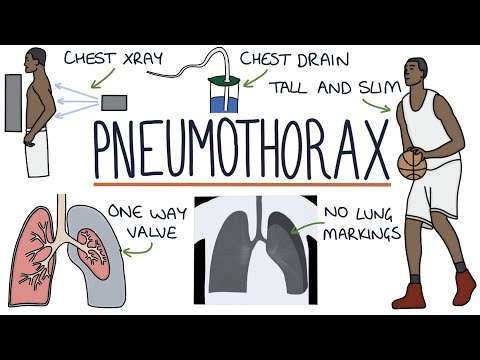
You know that feeling when you take a super deep breath, and it feels like the world just opens up for you? Now, imagine if that breath turned into a struggle. Sounds pretty intense, right? That’s kind of what happens with pneumothorax.
So, picture this: You’re playing basketball, you go for a slam dunk, and suddenly—bam! You feel this weird pain in your chest. It’s not just from missing the hoop; it’s your lung playing hide-and-seek with air. Not cool!
Basically, pneumothorax is when air leaks into the space between your lung and chest wall. It messes up how your lung works. And let me tell you, that’s no fun at all!
We’ll dig into how it happens and why it can really make things tricky for breathing. So grab a comfy seat; this is gonna be an eye-opener!
Understanding the Pathophysiology of Pneumothorax: Insights from Pulmonary Science
Alright, so let’s break down what pneumothorax is and how it messes with our lungs. Basically, a pneumothorax happens when air leaks into the space between your lung and the chest wall. This can cause your lung to collapse, which isn’t exactly what you want happening inside your body.
Now, there are a few ways this can happen. First off, there’s the spontaneous pneumothorax, which is when this occurs without any obvious cause. You know that moment when your friend cracks a joke and suddenly you laugh so hard your soda sprays everywhere? Well, imagine your lung doing something similar but with air—it just decides to pop out! This usually affects young, tall guys who are pretty slim.
Then there’s the traumatic pneumothorax. This one’s easier to picture. If you get hit in the chest or have some kind of accident that damages the lungs—like a bad fall or a car crash—that air can sneak in and make things messy. It’s like if you accidentally punctured an inflatable pool; it just starts deflating.
But what really goes down inside your body during all this? When air gets in there, it raises the pressure in that space between the lung and chest wall, known as the pleural space. The pressure makes it super hard for your lung to expand properly when you breathe. Think of blowing up a balloon—you need to push air in, right? But if there’s already something else taking up space in there, it becomes way tougher.
- Symptoms: You might feel sharp pain in your chest and have trouble catching your breath—like running out of breath while going up those stairs.
- Treatment: Sometimes doctors just keep an eye on it if it’s small or use a needle to suck out that pesky air if it’s larger.
- Surgery: In more serious cases, they might need to do surgery to fix things up—kind of like patching up that inflatable pool I mentioned earlier!
You see, understanding how pneumothorax works isn’t just about knowing fancy terms; it’s about really grasping how fragile our lungs can be. Just like that time I thought I could hold my breath underwater way too long and ended up gasping for air on the surface! So next time you hear about someone having issues with their lungs or breathing problems, remember there’s often more at play beneath the surface.
The field of pulmonary science keeps digging deeper into these mechanisms. Researchers are constantly finding new ways to understand conditions like this better—and who knows what cool discoveries we’ll make next! So yeah, keeping our lungs healthy isn’t just important; it’s essential for living life fully.
Understanding the Pathophysiology of Tension Pneumothorax: Key Mechanisms and Implications in Respiratory Medicine
Tension pneumothorax is a serious condition that can put your life on the line, and it all boils down to some tricky science. So, what is happening in your body during this situation? Let’s break it down.
First off, pneumothorax itself refers to air getting into the pleural space, which is the area between your lungs and the chest wall. Normally, this space is a vacuum that helps keep the lungs inflated. When air seeps in—whether from a puncture or injury—the balance gets messed up.
Now, here’s where tension pneumothorax comes into play. This happens when air enters the pleural space but can’t escape. You see, every time you inhale, more air gets pushed in there. It’s like blowing up a balloon without letting any air out—eventually, that balloon will burst! The rising pressure starts pushing on the lung on that side and even squishes the heart and other structures in your chest.
- The intrathoracic pressure increases: When air accumulates without escaping, pressure rises significantly.
- Collapsed lung: The lung will start to collapse because of this increasing pressure.
- Mediastinal shift: This means that everything—including your heart—shifts toward the other side of your chest, making breathing even harder.
You can imagine how distressing that would be! It’s like someone is sitting on your chest while you’re trying to take a deep breath. Symptoms can pop up quickly—sharp chest pain, difficulty breathing, and even rapid heart rates are common signs.
The body tries to compensate for this by increasing respiratory rates or heart rates. But after a point, it just can’t keep up; brain cells start craving oxygen if they don’t get enough blood flow due to all this squeezing going on!
Treatment is critical here since this condition can be life-threatening. Doctors typically use something called needle decompression, which involves inserting a needle into the pleural space to relieve pressure—and fast! Imagine being relieved of that crushing feeling almost instantly; it’s pretty amazing how quickly it can change things.
The key takeaway? Understanding tension pneumothorax isn’t just about knowing how and why it happens; it’s also about recognizing how fast medical intervention is needed when things go south in our bodies.
This whole scenario sheds light on why proper management of respiratory issues is vital in medicine today. You really don’t want tension pneumothorax sneaking up on you or someone else!
Understanding the Clinical Approach to Pneumothorax in Medical Practice
Alright, so let’s chat about pneumothorax. It sounds complex, but breaking it down makes it easier to understand. Pneumothorax is basically when air gets into the space between your lung and chest wall. This can cause the lung to collapse, which isn’t great for breathing.
Mechanisms of Pneumothorax can be classified mainly into two types: primary and secondary. Primary pneumothorax often happens without any underlying lung disease, while secondary occurs due to pre-existing conditions like COPD or asthma. Imagine you’ve got a balloon (your lung) inside a box (your chest). If that balloon pops or leaks air escapes into the box!
But wait—it gets more technical! The air that fills this space disrupts the normal pressure dynamics that help your lungs expand and contract. It’s kinda like if you were trying to blow up a flat tire; there’s just not enough pressure to keep it inflated properly.
- Primary Spontaneous Pneumothorax: This happens mostly in tall, thin young males who might have some weak spots in their lungs called blebs. Think of these blebs as little bubbles that can burst easily. It’s like having a tiny time bomb in your lungs!
- Secondary Spontaneous Pneumothorax: This one is often related to diseases like cystic fibrosis or pneumonia. Here, the lung itself is damaged already, making it more likely for air to escape.
- Iatrogenic Pneumothorax: Now this just means it’s caused by medical intervention—like during a procedure when a doctor accidentally punctures the lung. Oops! But hey, mistakes happen.
Now let’s get into how doctors actually handle pneumothorax in practice—like what they do when someone walks into an ER looking breathless and panicked! First off, they usually start with an X-ray. It’ll help them see if there’s indeed air in that pesky spot between the lung and chest wall.
If they confirm it’s pneumothorax, treatment options depend on how big the space is where the air’s trapped and whether the person is feeling super uncomfortable or not:
- If it’s small: Sometimes they’ll just watch and wait—maybe give some pain relief while keeping an eye on any changes.
- If it’s large or causing distress: They might stick a needle in there (yikes!) or place something called a chest tube to help drain out that unwanted air. It’s kind of like letting the pressure out of a soda bottle before you pop it open!
The recovery can vary too; some folks bounce back quickly while others might take longer depending on their overall health and any underlying issues.
You know what really hits home? I once met someone who had been hiking when they suddenly felt this sharp pain in their side—turns out they had developed a spontaneous pneumothorax right then and there! It was such a reminder of how fragile things can be under pressure.”
So there you have it—a little journey through understanding pneumothorax from its mechanisms to how doctors tackle it in real life! Not so scary anymore, huh?
Alright, let’s chat about pneumothorax. It sounds super technical, but it really boils down to a couple of basic ideas. You’ve probably heard of it, right? It’s when air leaks into the space between your lungs and chest wall. Think about that for a second! Your lungs are like big balloons that need to be inflated properly to help you breathe. When they’re not working right because of this air leak, it can get pretty serious.
So, how does this whole thing happen? Well, there are two main types of pneumothorax—primary and secondary. Primary typically pops up in healthy folks without obvious lung issues, often hitting young dudes who are tall and thin. I remember my friend Jake from college; he was like a string bean and had this happen during a workout session, completely out of the blue! One minute he was lifting weights; the next minute he felt a sharp pain in his chest. Super scary stuff!
Now, secondary pneumothorax usually happens in people who already have lung problems—like those with asthma or COPD. In these cases, a weak spot in the lung can just rupture. It’s kind of like when you have an old tire that finally gives way after years of wear and tear.
When air gets into that pleural space—the area between your lungs and chest wall—it disrupts the pressure balance needed for normal breathing. You see, our bodies work on pretty delicate pressures; it’s why we can’t just go around holding our breath forever! So when something disrupts that balance? Oof! You might feel short of breath or experience chest pain.
The mechanics behind it are wild too. Basically, the pressure inside your pleural space drops way too low compared to outside air pressure when there’s a rupture or leak—even causing your lung to collapse partially or fully. Imagine falling flat on one side because someone let all the air out of your inflatable pool—it’s not fun at all!
And here’s where things get more interesting: how do doctors even deal with this? They might use something called a chest tube to help get rid of that extra air so your lung can re-expand again. It sounds complicated but really is just about getting things back to normal.
Feeling scared yet? Well, honestly it’s more common than you think but can be treated effectively if caught early enough. Talking about these mechanisms like this reminds me how fascinating our bodies are—and how important it is to pay attention when something feels off.
Anyway, next time you hear someone mention pneumothorax—or even see an odd fitness post about “popping” lungs—you’ll have some cool info up your sleeve! Isn’t it amazing what our bodies go through day in and day out just for us to take a simple breath?