You know that moment when your fridge suddenly turns into a science fair? Like, you’re just standing there with a piece of pizza, and your magnet decides it’s the strongest thing in the universe? Yeah, magnets can be pretty amazing—and a little weird, too!
So, picture this: you’ve got your basic fridge magnet holding up your grocery list while secretly channeling its inner superhero. Now imagine if we cranked that up to eleven with electromagnets! These bad boys can actually switch on and off like magic.
Think about it: here’s an everyday object that can stick around but also unlock jaw-dropping science tricks. And honestly? Exploring magnets and electromagnets is super fun. It’s like unlocking little mysteries of the universe right at home.
Let’s jump into some cool activities with PHET magnets and electromagnets—trust me; you’ll be experimenting like a pro in no time!
Exploring 5 Real-World Applications of Magnets and Electromagnets in Science
So, let’s chat about **magnets** and **electromagnets**, shall we? These guys are super cool, and they play a huge role in our daily lives. You might not notice them much, but trust me, they’re everywhere! Here are five real-world applications that really show off their power.
1. Electric Motors
Ever thought about what makes your fan spin or your car go? Yep, it’s all thanks to electric motors. They use magnets to convert electrical energy into mechanical energy. The interaction between the magnetic fields created by the magnets and the current flowing through wires makes things move! It’s like giving life to inanimate objects. Pretty wild, right?
2. Magnetic Levitation (Maglev) Trains
Have you heard of those futuristic trains that float above the tracks? That’s called **maglev** technology! It uses powerful electromagnets to lift and propel the train forward without any friction. This means they can zoom super fast—like faster than a cheetah on roller skates! Imagine commuting at lightning speed without any bumpy rides!
3. MRI Machines
When you go for an MRI scan, it kind of feels like stepping into a sci-fi movie. This machine uses magnets and radio waves to create detailed images of your body’s insides. The strong magnets align the hydrogen atoms in your body, and when they relax back to their normal state, they emit signals that create those stunning pictures doctors rely on.
4. Credit Card Strips
Next time you swipe your credit card, think about how magnets are working behind the scenes! Those black strips on cards contain tiny magnetic particles that store your information. When swiped through a reader, the magnetic field interacts with those particles and voila—your data is read! Just goes to show how magnets help us with everyday financial transactions.
5. Speakers and Microphones
Do you love listening to music? Well, you can thank magnets for that sweet sound coming through your speakers! Inside both speakers and microphones are magnets that help convert sound waves into electrical signals (or vice versa). Basically, when you speak or play music, these devices use magnetism to create vibrations that we hear as sound.
Anyway, there you have it—five real-world applications of magnets and electromagnets in science that touch our lives every day. From speeding trains to keeping us entertained with music, these fascinating tools make our world much more interesting! So next time you see a magnet or hear some cool sounds from speakers, give a little nod to science at work!
Enhancing Science Education: The Role of PhET Simulations in Creating Interactive Learning Environments
Sure! Let’s talk about how PhET simulations can jazz up science education, especially when it comes to magnets and electromagnets. Seriously, if you’ve ever struggled with those concepts, you’re not alone. They can be a bit tricky at first glance.
PhET simulations are these really cool interactive tools that help students visualize science concepts through engaging activities. Think of them like virtual experiments that you can play with right from your computer. You can tweak variables and see outcomes in real-time, which is super awesome! This interactivity helps solidify understanding because you’re not just memorizing facts—you’re actually doing science.
One major benefit of using PhET simulations is that they create interactive learning environments. Students can manipulate components to see how magnets attract or repel each other. Want to see what happens when you change the distance between two magnets? Just drag them around and watch the force change! It’s like having your own mini-lab without all the mess.
Another important point is that these simulations cater to various learning styles. Some folks might understand best through visual aids, while others prefer hands-on experiences. With PhET, you get both! You can watch animations while playing around with settings to discover how things work on your own terms.
But let’s not forget about accessibility. Kids from different backgrounds may not have access to physical lab equipment, right? PhET bridges that gap by providing free online resources that anyone with internet access can use. So whether you’re in a high-tech school or a small town, engaging with science becomes equally possible for everyone.
Now imagine a classroom where students work together on these simulations. It’s like group projects but without the usual chaos! They can collaborate, discuss their findings, and teach each other different concepts as they play around with the software. That peer interaction is so valuable—it builds communication skills and encourages teamwork.
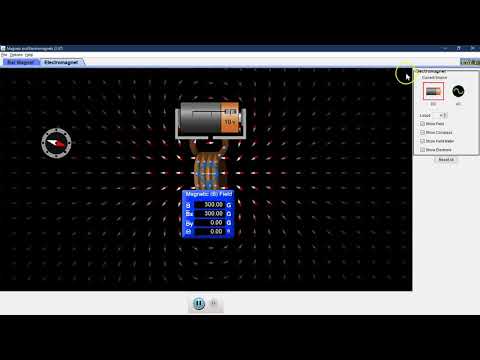
It’s fascinating how these tools fit into learning new topics too. Take electromagnetism as an example: students can play with coils of wire around a nail and see how changing current affects their magnet’s strength—totally hands-on but virtual! With this stuff in place, theory meets practice in one seamless experience.
In short, enhancing science education through PhET simulations brings wonders into classrooms everywhere by creating interactive learning environments where you can explore concepts like magnets and electromagnets without limits. So next time you’re thinking about how to make learning more fun and effective, consider diving into those interactive tools—you’ll find it makes all the difference!
Exploring Magnetic Attraction: A Step-by-Step Guide to Demonstrating Electromagnetic Principles in Science
Alright, let’s unpack this whole magnetic attraction thing. You might not think about magnets much in your daily life, but they’re kinda everywhere! Seriously. From your fridge to electronics to motors, they play a big role in how many things work. So, how do you actually show these electromagnetic principles? Let’s break it down.
First off, magnets themselves have north and south poles. If you’ve ever played with magnets, you know that like poles repel each other while opposite poles attract. You might remember a time when you tried to stick two magnets together and they just wouldn’t budge. Frustrating right? That’s because of these poles!
Now, let’s jump into **electromagnets**. These are a bit different because you can turn them on and off! An electromagnet is created when electricity flows through a wire coiled around a magnetic material, like iron. When the electricity is running, voilà! You’ve got yourself an electromagnet.
Here’s how you can demonstrate this principle yourself:
- Gather your materials: You’ll need copper wire, a battery, an iron nail (or any iron object), and some small metal objects like paper clips.
- Wrap the wire: Coil the copper wire around the nail—make sure it wraps tightly but not too tight that it breaks!
- Connect the battery: Attach one end of the wire to one terminal of the battery and the other end to the other terminal. This will complete the circuit.
- Test it out: Now try picking up those small metal objects with your nail! Isn’t that cool?
- Switch it off: Disconnect one end of the wire from the battery. Did you notice that those objects just fell off? That’s how electromagnetism works.
But listen; if you want to dig deeper into how these magnets interact with each other or even explore them virtually, tools like PhET Interactive Simulations can be super useful. These online simulations can help visualize concepts like magnetic fields or forces without needing all that physical stuff lying around.
And here’s something fun—remember when I mentioned having magnets anywhere? Think about how your phone vibrates when you get a message. Yup—you guessed it—those tiny motors are using electromagnetic principles to make things move!
So next time you’re grappling with why those pesky fridge magnets stick (or don’t), you’ll know it’s all about those spinning electrons creating fields and forces at work! Science isn’t just boring textbooks; it’s in our everyday lives waiting for us to explore it further!
So, let’s chat about magnets and electromagnets. Remember that feeling you got as a kid when you first discovered how magnets stick to the fridge? It’s like magic! You’d have your little toys, and suddenly, they would just cling on like they were best friends. Well, the world of magnets is way bigger and cooler than we think.
When you start diving into how they work, it’s both simple and mind-blowing. Basically, a magnet has a magnetic field around it which can pull certain metals toward it—pretty neat, right? It’s like an invisible force you can feel.
Now, electromagnets take this concept and turn it up a notch. With them, you can create a magnet using electricity! Imagine being able to switch something on and off at will. That’s exactly what happens here. When current flows through a wire coiled around a piece of metal, voila! You have an electromagnet ready to attract all sorts of stuff.
I remember once in school—we built our own little electromagnets using batteries and nails. I was so excited when mine actually worked! Watching my classmates’ faces light up as their creations came to life was something I won’t forget. It felt like we were all little scientists in our own lab; the sheer joy of discovery just filled the room.
And the cool thing is that activities focusing on these concepts are super engaging. Phet simulations make it easy to explore this without needing to worry about mess or materials. You can play around with different variables—like changing current or coil turns—and see how it impacts magnet strength or direction.
These scientific adventures don’t just teach us about physics; they open our eyes to how things work in our everyday lives — from maglev trains zooming by thanks to powerful electromagnets to MRI machines that help us see inside our bodies without any surgery!
So yeah, whether you’re swiping your fridge with those colorful alphabet magnets or experimenting with electromagnet experiments online, just know that there’s an entire universe behind those simple acts waiting for you to explore! Isn’t that kind of awesome?