You know that moment when you try to explain something complicated to a friend, and it just sounds like you’re speaking Martian? Well, that happens a lot in physics. Seriously!
I remember in high school, my buddy Jake tried to show me how black holes work. He used a pizza as an example which honestly confused me more than helped! But it got me thinking: how do you make this stuff make sense?
Enter physics simulations! They’re like the magic trick that shows you the hidden layers of what’s happening. You can see forces at play, visualize energy soaring or crashing, and just get a real feel for it all without needing a PhD.
So let’s chat about how these simulations bridge the gap between all those fancy theories and the messy reality we live in. You’ll see—it’s pretty cool!
Exploring Real-Life Applications of Simulation in Scientific Research and Innovation
Simulation in scientific research is like a playground for physicists and engineers. It allows them to explore complex theories without the messy realities of the physical world. Think of it as creating a video game version of reality where you can test out wild ideas without breaking stuff.
Physics simulations are super cool because they take abstract theories and translate them into something you can see and interact with. For example, when scientists want to understand how a new type of material behaves under extreme pressure, they can create a simulation to model those conditions. It’s like having a crystal ball that shows what might happen before they actually try it in the lab.
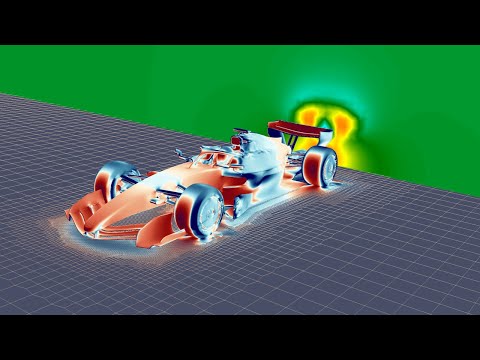
- Aerospace Engineering: When designing airplanes or rockets, engineers use simulations to test aerodynamics. They run scenarios that show how different shapes cut through air, which helps improve fuel efficiency and performance.
- Climate Modeling: Scientists use complex simulations to predict climate changes. By inputting various data (like CO2 levels), they can forecast potential scenarios for our planet’s future.
- Medical Imaging: In healthcare, simulations help create better imaging techniques (like MRI scans). They simulate how different tissues respond to magnetic fields, which leads to clearer images for doctors.
Remember the story of those crazy coral reefs? Researchers simulated ocean conditions to see how rising temperatures affect coral bleaching. They were able to predict massive die-offs before they even happened! This kind of simulation helps conservationists decide where best to focus their efforts.
But here’s the kicker: simulations don’t just help predict outcomes; they also aid in innovation. Think about self-driving cars—they rely heavily on **physics simulations**. These cars need to understand everything from road conditions to pedestrian behavior while driving safely. So, before hitting the streets, companies create virtual worlds where their cars learn how to navigate everyday situations.
Another fascinating application is in particle physics. At places like CERN, researchers run massive simulations that mimic particle collisions at high energies. This helps them analyze potential discoveries without needing countless physical experiments—which can be time-consuming and costly.
You see? By bridging the gap between theory and real-world applications through simulation, scientists not only save time but also spark innovation in ways we never thought possible! It’s all about playing with ideas and seeing what sticks before bringing it into reality. That’s what makes science so thrilling!
Exploring the Quantum Hypothesis: Is There a 50% Chance Our Reality is a Simulation?
So, let’s talk about this wild idea that our reality might just be a simulation. Seriously, it seems like something out of a sci-fi flick, right? But the notion is rooted in some deep philosophical and scientific questions. You might even call it the quantum hypothesis.
First off, the thought process behind this goes like this: if technology keeps advancing, who’s to say that future civilizations won’t have the capability to create incredibly detailed simulations of their ancestors? Pretty mind-boggling when you think about it! Imagine if they were curious about how people lived back in the day and decided to recreate everything down to the tiniest detail.
Here’s a twist—let’s talk about probability. Some people suggest there’s roughly a 50% chance we’re living in a simulation. Why? Well, think about how many simulated worlds could exist compared to just one real world. If we assume that creating simulations is feasible and future civilizations will pop them out like candy, then statistically speaking… more simulated realities are likely than not. You see what I mean?
So why do scientists even entertain this kind of speculation? One reason is quantum mechanics. This field shows us that particles behave in strange ways, almost like they’re part of a computer program running on specific rules. For instance, take entanglement—two particles can be connected no matter how far apart they are. It’s as if they’re sharing information instantly! Some argue that such behavior hints at an underlying code or framework.
But wait! Let’s not forget about physics simulations themselves. They help us understand complex systems, from climate patterns to galaxies colliding. Scientists use these simulations to predict outcomes based on certain variables and conditions—kind of similar to how we’d imagine a simulation of our reality could work.
Consider video games for example: in many games, every action you take influences the story or environment around you. In that sense, isn’t your character living in its own little simulated world? Now apply that concept on a cosmic scale, where we might just be characters as well!
What I find super interesting is how these ideas intertwine with philosophy—think Descartes and his “I think therefore I am.” If you can’t prove anything beyond your conscious experience (like whether there’s actually an external reality), then how do you know what’s real? It raises some beefy questions about existence itself.
In all honesty though, it’s essential to remember we’re still exploring these ideas—we haven’t cracked any codes yet or found evidence suggesting we’re living in a game designed by higher beings! It’s more like we’re pondering some mental gymnastics while munching popcorn.
So yeah, while contemplating whether there’s a 50% chance our reality is just some super-advanced simulation sounds cool (and slightly daunting), it also captures our imagination and pushes us into deeper questions about existence and technology’s role in shaping our lives.
In summary:
- Reality vs Simulation: The idea suggests tech-savvy future beings can create detailed simulations.
- Probability Game: If more simulations exist than real worlds, could there really be a 50% chance?
- Quantum Mechanics: Strange behaviors hint at possible underlying codes governing our universe.
- Physics Simulations: Helping us understand complex systems reflects how simulation concepts function.
- Philosophical Questions: Raises fundamental queries about existence and consciousness.
It sure makes for fascinating chit-chat over coffee with friends!
Exploring the Impact of Physics on Everyday Life: Real-World Applications and Insights
Physics is everywhere in our everyday lives, seriously. It’s like that friend who shows up uninvited but you’re secretly glad they did. From the way your car accelerates to how your phone works, physics really shapes our reality.
Real-world applications of physics are all around us. Think about the simple act of boiling water for tea. The heat from the stove transfers energy to the pot, and then to the water. You’re using conduction there! This is just one small example of thermodynamics, a branch of physics that deals with heat and energy transfer.
- Electromagnetism: It powers your gadgets, man! Every time you plug in your phone or turn on a light, you’re relying on electromagnetic forces. Those invisible fields allow electricity to flow through wires and light up your life.
- Kinematics: That’s a fancy word for movement! When you ride a bike, you’re experiencing concepts like velocity and acceleration. Your body adjusts how much force you put into pedaling based on terrain and speed—just instinctively!
- Fluid dynamics: Ever notice how some boats glide through water while others struggle? That’s fluid dynamics in action, helping designers create vessels that can move efficiently over waves.
You might have heard about physics simulations. These are tools that help us understand complex physical phenomena without burning down labs or causing chaos. For instance, engineers use simulations to predict how buildings will withstand earthquakes. They can play around with different materials and designs virtually before even lifting a hammer!
I remember my college days when we had a lab project involving pendulums. We spent hours timing swings to calculate gravitational pull, but it was all theoretical until we saw how real pendulums behaved under different conditions—like adding weight or changing lengths. It was like watching theory come alive right before our eyes!
The beauty of physics is its ability to explain so much about the world around us while also being incredibly practical. Whether it’s designing safer cars or improving sports equipment, each step taken by physicists has ripple effects in different fields.
You know what’s cool? Physics makes it possible for medical imaging technologies like MRI scans to function accurately by utilizing principles of magnetism and radio waves! Imagine getting an in-depth look at inside your body just because scientists took physics concepts seriously.
So, next time you’re sitting on the bus or scrolling through your phone, take a moment to appreciate just how much physics impacts your life daily—it’s there behind every little thing we do!
Physics simulations are, like, super fascinating! They’re a way for us to see what happens in the universe without actually, you know, blasting off into space or smashing particles together at mind-boggling speeds. It’s amazing how we can take complex theories and put them into a computer program to understand how stuff works in real life.
I remember the first time I played around with a physics simulation online. I was trying to figure out how gravity works, and there I was—watching little balls bounce around just like they would in real life. It felt so cool! It was like having a mini laboratory right on my screen. You get to tweak things, like changing the force of gravity or adding friction. And wow, seeing how that impacts the simulation makes it stick in your mind way better than just reading about it in a textbook.
These simulations don’t just help students, though. They’re used by scientists and engineers too. Like when designing rockets or bridges, they can simulate different scenarios to predict what might happen under various conditions without risking lives or wasting materials. When you think about it, it’s kind of poetic—theory meets practice in this beautifully choreographed dance of numbers and visuals.
But let’s be real here; not everything can be perfectly simulated. Even with all the fancy algorithms in place, some aspects of reality are just messy and unpredictable. Take weather forecasting: even with all our computers working overtime, we still struggle sometimes because nature doesn’t always play by the rules we set.
Still, these simulations give us such valuable insight. They help bridge that gap between abstract theory and what we can actually experience day-to-day. It’s like having a cheat code for understanding our world! The more we use them, the closer we get to grasping those big concepts underlying everything from quantum mechanics to everyday phenomena.
So yeah, physics simulations are not only useful but pretty thrilling too! They invite you into a realm where you can visualize forces at play and experiment with ideas without needing much more than your laptop or desktop computer—but hey, who doesn’t love that?