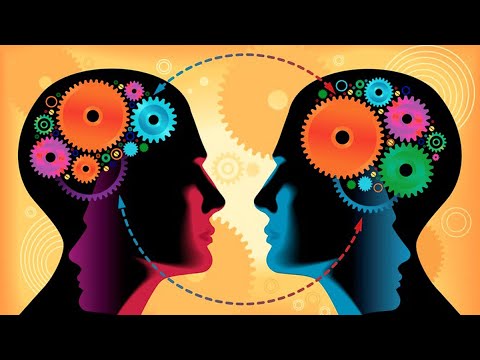
You know that moment when you realize your friend’s choice of pizza toppings says a lot more about them than just their taste in food? Like, who puts pineapple on a pizza, right?
Well, this is kinda like what psychology and social psychology are all about. They dig into how we think, feel, and act within society. It’s like having a magnifying glass into the quirks of human behavior.
Imagine you’re at a party, trying to figure out why some people are chatting away while others cling to their phones. That’s social psychology right there! It helps us understand why we behave the way we do around others.
And that’s not just for fun—it’s super useful too! Understanding these things can change how we interact with one another every day. So let’s break it down together!
Exploring Career Opportunities: Jobs Available with a Degree in Social Psychology within the Science Field
So, you’ve got your sights set on a degree in social psychology? That’s super cool! You’re stepping into a field that dives deep into how people think, feel, and behave in social contexts. And the awesome part? There are tons of career paths you can take with this kind of background. Let’s break it down a bit, shall we?
1. Researcher
If you enjoy digging deep into human behavior and working with data, becoming a researcher could be your jam. Many social psychologists work in academic or government settings where they study trends like voting behavior or group dynamics. You might find yourself conducting experiments or surveys to uncover fresh insights about how we interact with each other.
2. Market Research Analyst
Ever noticed how companies seem to know exactly what you want? That’s partly due to market research analysts! They use principles from social psychology to understand consumer behavior. If you like combining stats with creativity, this job lets you help businesses figure out what products people want and why.
3. Human Resources Specialist
HR is all about people—and that’s where your social psychology skills come into play! You’d get to apply your knowledge of human behavior to improve workplace culture and employee satisfaction. Think about it: facilitating better communication between teams and ensuring everyone feels valued can make a huge difference at work.
4. Social Worker
If you’re interested in helping individuals or communities directly, consider becoming a social worker. Knowledge of social psychology will certainly help you understand the challenges people face in societal structures and assist them more effectively—like helping families cope with mental health issues or navigating financial hardships.
5. Policy Analyst
Curious about how laws affect society? As a policy analyst, you’d evaluate policies and make recommendations based on data and human behavior studies. Your insights could influence decisions on public welfare programs or education systems—pretty impactful stuff!
6. Consultant
Consulting is another path where applying psychological principles can lead to big changes in organizations—from improving team dynamics to creating training programs tailored for specific needs.
In any of these roles, knowing how groups function can have great real-world implications—like crafting campaigns that resonate emotionally or designing interventions that promote behavioral change.
Remember the last time you felt misunderstood at work or school? Knowing why people behave the way they do can help bridge those gaps! It makes your degree not just useful but also tremendously relevant in addressing everyday challenges people face out there.
So, keep an eye on those career opportunities, because with a degree in social psychology, you’re not just getting an education; you’re obtaining the keys to understand society better and even contribute positively—pretty rad if you ask me!
Exploring the Interconnection Between Psychology, Social Science, and the Broader Field of Science
Psychology and social science are like the glue that holds the human experience together. You know how sometimes you just can’t figure out why people do what they do? That’s where psychology steps in, helping us understand thoughts, feelings, and behaviors. Meanwhile, social science takes a broader look at how these individuals interact within larger groups or societies. They’re interconnected fields that truly shine when you explore them side by side.
When we talk about psychology, it’s often about understanding individual behavior. But here’s the thing: our brains don’t work in isolation. For instance, think of when you’re at a party and you notice someone across the room laughing way too hard at something that isn’t even funny. Why? Maybe they’re trying to fit in or impress someone. Psychology can help unpack those motivations by looking at things like personality traits or emotional states.
On the flip side, we have social psychology, which zooms out a bit to see how those individual behaviors affect and are affected by others in society. It examines things like group dynamics, conformity, and social influence. Ever been in a situation where your friends wanted to try a new restaurant, but you really didn’t want to? You might have gone along with it just because everyone else was excited! Social psychology helps explain why we often yield to group pressure—even when we’d rather not.
So, how do these fields tie into the broader realm of science? Well, they make connections with disciplines like biology (think neuroscience), anthropology (the study of cultures), and even economics (how choices are made). Like an intricate web, everything is interrelated. When researchers use tools from different scientific domains—like brain scans used alongside social experiments—they can dig deeper into human behavior than ever before.
And here’s an emotional twist: think about mental health awareness. The stigma around mental health issues is still present in many societies today. Here’s where psychology really shines by providing insights into what individuals face when struggling with their mental well-being. At the same time, social science plays a crucial role in advocating for policy changes and public attitudes towards mental health support systems globally.
In summary:
- Psychology focuses on individual thought processes.
- Social psychology studies how individual behaviors are influenced by societal dynamics.
- The two fields are connected through various scientific methods and disciplines.
- Bigger scientific issues like mental health highlight their vital roles in society.
So yeah, when you look closely at psychology and social science together within the vast landscape of science, it’s clear that they offer invaluable insight into who we are as humans living in a complex world!
Exploring Social Psychology: Is It Considered a Hard Science?
When you think about social psychology, you might imagine a bunch of scientists wearing lab coats, conducting experiments. But the thing is, social psychology is a bit different from what you’d call “hard sciences,” like physics or chemistry. So, let’s break this down a little.
First off, social psychology studies how people’s thoughts, feelings, and behaviors are influenced by others. Sounds straightforward, right? But here’s where it gets tricky: humans are complicated creatures! Our behaviors are affected by countless factors—culture, environment, personal experiences—and that makes measuring them incredibly challenging.
In hard sciences, researchers often deal with measurable phenomena. For example:
- Physics: You can measure the speed of light precisely.
- Chemistry: Chemical reactions can be repeated with consistent results.
In social psychology, however, researchers tackle questions like “How does peer pressure influence your decisions?” or “Why do we conform to group norms?” These questions don’t lend themselves to neat formulas or repeatable experiments the same way other sciences do.
Moreover, one key aspect of social psychology is observation. Many studies rely on surveys or case studies rather than controlled lab settings. For instance, if you were to survey people on their political opinions after a major event like an election frenzy, you’d get varied responses based on individual biases and emotions at that moment. This makes it harder to draw universal conclusions.
The complexities don’t stop there! Social psychologists also have to deal with changing variables like societal norms and cultural shifts. These changes can impact findings in ways that hard science doesn’t typically face.
Now don’t confuse what I’m saying as meaning social psychology isn’t valuable! It absolutely is. Think about historical studies like Solomon Asch’s conformity experiment in the 1950s. He showed how people would change their answers just to fit in with the group—even when they knew they were wrong. That’s serious insight into human behavior!
You could say that while social psychology might not be a “hard” science in the traditional sense due to its challenges in measurement and consistency, it certainly has scientific rigor. The field uses empirical research, statistical analysis, and peer-reviewed studies—just like other sciences do!
The way I see it? Social psychology sits somewhere in between hard sciences and soft disciplines like philosophy or literature. There’s science here for sure—but it’s layered with human experiences that can’t always be quantified easily.
So when folks ask if social psychology is considered a hard science or not—it really depends on how you define “hard.” It’s an evolving field constantly trying to catch up with the ever-changing nature of human society and behavior!
You know, when you think about psychology, it’s like opening a window into how we think and feel. It’s kind of wild to see what makes us tick as individuals. But then there’s social psychology, which takes that a step further and looks at how we interact with others. It’s fascinating, really.
I remember chatting with an old friend at a café one rainy afternoon. We were talking about our college days—those crazy times when social dynamics shaped almost everything we did. I mean, think about it: the pressure to fit in, the influence of our friend groups… It all ties back to social psychology. Those little moments feel personal yet reveal so much about human behavior on a larger scale.
Social psychologists look at things like group behavior, conformity, and even why we do things that might not make sense individually but seem to be the norm in a group setting. Like, why do we sometimes follow trends that don’t align with our values? Seriously! Everything from fashion choices to political opinions can be influenced by what others think or do.
And here’s where it gets even cooler: bridging this science with society means making real change possible. When researchers understand why people behave in certain ways within their communities or cultures, they can help craft programs or interventions that promote positive behaviors—like fostering kindness or understanding during tough times.
It’s not just academic; it connects directly with our lives! Imagine using findings in social psychology to tackle issues like discrimination or mental health stigma. That’s some powerful stuff! Those insights can guide initiatives that make people more aware of their biases or encourage empathy among different groups.
But hey, it’s also important for us as individuals to reflect on our own experiences and be aware of how we’re affected by society. Like when you’re scrolling through social media and see everyone sharing similar opinions—it’s easy to go along without thinking much about it, you know? Being aware of these influences helps us make more informed decisions.
So yeah, whether you’re studying psychology or just living your life day by day, recognizing these connections is key. At the end of the day, bridging science and society isn’t just about academia; it’s about understanding ourselves better and improving the world around us in real ways.