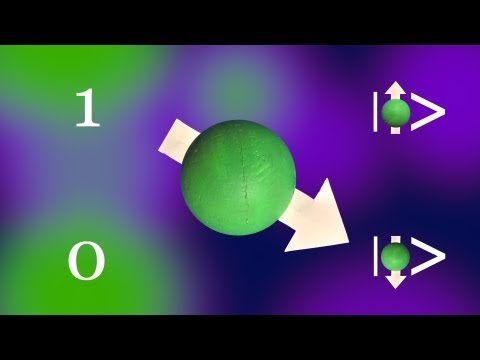
Okay, picture this: you’re sitting in a coffee shop, and the barista accidentally spills a latte all over the counter. Chaos ensues, right? But what if I told you that in the world of quantum computation, things can get even crazier?
Like, instead of just two choices—hot or cold—quantum computers can juggle so many possibilities at once it makes your head spin. It’s wild!
But seriously, this stuff isn’t just for sci-fi movies or nerdy kids in labs. Quantum computation is actually shaking things up in fields like medicine, cryptography, and materials science. You might not see it yet, but it’s quietly changing how we solve problems we used to think were impossible.
So let’s chat about what this all means and why it’s pretty cool. I promise it won’t be boring!
Exploring Quantum Computation: Transforming Modern Science and Its Applications [PDF]
Quantum computation is such a fascinating topic, you know? It’s like stepping into a world where the rules of reality bend and twist into something mind-boggling. At its core, quantum computing taps into the weirdness of quantum mechanics, which governs how the tiniest particles in our universe behave.
First off, let’s break down what quantum computers actually do. Traditional computers use bits as the smallest piece of data, which are either 0s or 1s. But quantum computers use qubits. These little guys can be both 0 and 1 at the same time, thanks to a concept called superposition. Imagine flipping a coin; while it’s spinning in the air, it’s kind of both heads and tails until it lands. Isn’t that just wild?
And then there’s entanglement. This quirky phenomenon happens when qubits become linked together, so that the state of one instantly influences another no matter how far apart they are. Picture two dancers perfectly in sync—when one makes a move, the other mirrors it immediately. This means quantum computers can process huge amounts of information simultaneously.
Now you might wonder: why does this matter for modern science? Well, here are some key areas where quantum computation could really shake things up:
Now let’s think about something relatable: remember when GPS was still figuring itself out—like taking you on a wild route just to avoid traffic? Now imagine if we had access to advanced quantum algorithms optimizing traffic flow in real-time across entire cities! That could save us from all those annoying standstills.
But here’s a catch—the technology is still pretty much in its infancy. Building stable qubits is no walk in the park; they’re super sensitive and can be easily disrupted by their environment—like trying to keep your balance on a seesaw while someone shakes it from below! Researchers are working hard on this though.
The potential applications are breathtaking but come with challenges that will take time to overcome. As scientists dive deeper into exploring these incredible machines, who knows what marvels we’ll uncover next? The journey is as exciting as the destination itself! And that’s what makes this field so thrilling; it’s always evolving—you feel me?
Exploring Quantum Computation: Its Impact and Significance in Modern Scientific Advancements
Quantum computation is like the cool younger sibling of classic computing. Instead of using regular bits, which are basically tiny switches that can be either a 0 or a 1, quantum computers use qubits. These qubits are super nifty because they can exist in multiple states simultaneously—thanks to something called **superposition**. Imagine flipping a coin and it’s somehow both heads and tails at the same time until you look at it. That’s what qubits do!
Now, why should you care about all this? Well, quantum computation could change the game for so many fields. Think about how data is processed today. In medicine, for instance, researchers spend ages trying to analyze vast amounts of data to find patterns in diseases. Quantum computers could handle these massive datasets way faster than classical computers ever could.
Another mind-blowing aspect is **entanglement**. This means qubits can be linked together in such a way that the state of one instantly influences another, no matter how far apart they are. Imagine having two magic dice: if one rolls a six, the other instantly knows to roll a six too! This property might allow quantum computers to solve complex problems quicker than traditional ones.
Let’s not forget about optimization problems—stuff like finding the most efficient routes for delivery trucks or figuring out stock portfolios. With their unique capabilities, quantum computers could tackle these challenges much more effectively than their older siblings.
Here’s where it gets even cooler: think about cryptography—the practice of keeping information secure. Traditional encryption depends on the fact that it’s hard for regular computers to factor huge numbers quickly. But quantum algorithms could crack these codes like they’re nothing! This might sound scary, but recognizing this can help in developing new security measures that are quantum-resistant.
But hold up—don’t picture quantum computers taking over just yet! They’re still in their early stages and have some hiccups to get through before we see them used widely. Issues like error rates and maintaining **quantum coherence** (which is basically keeping those fragile qubit states stable) need more work.
So what does all this mean for modern science? To put it simply:
- Speed: Quantum computing has the potential to perform calculations that would take traditional computers ages!
- New Discoveries: Faster processing can lead to breakthroughs in fields like pharmacology by simulating complex molecules.
- Better Security: Understanding quantum cryptography will help build stronger defenses against cyber threats.
You see folks? Quantum computation isn’t just sci-fi nonsense; it’s seriously paving the way for advancements we haven’t even dreamed of yet! And while we’re still working out those pesky issues, just knowing it exists opens up possibilities that make you wonder what tomorrow will bring if we keep pushing boundaries in science and technology!
Understanding Quantum Computing: Definition and Real-World Examples in Science
Quantum computing is one of those topics that might sound super complicated, but honestly, it’s pretty cool when you break it down. So, let’s chat about what it actually means and how it’s making waves in the real world of science.
First off, what is quantum computing? Well, it’s like taking your regular computer and giving it a turbo boost with some mind-blowing physics. Traditional computers use bits as the basic unit of information—like little on-and-off switches that represent 0s and 1s. But quantum computers use **quantum bits**, or **qubits**. These qubits can be both 0 and 1 at the same time! It’s called **superposition**, and it lets quantum computers process a massive amount of information at once.
Imagine flipping a coin. When it’s spinning in the air, it can be seen as both heads and tails. Only when you catch it does it land on one side or the other. That’s kinda how qubits work, but with way more math involved!
Another important concept here is **entanglement**. When qubits become entangled, they’re linked together so that the state of one can depend on the state of another—even if they’re miles apart! This spooky connection allows quantum computers to solve problems that would take regular computers ages.
Now let’s talk about some real-world examples where quantum computing shines bright in science:
1. Drug Discovery: Picture researchers trying to develop new medicines by understanding complex molecules. Quantum computers can simulate these molecules much faster than traditional methods, helping scientists discover effective drugs quicker.
2. Climate Modeling: Our planet’s climate is super complicated with countless variables at play. Quantum computers can analyze and predict weather patterns more accurately, which could help us combat climate change effectively.
3. Cryptography: You know how we rely on encryption to keep our data safe? Well, quantum computing could crack those codes much faster than current methods allow—which means better security measures need to be developed to keep our info safe!
The thing is, while this all sounds amazing, we’re still in the early days of tapping into quantum power fully. A lot of research is happening right now; scientists are figuring out how to build stable qubits and create algorithms that take advantage of this technology.
I remember watching a documentary about a group of scientists who managed to create a simple quantum algorithm for factoring numbers—something classical computers struggle with when numbers get large enough. Their excitement was contagious! It made me appreciate just how groundbreaking this technology could be.
In reality, as we explore more possibilities with quantum computing, every day feels like stepping into a sci-fi movie where we’re not just imagining futures but actively creating them through science! So yeah, whether it’s searching for new pharmaceuticals or predicting climate patterns accurately, there’s just so much potential packed into this quirky sector of tech!
Alright, so let’s chat about quantum computation. You might be thinking, “What’s that all about?” Seriously, it’s one of those things that sounds super complicated, but it can actually be really cool if you break it down a bit. Picture this: you’re standing in front of a vast library. A classical computer is like a librarian who can find one book at a time—efficient, but slow when you have millions to sift through. Now, imagine quantum computers like having a whole team of librarians who can check multiple books at once. Mind-blowing, right?
The tech behind quantum computers relies on the weirdness of quantum mechanics—the stuff that happens on a tiny scale where particles behave in ways that totally go against common sense. Like, particles can be in two places at once or even sort of “talk” to each other across distances without any physical connection. Sounds like sci-fi? For sure! But this is where it gets interesting for modern science.
I remember the first time I stumbled upon this topic during my college days. I was sitting in a lecture hall when the professor described how quantum computers could revolutionize fields like cryptography and drug discovery. It was one of those “aha” moments! I mean, think about being able to develop new medications much faster or cracking codes that could keep our information secure. That’s some serious game-changing potential.
What’s more is how they could tackle problems that would take classic computers ages to solve—like simulating molecules for scientific research or optimizing complex systems in real-time! Imagine trying to predict weather patterns with way more accuracy thanks to these powerful machines.
But it’s not all just rainbows and butterflies; there are challenges too. Building stable quantum computers is no small feat. They’re super sensitive to their environment—a bit like trying to keep a cake from falling flat while baking in an earthquake zone!
In essence, while we’re still figuring things out and laying the groundwork, it feels like we’re on the verge of something extraordinary with quantum computation paving the way for advancements we can’t even fully envision yet. It makes you wonder what other surprises science has up its sleeve! So here we are; excited and just waiting for those breakthroughs to unfold before our eyes, don’t you think?