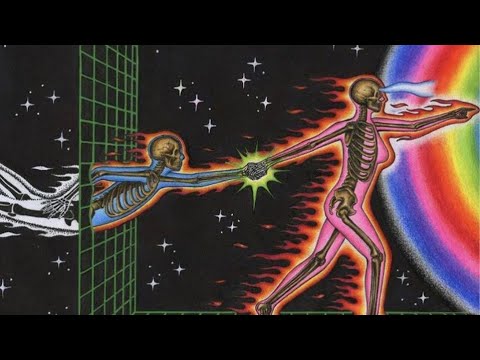
Okay, picture this: you’re at a party, and someone starts telling you about quantum physics. Suddenly, you feel like you’re in a sci-fi movie, right? Like, what’s up with particles being here one second and there the next? It’s totally mind-bending!
So, quantum theory is kinda like the magic show of the science world. Seriously! You think you know what’s real until some tiny particles come along and mess with your head.
And here’s the kicker: this stuff isn’t just for scientists in lab coats. Nope! Quantum theories are actually shaping how we understand everything around us—even our own reality.
Bizarre? Absolutely! But that’s what makes it so cool. So grab a comfy seat and let’s dig into the wild world of quantum theories together!
Exploring Quantum Mechanics: A Challenge to Traditional Concepts of Reality in Science
So, quantum mechanics, huh? It’s like the crazy cousin of classical physics. You know, the one that shows up at family gatherings and has everyone scratching their heads. Well, what’s wild about quantum mechanics is that it flips our traditional ideas of reality upside down.
First off, let’s break down what we mean by quantum mechanics. This branch of physics looks at things way smaller than atoms—like electrons and photons. These tiny particles behave in ways that just don’t make sense if you think in terms of everyday objects. Imagine you toss a ball. You can predict where it’ll land because its path is pretty straightforward. Not so with quantum particles.
For example, there’s this idea called superposition. Picture this: a coin spinning in the air is neither heads nor tails until you catch it. In the quantum world, particles can exist in multiple states at once until they’re measured or observed! This means an electron can be here and there at the same time—mind-blowing, right? It’s like having your cake and eating it too… but only if you look away for a moment!
Now, consider entanglement. This is where things really get funky. When two particles become entangled, they’re connected in such a way that changing one instantly affects the other—no matter how far apart they are! Think about a pair of gloves: if you find one glove on one side of town and know it’s left-handed, you automatically know the other glove must be right-handed somewhere else. But here’s the kicker: these particle connections can happen over vast distances instantaneously! Einstein called it “spooky action at a distance,” which sounds like something out of a sci-fi movie.
Also, quantum mechanics challenges our basic idea of reality. Traditional science emphasizes that objects exist independently whether we’re looking or not. Quantum theory throws that into chaos by suggesting that observation plays an active role in determining outcomes. Ever heard about Schrödinger’s cat? It’s a thought experiment where a cat is sealed in a box with poison that’s triggered by radioactive decay (which is random). Until someone opens the box to check on the cat, it’s considered both alive and dead simultaneously! Talk about an existential crisis!
So why does all this matter? Well, quantum theories are shaping technology right now! Take quantum computing; it harnesses superposition to process info much faster than traditional computers ever could. Plus, there are advances in cryptography making use of entanglement to create unhackable communication systems.
In closing—sort of—a lot remains mysterious within this wild frontier of science. As new experiments unfold and theories develop, we might get closer to understanding not just how our universe works but also what “reality” really means! Isn’t it exciting to think we’re still discovering secrets about existence itself? So yeah, keep your mind open because quantum mechanics sure likes to keep us guessing!
Exploring Joe Dispenza’s Insights on Quantum Physics and Its Implications for Science
So, let’s talk about Joe Dispenza and this whole quantum physics thing. You might have heard his name tossed around in spiritual circles or maybe even in some self-help books. The man is all about connecting the dots between quantum physics and our everyday lives. But, what does that really mean?
Dispenza argues that our thoughts and emotions can influence our reality at a quantum level. It’s like he believes that by changing your mindset, you can actually change the physical world around you. This idea sounds pretty mind-blowing, right? But let’s break it down a little.
- The Observer Effect: One of the core ideas from quantum physics is the observer effect, which suggests that just by observing something, you actually change its state. So when you’re focusing on something with intention, Dispenza suggests it’s like you’re becoming part of that system you’re observing.
- Energy and Vibration: According to him, everything in the universe vibrates at a certain frequency—even your thoughts! He takes this concept further, claiming that if we align our thoughts and feelings correctly, we can attract different experiences into our lives.
- Neuroplasticity: Dispenza mixes in some neuroscience here too. Neuroplasticity is basically how your brain can form new connections throughout life. He believes that by training your mind to think differently—like through meditation—you’re literally rewiring your brain to create new realities.
This all sounds fascinating but also a bit tricky to wrap your head around! There was this one time I tried a type of focused meditation Dispenza talks about. You know, sitting there trying to visualize my goals as if they were already happening? It felt kinda weird at first but after a while, I really got into it—almost like I was tapping into something bigger than myself.
Now let’s not get too carried away here; many scientists are cautious about applying quantum theories so broadly to everyday life. Some feel that while these concepts have deep implications in physics, applying them directly to human consciousness might be stepping over some lines.
If you think about it though, there is real value in shifting perspective—whether or not we fully buy into the whole quantum thing. Changing how you think could influence how you act and ultimately how situations unfold for you.
- The Nocebo/Placebo Effect: This ties back nicely into what Dispenza talks about with perception affecting reality. If individuals believe they’ll get better or worse based on their thoughts alone—it often turns out they do! That shows how powerful our minds can be!
- The Future of Science: With people like Dispenza challenging traditional views by merging science with personal experience, maybe we’ll see more research into these areas in the future—exploring consciousness alongside quantum mechanics.
Soo yeah, whether Joe Dispenza’s insights hold up under scientific scrutiny remains open for discussion. But his ideas are definitely getting people thinking outside their usual frameworks! It reminds us all of the potential within ourselves—not just as passive observers but as active participants in shaping our own realities.
You follow me? There’s something empowering about considering that connection between thought and existence—even if it dances on the edge of established science!
Exploring Quantum Reality Theory: Understanding Its Implications in Modern Science
Quantum Reality Theory is, well, one of those mind-boggling topics that make you question everything you thought you knew about the universe. The whole idea comes from quantum mechanics, which is basically how tiny particles behave at the atomic and subatomic levels. It’s super weird and fascinating—like a sci-fi movie come to life!
So, here’s the basic deal: in the quantum world, things don’t always follow the rules we’re used to. You know how in our everyday lives, if you throw a ball, it goes in one direction until it hits something? Not so much in quantum reality! Take particles like electrons: they can exist in multiple states or places at once until we measure them. This isn’t just theoretical; scientists have shown this through experiments like the famous double-slit experiment. When particles are shot through two slits, they create an interference pattern—like waves—until someone checks which slit they go through. Then poof! They act like little balls again. Mind-blowing, right?
Now let’s talk about implications. This stuff has led to wild ideas about reality itself. Some interpretations suggest that our universe might not be as straightforward and objective as we think. For instance:
- Observer Effect: The act of observing can change what happens at the quantum level.
- Superposition: Particles can exist in multiple states simultaneously—a particle isn’t just here or there; it could be both!
- Entanglement: Particles can become connected in such a way that changing one instantly influences another, no matter how far apart they are.
These concepts lead to some pretty wild theories about reality itself and even suggest that our perception might influence what’s real. It’s almost poetic when you think about how interconnected everything could be.
You know what else? Quantum theories are shaping modern tech too! Things like quantum computing, which could revolutionize how we process information—it operates on those very principles of superposition and entanglement! Imagine computers being able to solve complex problems way faster than anything we have today.
To wrap this up: exploring quantum reality theory isn’t just for physicists locked away in labs with their equations; it’s for anyone who marvels at the universe’s mysteries. It challenges us to think differently about existence and connection—and isn’t that something worth pondering over coffee?
So, you know when you’re watching a movie and everything seems totally normal until, bam! A plot twist turns everything upside down? That’s kind of how it feels when you start digging into quantum theories. They’re like the universe’s behind-the-scenes tricks that challenge our daily understanding of reality.
I remember reading about Schrödinger’s cat for the first time. It’s this thought experiment where a cat is both alive and dead at the same time—until someone opens the box. I mean, can you imagine? It totally blew my mind! How can something be two things at once? But this quirky idea helps explain superposition, a core principle in quantum physics where particles exist in multiple states simultaneously until observed. Seriously, it makes you think about how perception shapes reality.
And then there’s entanglement—this wild phenomenon where particles can get so intertwined that the state of one instantly influences another, no matter the distance between them. It reminds me of those friendships where no matter how far apart you are, you just seem to know what the other person is feeling. Connecting across space like that is almost magical!
But here’s the kicker: these theories don’t just challenge our everyday experiences; they also redefine what we think we know about time and space—and even reality itself. Picture yourself walking in a straight line but realizing that your path could twist and turn in ways your brain can’t even fathom. Isn’t it crazy how much we still don’t grasp?
Overall, these quantum concepts might seem distant or abstract, but they beckon us to reconsider everything from our everyday lives to the fundamental nature of existence itself. And honestly? That’s kind of exciting! Like standing on the edge of a cliff looking out at an unknown vastness and feeling both scared and exhilarated at what lies ahead. Who knows what other surprising revelations await us as we keep exploring this weird world?