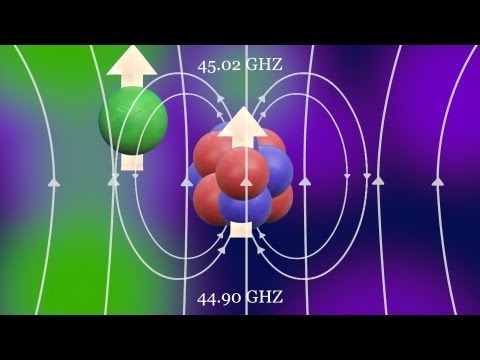
You know what’s wild? There’s a whole reality out there that’s smaller than atoms! Yeah, I’m talking about the quantum world.
Picture this: you wake up one morning, and everything you thought you knew about how stuff works starts to crumble. Like, your morning coffee? It could be both hot and cold at the same time!
Alright, maybe it’s not that dramatic. But seriously, quantum mechanics is like the universe’s version of a magic trick. You think you get it, then bam! Something totally unpredictable happens.
So, what even is a qubit? Well, imagine it as the ultimate digital teen—one minute it’s hanging out in one place, and the next it decides to be somewhere else entirely. Confused yet? Don’t worry; we’ll take this journey together.
Let’s explore this quirky little world where rules bend and break. Buckle up; things are about to get super interesting!
Exploring the Cost of a 1000 Qubit Quantum Computer: A Scientific Overview
Building a quantum computer? Sounds super cool, right? But let’s break down something that’s not so shiny—the cost of getting a 1000 qubit quantum computer up and running. It’s not just slapping together some chips and wires; it involves a bunch of complex science and engineering, so buckle up!
First off, what is a qubit? Well, you know how in regular computers, bits are like tiny light switches that can be either on or off? Qubits are like magic light switches that can be on, off, or both at the same time thanks to a funky property called superposition. This allows quantum computers to tackle certain problems way faster than traditional ones.
Now let’s talk about cost. To build one of these bad boys with 1000 qubits isn’t just about the chips. There’s also:
- Research and Development: Creating new materials or designs takes tons of time and money. Think about how much effort goes into developing superconducting materials; this is where a lot of initial costs hit.
- Cooling Systems: Quantum computers often work at ultra-low temperatures—like colder than outer space! That requires complex cooling systems that can run into the hundreds of thousands of dollars. You need those systems to keep the qubits stable.
- Error Correction: Qubits aren’t as reliable as we want them to be. Error correction techniques are crucial but keep raising costs. You might need many more qubits (maybe thousands) just to get 1000 functioning qubits without errors!
- Sophisticated Infrastructure: Quantum computers need special environments—think isolation from electromagnetic interference. Setting up labs actually adds to the bill significantly.
- Talent Pool: Hiring top-notch scientists and engineers who know their stuff in quantum mechanics doesn’t come cheap! You’re looking at serious salary demands here.
So when it comes down to it, estimates for creating a 1000 qubit machine often toss around numbers anywhere from tens of millions to over a hundred million dollars! Crazy, huh? It’s kind of like building an entire spaceship but for data processing.
Another thing you should know is that while the upfront investment is huge, there might be enormous payoffs in the long run. Imagine solving big global challenges in fields like drug discovery or climate modeling way faster than ever before.
And remember this: as researchers learn more and tech advances, costs could drop over time—like how regular computers got cheaper as they evolved. Every tiny step matters in this wild journey towards making quantum computing common.
So yeah, while it sounds all science fiction-y and amazing now, building a quantum computer involves not only high hopes but also hefty price tags! The future is bright for those who dare venture into these uncharted territories of computing!
Exploring the Potential of 1 Million Qubits: A Scientific Analysis of Quantum Computing Power
So, let’s talk about quantum computing and this idea of reaching a million qubits. Sounds pretty cool, right? Well, it’s actually a big deal in the world of technology and science.
First off, you might be wondering what a qubit is. Think of it like the basic building block of quantum information—kind of like how a bit is for regular computers. But here’s where it gets interesting: unlike a standard bit that can just be 0 or 1, a qubit can be both at the same time due to something called superposition. Imagine spinning a coin; while it’s in the air before it lands, it’s sort of both heads and tails!
Now, why is having one million qubits so exciting? It’s because each additional qubit exponentially increases computational power. Here’s an example: if you have just 20 qubits, they can represent over a million different states at once! With one million qubits? You could potentially represent more states than there are atoms in the observable universe. That’s mind-blowing!
You might be saying to yourself, “That sounds awesome, but what can we actually do with that kind of power?” Well, think about complex problems that take forever to solve with today’s best supercomputers—like simulating molecules for drug discovery or optimizing huge logistical operations. One million qubits could tackle these tasks way faster.
- Chemical Simulations: With more power, we could simulate molecules more accurately than ever. This means faster discovery of new drugs or materials.
- Cryptography: Quantum computers have the potential to crack encryption codes much quicker than traditional systems.
- A.I. Development: They could enhance machine learning models by processing vast amounts of data without delay.
The flip side? This whole thing isn’t simple. Building and maintaining quantum computers with millions of qubits is like trying to juggle flaming swords while riding a unicycle on a tightrope! You need to keep those qubits stable—a state known as coherence. Any tiny disturbance from their environment can mess things up.
The challenges might sound daunting, but scientists around the globe are making strides every day! They’re experimenting with different ways to create these robust quantum systems—like using superconducting circuits or trapped ions—each comes with its own set of hurdles and advantages.
I remember hearing about this scientist who spent years working on error correction techniques for quantum computing. He shared how he felt like he was climbing an endless mountain but eventually saw those little peaks of success along the way. It really shows how persistence is key in scientific exploration!
The idea of one million qubits isn’t just flashy—it represents our ongoing quest for understanding and harnessing the mysteries at play in our universe. Despite all the challenges ahead, stepping into this world feels like opening up a treasure chest full of possibilities!
You see? Quantum computing has immense potential just waiting for us—but reaching that million-qubit threshold won’t happen overnight! It’s going to take time… and lots of teamwork across disciplines!
Exploring Quantum Realities: A Comprehensive Review of Qubit Development in Quantum Computing
Quantum computing is like the cool kid on the block in the world of technology. It’s all about qubits, those funky little units of information that pack a serious punch compared to your regular bits. But what exactly are they and why do they matter? So, let’s take a closer look.
First off, what’s a qubit? Well, unlike the classic bit which is either 0 or 1 (think of a light switch), a qubit can be both at the same time. This is because of something called “superposition.” Imagine flipping a coin; until you catch it, it’s kind of both heads and tails. That’s superposition!
Now, there’s also this mind-boggling thing called “entanglement.” So, if two qubits are entangled, changing one will instantly affect the other, no matter how far apart they are. It’s like having an invisible string connecting them. This spooky action at a distance really amps up computing power because it allows for complex operations to happen in tandem.
Why do we care about these qubits in quantum computing? The main deal is that their ability to hold multiple states enables quantum computers to process massive amounts of data way faster than traditional ones. Imagine trying to find your friend in a packed concert; with normal computing, you’d have to check each person one by one. But with quantum computing and its qubits, it’s as if you could scan the crowd all at once.
Now let’s talk about how developers are building these bad boys. There are several approaches:
- Superconducting Qubits: These use materials that conduct electricity without resistance when cooled to extremely low temperatures. Google uses this method! It’s super popular because it plays nicely with existing technologies.
- Ionic Traps: Here, ions (which are charged particles) are trapped using electromagnetic fields and manipulated with lasers. It sounds like something out of a sci-fi movie!
- Topological Qubits: These are still kind of theoretical but aim to leverage anyons—exotic particles that can exist only in two dimensions—to create more stable qubits resistant to errors.
Each method has its advantages and challenges. For instance, while superconducting qubits are well-developed right now, they still require super cooling which is tricky and expensive.
But here’s the kicker: the race for better qubits is on! Companies worldwide are investing tons of resources into making them more efficient and reliable because everyone wants that quantum advantage.
You see? It all boils down to taking tiny steps toward building these amazing quantum realities we keep hearing about—one qubit at a time! So next time you hear someone talking about quantum computers or how close we’re getting to creating practical applications for this tech… just remember: behind all that hype is some cool science involving quirky little particles acting just like superheroes in the digital world!
You know, when you start thinking about quantum computing, it’s like stepping into a different universe. I remember the first time I heard about qubits. It felt a bit like magic—like someone just opened a door to a world where the rules of physics do backflips. Seriously, qubits are so much weirder than regular bits, which is mind-blowing in itself.
So, what’s the deal with qubits? Well, in classic computing, we use bits that are either 0 or 1—like flipping a light switch on or off. But with quantum bits—or qubits—they can be both at the same time thanks to something called superposition. Imagine being able to wear your pajamas while dressed for work; yeah, it’s that kind of vibe! This quality alone allows quantum computers to do some seriously complex calculations way faster than any classical computer could dream of.
And then there’s entanglement. That’s another funky word in the quantum world! When two qubits become entangled, changes to one qubit instantly affect the other, no matter how far apart they are. It’s like having twin telepathy on steroids or something—it really challenges what we think about information and connection.
But here’s where it gets personal for me. I’ve always loved puzzles and games that challenge my brain—like Sudoku or chess. You’ve probably had those moments when you’re stuck in a puzzle and suddenly find clarity; that quick rush of excitement when everything clicks together? That feeling is amplified tenfold with quantum computing because it opens up new ways to solve problems we haven’t even thought about yet! It stretches our imagination into realms where we can tackle climate models, drug discovery, or even optimizing traffic systems!
The thing is, building these quantum realities isn’t all rainbows and sunshine; there are hurdles galore. Think about trying to keep those delicate qubits stable—they’re like juggling eggs while riding a unicycle. Each little error can throw everything off kilter.
As scientists untangle these complexities bit by bit—or should I say qubit by qubit—we step closer to harnessing this technology for real-world applications. It makes me feel hopeful and kind of giddy thinking about what our future might hold. Imagine being part of an era where quantum computers change how we approach some of life’s toughest challenges!
So yeah, whether you see it as daunting or downright exhilarating, building these quantum realities is definitely an adventure worth following closely!