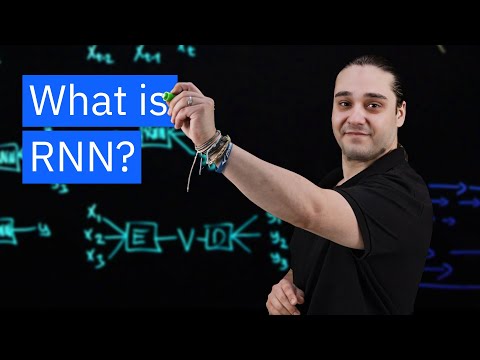
You know that feeling when you’re trying to remember the lyrics to your favorite song, but your brain keeps playing that catchy chorus over and over? It’s like, UGH! But what if I told you there’s a kind of computer brain that can actually remember previous information and use it to make sense of new stuff?
Oh yeah, I’m talking about Recurrent Neural Networks (RNNs). These cool algorithms are basically the memory wizards of the tech world. They learn from sequences, making them super handy for everything from predicting the next word in a text to understanding what your voice is saying.
Seriously, it sounds like something out of a sci-fi movie, but RNNs are making waves in science. Whether it’s in analyzing DNA patterns or helping robots understand language, they’re kind of a big deal. So let’s take a closer look at how these nifty networks are changing the game!
Exploring the Challenges and Limitations of Recurrent Neural Networks in Scientific Research
So, recurrent neural networks (RNNs) are like the cool kids in the AI playground, but they’re not without their challenges. You might think of them as a memory-enhanced version of regular neural networks. They’re great at handling sequences, so stuff like time series data or language processing is right up their alley. But, just because they’re powerful doesn’t mean they don’t face some serious hiccups along the way.
One big issue with RNNs is the vanishing gradient problem. Okay, so here’s what that means: when you’re training these networks, especially on long sequences, the updates to the weights can become super tiny. Like, so tiny that they might as well not exist! This makes it hard for the network to learn patterns that happen over long stretches of time. Imagine trying to remember what you had for breakfast last month when you can’t remember yesterday’s lunch—frustrating, right?
Then there’s also overfitting. This happens when RNNs learn the training data too well instead of generalizing from it. Think about how sometimes you memorize answers for a test rather than actually understanding the material. The same concept applies to RNNs; if they focus too much on minor details in their training data, they might struggle with new information.
Another hurdle is computational cost. Training RNNs can be a bit like running a marathon while carrying a backpack full of bricks—exhausting! They often require more computing power and time compared to simpler models. If you’re working with large datasets or in real-time applications, this can become an efficiency nightmare.
And let’s not forget about sequence length limitations. While RNNs are designed for sequential data, there’s always a ceiling on how much context they can remember. Their memory isn’t infinite; it tends to fade away as sequences get longer. You could say it’s like trying to read an epic novel but forgetting what happened in chapter one by the time you reach chapter five.
Now let’s talk about interpretability. Sometimes it feels like RNNs are hidden behind a foggy glass wall; you know they’re doing something impressive, but figuring out how and why can be tricky. Researchers often find it hard to interpret why an RNN made specific predictions or decisions. It’s kind of like watching someone do magic tricks—you can see something amazing happening but have no clue what’s going on behind the scenes.
Lastly, data preprocessing should get a shoutout here too! Before feeding data into an RNN, researchers need to spend time preparing and transforming it into suitable formats. If you’ve ever tried organizing your closet and thought you’d never get through all those clothes… yeah, you get where I’m going.
So yeah! While recurrent neural networks pack some serious potential for scientific research with their ability to tackle sequence-based problems effectively, these challenges can slow down progress or lead researchers down tricky paths full of complications!
In summary:
- Vanishing Gradient Problem: Limits learning across long sequences.
- Overfitting: Learns details too well and struggles outside training data.
- Computational Cost:. Expensive in terms of processing power and time.
- Sequence Length Limitations:. Memory fades over longer inputs.
- Interpretability:. Hard to understand decisions made by models.
- Data Preprocessing:. Requires careful preparation before use!
Overall these challenges serve as reminders that even superstar models have their rough edges—nothing in science is straightforward!
Understanding ChatGPT: Exploring Its Architecture Beyond RNNs in Computational Science
So, let’s chat about ChatGPT and its architecture. You might have heard of RNNs (Recurrent Neural Networks), right? They were pretty groundbreaking for processing sequential data, like text. But ChatGPT takes things a step further—actually, way further.
First off, what is ChatGPT? It’s a type of model called a transformer. Transformers are great at handling dependencies in data without getting lost in the weeds. Unlike RNNs that operate step-by-step (which can be slow), transformers look at the entire input all at once. This helps them understand context better.
Now, why does this matter? Let’s break it down into some key points:
Now, let’s talk about something real here: when I first learned about these models, I got this little spark of excitement—kinda like when you finally figure out how to ride a bike without training wheels! Understanding how these systems are structured opened my eyes to so many possibilities.
In simple terms, transformers can take in tons of information and pull out what matters most from vast amounts of text—this makes them particularly powerful in tasks like translation or even generating text like this.
To wrap things up: ChatGPT isn’t just another machine; it’s built on state-of-the-art tech that surpasses older methods like RNNs with its ability to process information quickly and contextually understand language better than ever before.
So next time you’re chatting with ChatGPT or any similar models, remember there’s an impressive world of tech behind those friendly responses! It’s wild how far we’ve come in computational science!
Understanding the Key Benefits of Recurrent Neural Networks in Scientific Research
Recurrent Neural Networks, or RNNs for short, are like the cool kids in the machine learning world. They’re super handy for dealing with sequences of data. Think about it: if you’ve ever listened to a song or read a book, you know that context matters. RNNs keep track of what they’ve learned from previous data points to make sense of what comes next.
First off, one of the key benefits is their ability to handle time-series data. You know how when you’re watching a movie, each scene builds on the previous one? RNNs work similarly. They process information in a sequence and remember past inputs using their internal memory. This makes them great for tasks like forecasting weather or predicting stock prices, where knowing the past helps understand future trends.
Another awesome thing about RNNs is how they excel in natural language processing (NLP). Imagine having a conversation with someone where they can remember what you just said. That’s what RNNs do! They analyze sentences one word at a time and build an understanding as they go along. This allows them to power applications like chatbots and translation services, making them more fluent and contextually aware.
Moreover, when it comes to generating content—like music or text—RNNs shine bright again! They can create new sequences that feel coherent because they’ve learned patterns from existing ones. It’s like that moment when your friend starts telling a story but adds their twist; it still feels familiar yet fresh.
But wait, there’s more! RNNs can also be tailored for different types of data through variations like Long Short-Term Memory (LSTM) networks and Gated Recurrent Units (GRUs). These tweaks help prevent the infamous “vanishing gradient problem,” which is kind of like trying to remember a long series of numbers and losing track midway. By preserving relevant information over longer sequences, LSTMs and GRUs ensure that important context isn’t lost along the way.
Now, think about scientific research—say studying gene sequences in biology or analyzing patterns in climate change data. With RNNs at their disposal, researchers can sift through massive datasets efficiently. For example, predicting disease outbreaks by analyzing historical health data becomes way more accurate with these networks involved.
Also interesting is how RNNs adapt over time! With continued training on new data, they become better at predictions or classifications. It’s like having a buddy who learns your preferences after hanging out a few times—they just get smarter over time!
To wrap this up nicely: whether it’s translating languages or predicting future events based on past information, Recurrent Neural Networks are changing the game in science and research fields everywhere. From making sense of complex datasets to enhancing our understanding of patterns we didn’t even know existed, these networks are truly remarkable tools that keep pushing boundaries!
So yeah, as technology advances and we face increasingly complex challenges in science, who knows what breakthroughs these neural marvels will help us discover next? The mind boggles at all the possibilities!
Okay, so let’s talk about recurrent neural networks, or RNNs. These are like the cool, brainy siblings of regular neural networks. They’ve got this super special power: they can remember things over time. Isn’t that wild?
Picture this. You’re sitting at home, binge-watching your favorite series for the umpteenth time. Each episode builds on the last, right? You remember what happened before and that helps you understand what’s going down now. Well, RNNs do something similar but with data! They take in sequences of info—like words in a sentence or frames in a video—and recall what they’ve “seen” before to make sense of what’s happening next.
You might be wondering how this fits into science. So, let’s say you’re trying to analyze patterns in climate data over years—RNNs can help predict future trends by looking at all that historical information! Imagine how helpful that could be for tackling climate change! There are researchers out there using RNNs to predict weather patterns and even analyze genetic sequences. It’s like having a crystal ball but way nerdier!
One day while I was chatting with my friend who’s super into machine learning, she mentioned how RNNs were being used to translate languages. It hit me right then how incredible it is that a computer can learn the nuances of human language! I mean, think about all those idioms we throw around casually—RNNs have to figure out not just words but also context and emotion. That’s like teaching a toddler not only what “kick the bucket” means literally but also that it’s a funny way to say someone has passed away.
It feels almost magical when you think about it: machines learning from sequences just like we do everyday! But hey, it isn’t all rainbows and butterflies—RNNs can trip up sometimes, especially with really long sequences where they might forget earlier bits of information (it’s called “the vanishing gradient problem,” if you want to sound smart at your next party).
Despite the hiccups, these networks continue evolving and getting more powerful; they’re shaping research fields in ways that still blow my mind. In science, where every bit of information counts, having tools like RNNs allows us to dig deeper into mysteries we thought were too complex before.
So yeah, while we’re having our popcorn moments over our TV shows, these brilliant networks are out there unwrapping layers upon layers of information—just one more reason why science is so darn exciting!