So, here’s a fun fact: did you know that some of the most secure messaging apps use a special kind of code to keep your secrets safe? It’s like having your own superhero protecting your conversations.
This superhero has a name—Salsa20. Sounds like a dance, right? Well, it kinda is, but instead of twirling on the dance floor, it’s all about spinning data into safety!
Imagine sending a message that only your friend can read while everyone else thinks it’s just gibberish. Pretty cool, huh? Salsa20 is one of those nifty tricks in the cryptographic toolbox that helps make that happen.
But what makes this thing tick? Why is it a big deal in the world of security? Let’s break it down and see how this catchy-named encryption method is changing the game for keeping our digital lives secure.
Evaluating the Security of Salsa20: Insights from Cryptographic Research
When we talk about Salsa20, we’re stepping into the world of cryptography. This is all about keeping information safe from prying eyes. So, how secure is Salsa20? Let’s break it down.
First off, Salsa20 is a stream cipher designed by Daniel J. Bernstein. What you need to know is that it’s super fast and efficient for encrypting data. Unlike block ciphers, which encrypt data in chunks, stream ciphers like Salsa20 process data bit by bit. This makes it really flexible for different applications.
Now, let’s look at its security features. One of the coolest things about Salsa20 is its simplicity. In cryptography, sometimes less is more! Its structure allows for a very high level of security while being easy to implement. This reduces the chances of introducing bugs or vulnerabilities during coding.
Research on Salsa20 has shown some impressive results. According to various studies, the cipher has been evaluated against different types of attacks—like brute force and differential attacks—and it holds up quite well! The key size can be 128 or 256 bits, which means you’ve got a lot of combinations to sift through if someone tries to crack it.
Another point worth mentioning is that the design of Salsa20 allows for high throughput without sacrificing security. This means you can encrypt data quickly without worrying that speed will compromise the effectiveness of your encryption.
But no system is perfect, right? That’s where cryptanalysis comes in—the branch of study focused on breaking ciphers and assessing their security. Researchers are always testing Salsa20’s limits to find potential weaknesses; so far, these efforts have only discovered very minor flaws that don’t significantly reduce its overall effectiveness.
Here are some key insights from ongoing research on Salsa20:
- Resistance to Cryptanalysis: The cipher shows significant resistance against known attacks.
- Performance: It performs exceptionally under different hardware environments.
- Simplicity in Structure: The design minimizes complexity and reduces potential error points.
It’s kind of like making a sandwich: you want simple ingredients—bread, meat, cheese—but combining them just right makes all the difference in taste and satisfaction.
Finally, there’s this emotional connection we have with encryption tech today—it keeps our secrets safe! Think about every time you send a message or make an online transaction; knowing that something like Salsa20 could be safeguarding your info feels kind of reassuring.
In summary, while no encryption method can guarantee absolute security forever (because hey—things change), current evaluations show that Salsa20 stands strong in protecting our digital lives from unauthorized access. And knowing it’s backed by solid research gives us that little extra peace of mind we all need when navigating through the vast digital universe!
Comparative Analysis of AES and Salsa20: Understanding Cryptographic Algorithms in Modern Science
When we talk about cryptography, it’s like discussing the secret codes you used with your friends in elementary school. But instead of using crayons and notebooks, we’re dealing with complex math and algorithms that keep our online lives safe. Two popular algorithms in this realm are **AES** (Advanced Encryption Standard) and **Salsa20**. Let’s break down what makes these two tick.
AES is like the heavyweight champion of encryption. It’s been around since 2001 and is widely trusted, especially for securing sensitive data. Imagine AES as a really strong vault; it uses a combination of substitution and permutation techniques to scramble your data so that only someone with the right key can decode it. You see, its strength comes from how it handles blocks of data—specifically, 128 bits at a time—and it can use keys that are 128, 192, or 256 bits long. This variety makes AES quite versatile.
On the other hand, we have Salsa20. Think of Salsa20 as the cool new kid on the block who dances to a different beat. It was designed by Daniel Bernstein and offers some fresh approaches to speed and simplicity. Salsa20 uses a stream cipher method, which means it encrypts data one bit at a time rather than in fixed blocks. This speeds things up significantly—like replacing an old car with a sports car for quick getaways!
Now, let’s look at some key differences between these two:
- Performance: Salsa20 usually runs faster than AES on most platforms because it does not have as many rounds of processing required.
- Security Level: Both are considered secure but use different principles. AES has been rigorously analyzed for vulnerabilities over its lifetime.
- Flexibility: While AES supports several key sizes, Salsa20’s strength comes from its ability to maintain high speeds even with smaller key sizes.
- Implementation: You might find Salsa20 easier to implement due to its simpler operations compared to the more complex structure of AES.
It’s fascinating because both algorithms have their strengths depending on what you’re looking for. For example, if you were securing sensitive government documents or financial information, you might lean towards AES because of its established reputation and reliability.
But if you’re working on something like real-time encryption for video streams or online gaming where performance is critical—Salsa20 could be your go-to choice!
So when deciding between these two giants in cryptography, consider what you’re protecting and how much speed matters to your project. Both AES and Salsa20 add layers of protection around our data—making sure that our secrets stay just that: secret!
Understanding Salsa20 Encryption: A Scientific Exploration of Its Mechanisms and Applications
So, let’s talk about Salsa20, which is a cool thing in the world of cryptography. Now, if you’re not familiar with cryptography, it’s basically the practice of securing information so that only intended recipients can read it. Think of it like putting your message in a super-secret box that only your friend has the key to.
Salsa20 is an encryption algorithm developed by Daniel J. Bernstein and is widely recognized for its speed and security—like a ninja that’s not just fast but also really good at staying hidden. It belongs to a category of encryption called **stream ciphers**, which means it encrypts data one bit or byte at a time rather than in large chunks. This makes it pretty efficient for real-time applications.
How Does It Work?
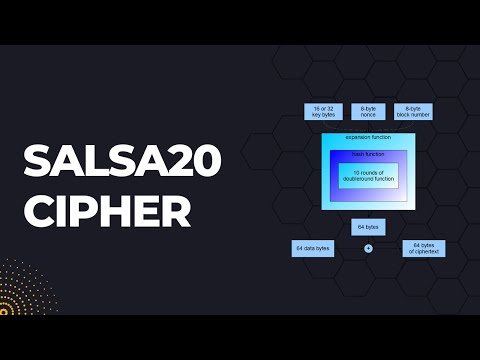
The basic mechanism behind Salsa20 involves a series of mathematical operations on blocks of data and a secret key. When you want to send some encrypted message, Salsa20 takes your original data (plaintext) and transforms it using this key into something unrecognizable (ciphertext). You need the same key to turn it back into plain text later.
Here’s how Salsa20 breaks things down:
- Input: You provide some plaintext and a secret key.
- Round Function: It goes through several rounds (typically 20) where it shuffles bits around, mixes them up like tossing a salad.
- Ciphertext Output: Finally, you get ciphertext that looks completely random.
Now, let me share an anecdote here. Imagine you’re texting your buddy about this weekend’s plans—the kind where you don’t want anyone snooping around! If you’re using Salsa20, the message gets scrambled up so no party-crasher can figure out what you’re saying even if they manage to intercept those messages.
Applications Galore!
Salsa20 isn’t just hanging out in textbooks; it’s actually used in many real-world applications today! You might find it in secure communications software or file storage solutions where privacy is important. It’s also seen action in systems that need fast encryption without sacrificing security, ideal for mobile devices where speed matters.
So why is everyone excited about Salsa20? Well, besides being fast as lightning when encrypting data, researchers have found it hard to break into—a good quality for anything that’s meant to keep secrets safe. Most importantly, even with advances in computing power and hacking techniques over time, Salsa20 stands tall against various attacks.
Looking forward? The crypto world keeps evolving—new methods appear constantly—but Salsa20 remains relevant thanks to its balance between speed and security. If you think about how much sensitive info we share online daily—bank details or personal messages—it’s comforting to know there are solid encryptions out there doing their job well.
In summary, understanding Salsa20 gives you insight into how we can protect our private conversations and data from prying eyes using smart algorithms that operate behind the scenes like tech superheroes!
Salsa20, huh? Sounds like a dance move, but it’s really more about keeping our secrets safe. So imagine this: you’re chatting with your friend late at night, sharing your deepest thoughts and maybe some juicy gossip. You wouldn’t want just anyone eavesdropping on that, right? That’s where things like Salsa20 come into play.
Now, Salsa20 is this neat cryptographic technique that’s all about encrypting data—basically scrambling it up so no one else can read it. And honestly, this is super important in our digital age where everything seems to be online. Think about how often you send messages or share photos; keeping that info private is a big deal!
When Salsa20 popped up on the scene back in the day, it was kind of revolutionary. The cool thing about it is how fast and efficient it is at encrypting data. It’s like having a really good lock on your door that doesn’t slow you down every time you want to go in or out. No one wants a heavy-duty security system if it takes forever to log in or send a text!
I remember when I first dabbled with some home automation gadgets. Connecting everything felt exciting yet slightly overwhelming because I worried about privacy—who’s watching? Could someone sneak in? Knowing there are secure options like Salsa20 gave me some peace of mind. It’s not just tech for experts; it’s something that helps everyday folks feel safer online.
The interesting bit? Salsa20 isn’t even the only encryption method out there, but its design is particularly clever and simple yet strong enough to keep hackers scratching their heads in frustration (and let’s be honest, we love seeing the bad guys lose). Its streamlined approach means people can use it without needing a PhD in computer science to understand what’s going on under the hood.
So yeah, while Salsa20 might sound all techy and complicated at first glance—think of it as a friendly bouncer standing guard at your digital party! You can relax and enjoy your conversations knowing somebody’s got your back—keeping intruders out while letting your real friends through. How cool is that?