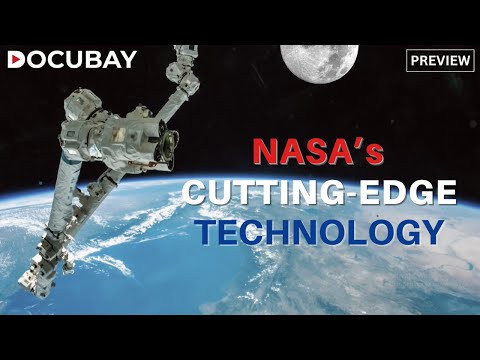
You know, when I was a kid, I used to think that being an astronaut was all about floating around in zero gravity and eating freeze-dried ice cream. Seriously! But there’s a whole lot more that goes into getting up there, right?
It’s kinda crazy if you think about it. Spacecraft engineering has come leaps and bounds since those early missions. Like, who knew we’d be designing spacecraft that could practically talk to each other?
And while we’re dreaming about galactic adventures, the tech behind these innovations is mind-blowing! As we gear up for future missions, let’s take a little peek at what’s changing in this wild world of spacecraft engineering. Sound cool?
Exploring Tomorrow: Future Possibilities in Space Exploration and Scientific Advancements
So, space exploration, huh? It’s like the ultimate frontier for human curiosity and innovation. I mean, just think about it: we’ve only really scratched the surface of what’s out there. With advancements in spacecraft engineering, the future is looking pretty bright!
First off, let’s talk about propulsion systems. Traditional rockets are great and all but they have their limitations. New technologies like ion propulsion are gaining traction. They work by generating thrust through ionizing a propellant and using electric fields to accelerate those ions. It sounds super complex, but basically, it means that we can keep our spacecraft going for longer periods without needing massive amounts of fuel. So instead of running out of gas halfway to Mars, we could potentially zip around the solar system!
Another area to nerd out on is life support systems. Designing habitats that can sustain human life in space for extended missions is crucial. Imagine living on Mars—it’s not exactly a walk in the park! Engineers are working on closed-loop systems that recycle air and water effectively. Think of it like a fancy water bottle where you drink your own recycled H2O… but way cooler and more complex! Such systems will help astronauts survive long durations away from Earth.
Then there’s robotics and automation. We’ve already seen robots doing some heavy lifting in space—like helping with repairs on the International Space Station (ISS). The engineers are constantly pushing boundaries with autonomous spacecraft that could explore distant planets or moons without needing someone behind the wheel. Just picture rovers like Curiosity or Perseverance exploring Mars with even more advanced capabilities—working together as mini-scouts!
Plus, additive manufacturing, or 3D printing in space, is revolutionizing how we see building structures off-Earth! Instead of hauling everything from Earth, why not print tools or parts right there? That saves time and resources—what a neat idea! It’s all about being resourceful when you’re millions of miles away from home.
Now let’s consider what this means for interstellar travel. Yeah, I know—it sounds like something from a sci-fi movie. But theoretical concepts like the Alcubierre Warp Drive propose bending space-time to make distances shrink down dramatically. It sounds totally out there (pun intended), but researchers are taking notions seriously enough to explore their implications.
And here’s the emotional part: think back to when you were a kid staring up at the stars dreaming about what might be out there. Those dreams don’t have to stay dreams forever! With each innovative step forward in spacecraft engineering and scientific advancements, humanity gets one step closer to making those wild imaginations come true.
In summary:
- Propulsion technology: Ion propulsion systems could change how we travel through space.
- Life support innovations: Sustainable living environments will be necessary for extended missions.
- Robotics advances: Automation will enhance exploration capabilities dramatically.
- Additive manufacturing
- Theoretical interstellar concepts:: Ideas like warp drives push the boundaries of science!
: 3D printing can provide essential tools directly in space.
The sky isn’t even close to being the limit anymore; it’s just where our journey begins. Who knows what tomorrow holds? But hey—it looks exciting!
Exploring Cutting-Edge Innovations in Aerospace Engineering: The Latest Advances in Technology and Science
As we step into an era of space exploration that’s buzzing with excitement, the field of aerospace engineering is right at the forefront. With new innovations, we’re talking about things that just a few years ago felt like they belonged in sci-fi movies. And now? They’re part of our reality.
Reusable Rockets are one of the coolest advancements. Remember when rockets used to get tossed aside after one flight, like an old toy? Well, companies like SpaceX changed the game with their Falcon 9. This rocket can land back on Earth after delivering its payload to space. Not only does this save tons of money, but it also makes launching satellites and other missions so much more frequent.
Then we have 3D Printing. Imagine instead of needing a giant factory to build spacecraft parts, you could just print them out! Engineers are using 3D printing to create complex components directly from digital designs. It’s crazy efficient and opens doors for customization that were previously unthinkable. Like, if you need a part that’s super specific, boom – you print it!
Another fascinating area is advanced materials. Engineers are constantly looking for lighter yet more durable materials to build spacecraft. New alloys and composites mean rockets can carry more weight or use less fuel. Think about how your phone is lighter than those first brick-like models we used – it’s kind of the same principle at work here.
We can’t skip autonomous systems, either. Drones and rovers equipped with AI can explore the surfaces of other planets without waiting for human commands coming from millions of miles away. The Mars Rover Perseverance has been sending back incredible data while navigating all by itself! It’s like having a really smart robot buddy up there.
And let’s not forget about electric propulsion. Traditional rocket engines burn lots of fuel quickly; electric ones use electricity to produce thrust over longer periods. They may seem slow at first, but they can reach high speeds eventually! This technology is paving the way for deep-space missions where every ounce of fuel counts.
As missions become more ambitious—think sending humans to Mars or beyond—engineers are working on innovations that address life support systems too. They’re developing technologies to recycle air and water so astronauts can stay in space longer without dragging massive supplies along.
In all this hustle and bustle, remember this: behind every innovation in aerospace engineering stands a team filled with creativity and passion for exploration! If you’ve ever gazed up at the stars and wondered what’s out there, you’re not alone; many brilliant minds are working hard to help us reach those distant worlds.
Isn’t it mind-blowing how far we’ve come? The future holds so many possibilities—and who knows what amazing advances await us next? So buckle up; it’s bound to be quite a ride!
Exploring Recent Innovations in Space Propulsion Technologies: Advances Shaping the Future of Space Exploration
Oh man, space propulsion technologies are, like, totally fascinating! It’s like we’re on the brink of these wild space adventures, and the tech is evolving super fast. You see, when we talk about spacecraft engineering and how it’s shaping future missions, it’s all about super cool innovations that help us push boundaries.
So first off, let’s chat about ion propulsion. This method uses electricity to accelerate ions and create thrust. It’s not exactly like firing a rocket engine but way more efficient for long journeys. You might’ve heard of the Dawn spacecraft that used this technology to explore asteroids. It just kept going and going, kind of like that energizer bunny! Basically, ion drives can operate for a longer time with less fuel, which is a game changer for deep space missions.
Now onto something else exciting: solar sails. Imagine huge sails catching sunlight to propel a craft through space—sounds like something out of a sci-fi movie, right? But seriously—it’s real! NASA’s Planetary Society is working on actual solar sail tests with their LightSail project. These sails can harness the power of sunlight without needing propellant. So they’re light as a feather but can still travel vast distances over time.
Then there’s the whole buzz around nuclear thermal propulsion. It’s like giving rockets a super-powered tank of gas! In this approach, you heat up liquid hydrogen using nuclear reactions to create explosive thrust. The beauty? You get way more efficiency compared to traditional chemical rockets. Sure sounds safer than it sounds—like using an explosive BBQ grill but in space!
Oh! And let’s not forget about plasma propulsion. This tech ionizes gas into plasma and uses magnetic fields to generate thrust. The benefit here? It has an incredible specific impulse—a measure of efficiency that means you can get farther faster with less fuel. Researchers are looking at systems like VASIMR (Variable Specific Impulse Magnetoplasma Rocket) which could revolutionize how we think about getting astronauts to Mars.
And while we’re dreaming big, there are talks of warp drives. I know it sounds outrageous—like Star Trek stuff—but scientists are actually investigating how bending spacetime might allow us to cover vast distances in no time flat! It’s theoretical now but look at how far we’ve come in science—you never know where research will lead next.
These innovations represent so much more than just moving people or payloads through space; they symbolize our desire to connect with the universe and perhaps find other life forms out there! I mean remember when humans thought we’d never leave Earth? Look at us now!
To wrap this up: as scientists keep tinkering away in their labs and universities worldwide, one thing’s for sure:
- Ion Propulsion: efficient for long journeys
- Solar Sails: utilizing sunlight for propulsion
- Nuclear Thermal Propulsion: high-performance rocket tech
- Plasma Propulsion: incredibly efficient thrust generation
- Warp Drives: bending spacetime—fingers crossed!
Every breakthrough isn’t just about technology; it represents our curiosity to explore beyond our little blue planet. And who knows? Maybe one day you’ll be on one of those advanced craft heading toward Mars or beyond!
So, you know how we’ve been looking up at the stars since forever? There’s this weird blend of excitement and curiosity that comes with exploring space. It’s not just about sending shiny metal boxes into the void; it’s about pushing the boundaries of what we thought was possible. That’s where innovations in spacecraft engineering come in, and, honestly, they’re pretty mind-blowing.
Thinking back to when I was a kid, I remember watching a documentary about NASA shuttle launches. The roar of the engines, the fiery trails lighting up the sky—it felt magical! It made me realize how far we’ve come since those early days of space travel. Now, engineers and scientists are working on spacecraft that can do things we didn’t even think were feasible just a few decades ago. Like, have you heard about reusable rockets? They’re not just a cool concept; they’re revolutionizing how we think about getting into orbit.
But it goes beyond just reusability. These days, there’s a ton of focus on making spacecraft smarter and more autonomous. Think about it—machines that can make decisions in real time! That feels like science fiction but is becoming a reality thanks to artificial intelligence and advanced robotics. Just imagine little rovers buzzing around Mars making discoveries without someone back on Earth saying, “Go left now!”
And let’s talk sustainable practices for a second! Spacecraft engineering is really stepping up its game by designing vehicles that minimize waste and use resources efficiently. Some teams are even working on propulsion systems powered by solar energy or using water from other celestial bodies—like Mars! That’s pretty rad if you ask me.
Sure, there are challenges ahead—radiation protection for long missions and potential tech failures—but the spirit of innovation is alive and well in this field. And if there’s one thing I’ve learned over my years of watching human ingenuity unfold it’s this: when people put their minds together to solve complex problems, amazing things happen.
So yeah, as we look forward to future missions—whether it’s taking humans back to the Moon or setting foot on Mars—remember that each ingenious solution brings us one step closer to understanding our universe better… and maybe even finding new worlds to call home someday. Isn’t it exciting?