You know what’s funny? I once tried explaining statistics to my grandma. Let’s just say her eyes glazed over faster than you can say “mean and median.”
Seriously, though, statistics can feel like a foreign language. You’ve got your p-values, confidence intervals, and all that jazz, right? It sounds complicated, but it doesn’t have to be.
When it comes to science, numbers tell a story. They help us understand what’s really going on in our experiments or studies. But without the right terms, it’s like trying to read a novel in a language you don’t speak.
So, here’s the deal: let’s break down some essential stats lingo. You’ll be tossing around terms like a pro at your next gathering! And who knows? It might just come in handy when you want to impress someone or avoid another awkward conversation with grandma.
Essential Statistical Concepts Every Data Scientist Should Master in Scientific Research
So, let’s chat about stats, shall we? If you’re diving into the world of data science, getting a grip on some essential statistical concepts is like having a map in a wild forest. You don’t want to get lost!
First off, let’s talk about **descriptive statistics**. This is basically the stuff you use to summarize your data. Think of it like pulling out the most important bits from a long story. You’ve got measures like the *mean*, which is just the average of your numbers. Then there’s the *median*, which is the middle value when you’ve lined all your numbers up in order. And let’s not forget about *mode*, the number that shows up the most often—like that one friend who always orders pizza!
Next, we have **inferential statistics**. This is where things start getting fun, huh? With inferential stats, you’re using a small group (called a sample) to make guesses about a bigger group (called a population). You can think of it as trying to figure out what everyone likes at a party by just asking a few people. Here you’ll encounter terms such as *confidence intervals* and *hypothesis testing*.
Now imagine you’re testing whether plants grow taller with more sunlight. Your null hypothesis could be “sunlight doesn’t matter,” while your alternative hypothesis says “more sunlight equals taller plants.” Once you run your tests and collect data, you can either reject or fail to reject that null hypothesis based on what those results show!
A key player in statistics is **probability**, and let me tell ya, this isn’t just for gambling tables! Probability helps us quantify uncertainty—it’s how likely something is to happen. For instance, if you’re flipping a coin, there’s a 50/50 chance it’ll land heads or tails. But when you’re analyzing complex data sets? Understanding probability distributions becomes crucial because they help model different scenarios.
Also important are **variability measures**—these tell you how spread out your data points are! The most common ones are *range*, which is simply the difference between your highest and lowest values; and *standard deviation*, which tells you how much your data varies from the average. If standard deviation’s small, all your numbers are pretty close together; if it’s large? Well, they’re more all over the place.
Oh! And let’s not skip over **correlation** and **causation**—super key concepts here! Just because two things seem related (like ice cream sales and drowning incidents), doesn’t mean one causes the other—you follow me? Correlation just tells you there’s some connection between them but causation means one directly affects the other.
Finally, it’s also vital to understand **statistical significance**—this helps determine how reliable your findings are under certain conditions. A p-value less than 0.05 usually gets scientists excited because it suggests there’s less than 5% chance that your results happened randomly.
In summary:
- Descriptive Statistics: Mean, median, mode.
- Inferential Statistics: Hypothesis testing and confidence intervals.
- Probability: Measures likelihoods—you know?
- Variability: Range and standard deviation show spread.
- Correlation vs Causation: Just because they’re friends doesn’t mean one caused the other!
- Statistical Significance: p-values help prove reliability.
So yeah! These concepts aren’t just dry phrases thrown around in textbooks—they’re tools for understanding complex relationships in scientific research. Each idea builds on each other like Lego blocks; once you’ve got them down pat, constructing conclusions or making sense of those confusing graphs becomes way easier—and way cooler too!
Essential Statistical Terms Every Scientist Should Know
So, let’s chat about some essential statistical terms that every scientist should just, you know, have in their back pocket. Because honestly, understanding these can make your research way clearer and more relatable. If you’re anything like me, trying to wrap your head around stats can feel a bit like solving a puzzle without all the pieces. But don’t worry! I’ll break it down for you.
Mean is probably one of the first terms you’ll hear when diving into stats. It’s just the average of a set of numbers. For example, if you have test scores of 80, 90, and 100, the mean would be (80 + 90 + 100) / 3 = 90. Easy peasy!
Then there’s median. This one is about finding the middle number when all your data is lined up in order. If we use our test scores again—let’s say we add a score of 70—now we have 70, 80, 90, and 100. The median would be (80 + 90) / 2 = 85 since it’s right in between those two middle numbers.
Next up is mode. Simply put, it’s the number that appears most frequently in your data set. Imagine a class where most students scored an A while a few got C’s and D’s; the A would be your mode.
You also can’t ignore variance and standard deviation. These both tell us how spread out our data is. Variance measures how far each number in the set is from the mean and thus from every other number. Standard deviation does something similar but gives us results in the same units as our data—it’s just easier to understand that way! So if your test scores varied wildly between students—the variance might be high—but if they were all pretty close to each other, variance (and standard deviation) would be low.
Now let’s talk about correlation. You might hear this term tossed around quite often! It tells us if two variables are related and how strongly they are connected. Say there’s a correlation between hours studied and test scores—it might show that more studying leads to higher scores! But keep in mind; correlation doesn’t imply causation! Just because two things are linked doesn’t mean one causes the other.
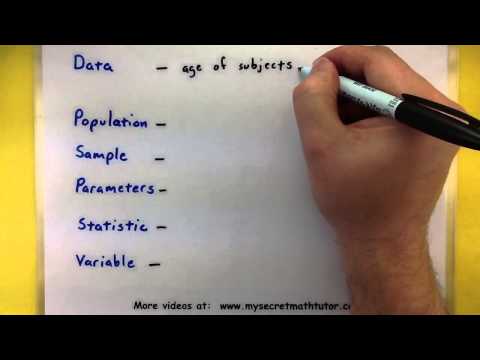
Another important term is population vs sample. The population is basically everyone or everything you’re interested in studying—like all students at a school—but usually, you can’t measure everybody because it’d take ages! Instead, you use a sample—a smaller group that represents your larger population.
And then there are those pesky p-values. They help determine if your results are statistically significant or not—that means whether they’re likely due to chance or if there really is an effect happening here. Generally speaking, if your p-value is less than .05 (that’s like saying there’s only a 5% chance those findings happened randomly), it’s usually considered significant!
Finally—yes we’re almost there—let’s not forget confidence intervals. They give us an estimated range where we think our true result lies based on our sample data. Like saying you’re pretty sure someone ate between two and four slices of pizza last night based on what you saw—they might have buried more under their bed for later!
So yeah, grasping these essential statistical terms isn’t just nerd talk; it’s like putting on glasses so everything becomes crystal clear when you’re diving into scientific research or sharing findings with others! You’ll find that understanding these will definitely help bridge communication gaps when chatting with fellow scientists or even folks outside your field—you know?
Top 5 Statistical Tools Essential for Scientific Research
Sure, let’s talk about some statistical tools that are super essential for scientific research. Think of these as the trusty sidekicks of any researcher. They help make sense of all the data swirling around. So, here we go!
Descriptive Statistics
This is basically your first stop in data analysis. Descriptive statistics gives you a snapshot of what’s going on in your data. It includes measures like means, medians, modes, and standard deviations. You know, it’s like summarizing a whole book into a few lines. For instance, if you’re looking at test scores of students, the mean score shows you the average performance. It helps you grasp your data’s overall trend without diving deep into specifics.
Inferential Statistics
Now this one gets a bit more complex but stick with me! Inferential statistics lets you make predictions or generalizations about a larger population based on a sample of data. It often uses methods like hypothesis testing and confidence intervals to draw conclusions. Imagine you did an experiment with just 30 people out of 1,000; inferential statistics helps you guess how those results might play out if everyone were included.
Regression Analysis
This tool is all about relationships—like figuring out how one thing affects another. Regression analysis helps to examine the relationship between two (or more) variables. For example, if you’re studying how study time relates to exam scores, regression can show whether more study hours correlate with higher scores or not! It’s super useful for predictions too.
ANOVA (Analysis of Variance)
If you’ve ever needed to compare means from three or more groups at once, ANOVA is your go-to buddy! It tests whether there are statistically significant differences between group means. Let’s say you’ve got test scores from students in different teaching methods—ANOVA can help figure out if one method really works better than others overall.
Chi-Square Test
Alright, this one’s pretty handy for categorical data. The Chi-square test checks if there’s a significant association between two categorical variables—like gender and preference for a specific type of food (think pizza versus salad). If your results show significance here, it suggests that one variable may influence the other!
So there you have it! These are five key statistical tools that every budding researcher should know about—each plays its own unique role in making sense of data and helping researchers discover meaningful relationships or trends in their studies!
You know, when it comes to science, we often find ourselves swimming in a sea of numbers. And honestly? It can feel overwhelming at times. But here’s the thing: understanding some essential statistics terms can really help us communicate our findings more clearly.
Take “mean,” for instance. It’s just a fancy word for the average, right? You add up all your numbers and divide by how many there are. I remember sitting in my first statistics class, nervously tapping my foot while the professor explained it with a big smile. He said something like, “Imagine you’re sharing pizza with friends—finding the mean is just about figuring out how many slices each person gets.” I mean, who wouldn’t get that!?
Then there’s “median.” This one’s cool because it helps you see what number is smack dab in the middle of your set when you line them up from smallest to largest. It’s like finding that sweet spot at a concert where everyone’s happy—no one feels shortchanged!
And let’s not forget about “standard deviation.” This term sounds super technical but think of it as a measure of how spread out your data points are. If everyone in your group is getting almost the same grade, then the standard deviation is small; if there are huge differences, well then it’s larger! I remember feeling so proud when I finally grasped this concept after staring at graphs for what felt like forever.
Now, what really gets me is how these terms connect to real life. Like when scientists present their research, using these statistical words helps convey their message better—it’s not just a jumble of numbers anymore; it has meaning! These concepts show us trends and tell us stories about our world.
Sure, statistics can feel dry sometimes, but think about all the breakthroughs and discoveries that rely on them! Whether it’s tracking climate change or understanding health trends in communities—statistics are necessary players on this scientific team.
So yeah, embracing these essential terms makes science accessible for everyone. It bridges gaps and pulls people into conversations about things that matter—like our planet’s future or public health initiatives. When you break down those walls of jargon and make statistics relatable? That’s where the magic happens!