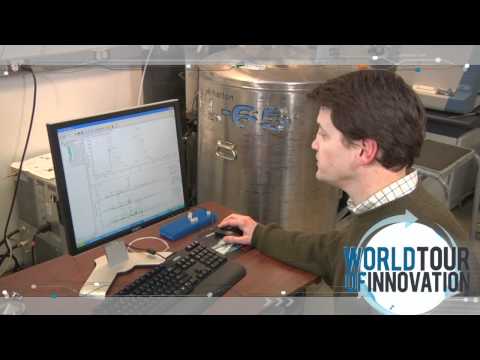
Imagine you’re at a party, and someone brings out a super cool gadget, like one of those fancy mixers that makes drinks out of everything in the fridge. You’re like, “Whoa, what’s that?” That’s kind of how I feel about tandem mass spectrometry.
It’s this mind-boggling technology that breaks down molecules so scientists can see their secrets. Sounds complicated, right? But here’s the kicker: it’s not just for lab coats and beakers anymore! It’s helping everyone from your local chef to researchers finding cures for diseases.
So let’s chat about all the rad innovations happening with this tech. Trust me, it’s a wild ride worth taking!
Advancements in Tandem Mass Spectrometry: Pioneering Scientific Discoveries and Innovations
So, let’s talk about **tandem mass spectrometry**—or MS/MS if you’re feeling fancy. This method has seriously changed the game in scientific research. It’s like putting a high-tech magnifying glass on molecules so scientists can really understand what they’re dealing with. Cool, right?
Basically, tandem mass spectrometry lets researchers analyze complex mixtures of substances in detail. Imagine trying to sort through a giant box of LEGO bricks to find that one tiny piece you need for your model. The thing is, it can be super tricky because everything looks similar at first glance.
With MS/MS, that process gets way easier. Here’s how it works: first, you ionize your sample—that means you give the molecules a little charge so they can be moved around by electric fields. After that, these ions are sorted by their mass-to-charge ratio in the first stage of the instrument. It’s like lining up all those LEGO pieces according to size!
Then comes the fun part: selected ions get smashed into each other (not literally!) to create smaller fragments. This is where the tandem part kicks in—those fragment ions are then analyzed again in a second round of mass analysis. This helps scientists identify the original compounds and even their structures.
Imagine if you could crack open those LEGO bricks and see exactly how they fit together! That’s what researchers can do with this technique—it opens up doors for all sorts of discoveries.
Why is this important? Well, there are tons of applications! Here are just a few:
- Drug Development: In pharmaceuticals, MS/MS helps in understanding drug metabolism and discovering new drugs efficiently.
- Proteomics: By analyzing proteins and their interactions more efficiently, researchers can uncover pathways involved in diseases.
- Environmental Science: Scientists can detect pollutants at extremely low concentrations which is crucial for monitoring our planet’s health.
One emotional factor is how this technology has helped save lives. Think about it: understanding disease better means more targeted treatments and potentially life-saving drugs making it to patients faster than ever before.
Also, it’s not just about helping humans; MS/MS is used in food safety too! You know those scare stories about tainted produce or contaminated milk? Researchers use tandem mass spectrometry to identify harmful substances so that we know what we’re putting into our bodies.
In recent years, advancements have taken things even further with improvements like **faster analysis times** and **better sensitivity**—it means getting results quicker and seeing smaller amounts of material than ever before!
And yeah, there are challenges ahead as well. The technology needs constant refining—think software upgrades but for scientific instruments—and researchers are always looking for ways to improve accuracy and decrease costs.
But here’s the bottom line: tandem mass spectrometry is paving new paths across fields from medicine to environmental studies, giving us tools that were unthinkable just a decade ago. Just imagine what future advancements could bring!
Advancements in Tandem Mass Spectrometry: Driving Scientific Progress in 2022
Tandem mass spectrometry, or MS/MS, has been a game-changer in the field of science. It’s like having super-sight into the molecular world! In 2022, advancements in this technology took a giant leap forward, opening up fresh avenues for research and discovery. Let’s break it down a bit.
First off, what is tandem mass spectrometry? Imagine you have a mystery box filled with various toys. Tandem mass spectrometry is a way to figure out what’s inside by breaking those toys down step-by-step. You first ionize the molecules in a sample, sort them based on their mass-to-charge ratio, and then fragment them to analyze their structure. This two-step process gives you detailed information about the composition of complex mixtures.
One of the standout advancements last year was improved sensitivity and resolution. Researchers developed new ionization techniques that made it possible to detect even the tiniest trace of substances. This means things like detecting harmful pollutants in environmental samples or identifying biomarkers for diseases became way more precise and reliable.
Moreover, there were great strides in data analysis software. The explosion of data from mass spectrometry can feel overwhelming. Luckily, new algorithms emerged that help scientists make sense of it all much faster than before. Think about trying to find your favorite song among thousands—you’d want an effective search tool! Enhanced software means researchers can quickly identify patterns or notable findings without wading through heaps of raw data.
Also noteworthy was the growth in applications within proteomics. In simpler terms, proteomics studies proteins and their functions. As we know, proteins are essential for pretty much all biological processes. In 2022, researchers utilized tandem mass spectrometry to map out protein interactions more effectively than ever. This had massive implications for understanding diseases like cancer where protein malfunction plays a key role.
And let’s not forget about miniaturization. Scientists worked on bringing down the size of mass spectrometers while still boosting performance. Smaller devices could become portable—imagine running quick diagnostics right at your doctor’s office instead of sending samples back to a lab!
In summary, the advancements made in tandem mass spectrometry last year significantly propelled scientific progress across various fields. Whether it was enhancing sensitivity, refining data analysis methods, expanding applications in proteomics, or miniaturizing equipment for better accessibility—these innovations truly represent how science evolves.
So next time you hear about some groundbreaking research using tandem mass spectrometry, remember there are brilliant minds behind those instruments making amazing discoveries possible!
Exploring Advances in Mass Spectrometry: In-Depth Articles and Insights for Scientific Research
Mass spectrometry is like the detective of the scientific world. It helps us figure out what things are made of by measuring the mass of molecules. But wait, there’s more! When you combine it with tandem techniques, it becomes even cooler and more powerful. Basically, tandem mass spectrometry (often called MS/MS) takes things up a notch by smashing molecules apart and analyzing the fragments. This lets scientists gather super detailed info about those molecules, which can be super helpful for all sorts of research.
Imagine you’re trying to figure out what a complex soup is made of. You might taste it and say, “Hmm, there’s chicken here!” or “I think I taste some carrots.” But with mass spectrometry, you can break down that soup into its individual ingredients based on mass. This process makes identifying compounds way more accurate!
So what are some innovations happening in this field? Well, here are a few big ones:
- Higher Sensitivity: New technologies are allowing researchers to detect even smaller amounts of substances. This is key in fields like toxicology or environmental science where you want to catch trace amounts of pollutants.
- Speed Improvements: Instruments are becoming faster, meaning scientists can get results quicker than ever before. This is essential when working with time-sensitive samples like blood or other biological materials.
- Increased Resolution: Enhanced capabilities mean researchers can distinguish between very similar molecules that might have only slight differences in their structure.
- User-Friendly Software: The software used to analyze data has also improved tremendously. It’s now easier for scientists (even those without a heavy tech background) to interpret their findings and draw conclusions.
Let’s talk about one specific application: drug discovery. Researchers use tandem mass spectrometry not just to identify drugs but also to study how they break down in the body. Imagine if you’re testing a new medication – using this technology allows you to see how long it stays effective or if it produces unwanted side effects by breaking into harmful parts.
Don’t forget about metabolomics – this is all about studying small molecules in biological samples—think stuff like sugars and fats. With advances in tandem mass spectrometry, it’s possible for scientists to map out metabolic pathways more easily than before. It’s like creating a treasure map showing where nutrients go in our bodies!
Remember that emotional anecdote we talked about? Here’s one: Picture a scientist who spent years working on detecting rare diseases using traditional methods—so painstakingly slow! Then she finally got her hands on an advanced tandem mass spectrometer and couldn’t believe her luck; she was able to speedily identify patients’ conditions thanks to those tiny molecular details popping up quickly on her screens.
It feels kind of exciting when you realize how dynamic this field is! Each innovation brings new opportunities for breakthroughs across various scientific areas—from medicine to environmental health. So keep an eye on this space; it’s absolutely worth watching as these techniques continue evolving!
You know, when we think about scientific progress, it’s like seeing a huge puzzle slowly coming together. One piece that’s really exciting in this puzzle is tandem mass spectrometry—or MS/MS for short. Yeah, it sounds super technical, but hang with me a sec.
I remember when I first heard about mass spectrometry in college. There was this moment during a lab where we got to see tiny molecules getting blasted apart and then pieced back together. It was like a science fiction movie right in front of my eyes! And that’s basically what MS/MS does; it helps scientists break down compounds into smaller bits and then figure out what those bits are. It’s like being a detective for molecules!
So, here’s the deal: tandem mass spectrometry is all about taking things up a notch. Instead of just identifying what a substance is, it dives deeper—like peeling back layers of an onion. First, you ionize the sample—basically, you charge those little particles up so they can play along in the mass spectrometer. Then comes the fun part: once you’ve identified the big players in your sample, you can further fragment them into even tinier pieces to find out more details.
This innovation means that scientists can do some seriously cool stuff. For instance, they can identify complex mixtures faster and more accurately than ever before—think food safety or environmental monitoring. You’ve got an apple juice sample? MS/MS can help pinpoint if there are any nasty chemicals hiding out there.
Plus, it doesn’t stop at just analyzing food or environmental samples; it leaps into medicine too! Imagine tracking down metabolites from drugs or discovering new biomarkers for diseases—this tech is making waves everywhere.
But the coolest thing? It keeps evolving! New advancements mean that researchers are continuously improving sensitivity and speed. They’re combining MS/MS with other technologies like chromatography for even better results or using AI to analyze data faster than any human could dream of.
It’s kind of heartwarming to think about how these innovations bring scientists closer to answering some pretty big questions—from understanding diseases better to ensuring our food is safe. Every new breakthrough takes us one step closer to solving those mysteries that have puzzled us humans for ages.
So yeah, while “tandem mass spectrometry” might sound daunting at first glance, it really embodies the spirit of scientific exploration—pushing boundaries and making discoveries possible that we never thought could happen before! How cool is that?