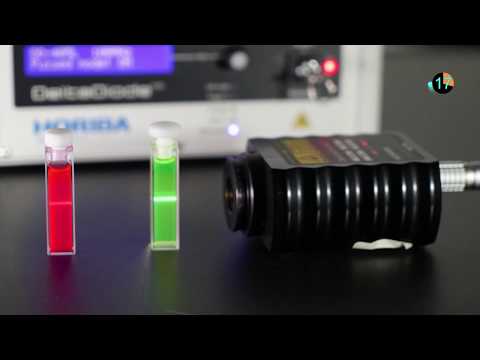
You know that moment when you’re trying to catch the perfect selfie, but the lighting keeps changing? Yeah, it’s a struggle. Well, imagine if you could capture light in a totally different way—like, super accurately—so you can see things that are way too small for the naked eye.
That’s what time-correlated single-photon counting (or TCSPC for short) does! It’s like having a special superhero lens for scientists. They can measure super fast processes happening in molecules and cells. Pretty neat, huh?
With all the new advancements popping up in TCSPC, it’s transforming not just research but how we share these discoveries with everyone. Seriously! This stuff is making waves in science and outreach alike. So let’s talk about what’s been cooking in this exciting field and why it might just be your new favorite topic!
Exploring 2022 Advancements in Time-Correlated Single Photon Counting (TCSPC) for Scientific Research and Outreach
Time-Correlated Single Photon Counting, or TCSPC for short, is super interesting! Basically, it’s a technique used in many areas of scientific research. It helps scientists measure how long it takes for a photon (that’s a tiny particle of light) to reach a detector after being emitted from a sample. You know, just like how we react when we see fireworks and count the seconds until we hear the bang. In this case, the “bang” is when that photon arrives!
One major advancement in TCSPC during 2022 was the improvement in detector technology. New detectors can work faster and more accurately than before. This means that researchers can track events happening at shorter timescales. Think about it: if you’re trying to study how fast certain reactions happen in cells or chemical processes, having better timing can make all the difference.
Another cool leap was in data processing algorithms. These algorithms help scientists analyze the data they gather from TCSPC much more efficiently. With advancements in machine learning and artificial intelligence, sorting through mountains of data isn’t as intimidating anymore. So instead of spending ages on analysis, researchers are getting results quicker and providing insights into their experiments.
TCSPC also found its way into biomedical applications, like studying living cells. Imagine being able to watch how drugs interact with cells in real-time! With improvements made to sensitivity and imaging speeds, scientists can now observe processes that were once invisible to us.
On the outreach side, advancements in TCSPC techniques make it easier for educational institutions to demonstrate complex principles of physics and biology using visuals that capture attention. You know those experiments that light up? They’re not just pretty – they’re informative too! By showcasing these real-time actions with enhanced accuracy, educators can convey concepts that are usually tough to understand.
In practical terms, let’s say you’re conducting research on Alzheimer’s disease. Using TCSPC advancements means you could investigate how proteins interact at lightning speed and get clues about what goes wrong during disease progression.
Another point worth mentioning is collaboration across disciplines. In 2022, more scientists from various fields – like chemistry, biology, and physics – started working together using TCSPC technology. The exchange of ideas has led to innovative approaches for tackling old problems with fresh eyes.
So yeah, overall advancements in Time-Correlated Single Photon Counting over the past year have made it an even more powerful tool for both scientific research and outreach efforts. With better detectors, smarter data processing methods, applications expanding into new fields like biomedicine, enhanced teaching tools—all these elements combined mean we’re on the cusp of new discoveries! It’s exciting stuff just waiting to unfold!
Exploring Recent Advancements in Time-Correlated Single Photon Counting (TCSPC) for Enhanced Scientific Research and Outreach
So, let’s talk about **Time-Correlated Single Photon Counting (TCSPC)**. It sounds pretty technical, right? Well, it’s actually a super interesting method used in various fields of science, like physics and biology. Basically, it helps researchers measure how long it takes for a photon—the tiniest particle of light—to travel and be detected after its emission. This is crucial for many experiments.
What makes TCSPC special is its ability to measure very short time intervals, like picoseconds! Just to give you a sense of that: one picosecond is one trillionth of a second. Crazy fast! And this precision allows scientists to get really detailed information about the processes they’re studying.
Now, let’s break down some recent advancements in TCSPC that are making waves:
- Improved Detector Technologies: New detectors are now faster and more sensitive. This means they can catch more photons accurately, which greatly enhances data quality.
- Advanced Timing Electronics: These have improved the accuracy and speed of time measurements. Better electronics mean less noise and clearer results.
- Software Innovations: The software used to analyze the data has become more user-friendly and powerful. It allows researchers to handle larger datasets without getting bogged down.
- Integration with Other Techniques: TCSPC is starting to be combined with techniques like fluorescence microscopy. This integration provides richer insights into biological systems at the cellular level.
You see, each of these advancements has the potential to push boundaries in scientific research. For instance, take the field of biomedicine: researchers can use TCSPC to study how drugs interact with cells over time. By understanding these interactions better, they aim for more effective treatments.
And there’s another angle too—outreach! Scientists can share their findings through interactive visuals based on TCSPC data. Imagine being able to see real-time interactions happening at a molecular level in an educational video or exhibit! That kind of visual storytelling can seriously make complex scientific concepts way more relatable.
Let’s not forget how important collaboration is in this field. With advances making TCSPC more accessible, researchers from different backgrounds can team up more easily. This leads to innovative projects that might not’ve been possible before—like developing new imaging techniques or improving cancer detection methods.
In short, the recent advancements in **TCSPC** technology aren’t just about making measurements faster; they’re reshaping how we understand complex processes and communicate those ideas effectively. Isn’t it exciting?
You know, it’s kind of amazing how fast technology is moving in the world of scientific research. Take Time-Correlated Single Photon Counting (TCSPC) as an example. This method has really changed the game for studying light and its interaction with matter. It sounds super technical, but honestly, it’s one of those things that just shows how curiosity leads to innovation.
So, like, picture this: you’re in a lab surrounded by all this complex equipment, and you’ve got a nanosecond laser firing away. With TCSPC, you can measure how long it takes for single photons to bounce back from whatever sample you’re focusing on—like molecules or cells. That’s pretty cool! It’s basically letting researchers see and understand processes at the tiniest levels.
I remember chatting with a friend who works in a lab focused on cancer research. She was talking about how they can use TCSPC to track changes in the way cancer cells behave when exposed to different treatments. It was the kind of thing that made your heart race; it’s not just data—it’s potentially saving lives! That emotional connection is what really drives scientists to keep pushing forward.
Now, don’t get me wrong; TCSPC isn’t some magic wand that solves everything overnight. But advancements in this area mean that scientists can tackle problems more efficiently and accurately than ever before. They can explore new frontiers in biology and material science with tools that are just getting better all the time.
And let’s not forget about outreach! Getting these advancements out into schools and communities is so important. When younger folks see real-time demonstrations using TCSPC tech, they might catch the science bug—just like we all wish we did back in school! It bridges that gap between complex theory and real-world applications, making science feel accessible rather than stuck up in some lab somewhere.
In short, advancements in TCSPC aren’t just about numbers or fancy gear; they’re about what we can learn and achieve with them together as a community—scientists nerding out on life-saving insights while inspiring young minds along the way. How cool is that?