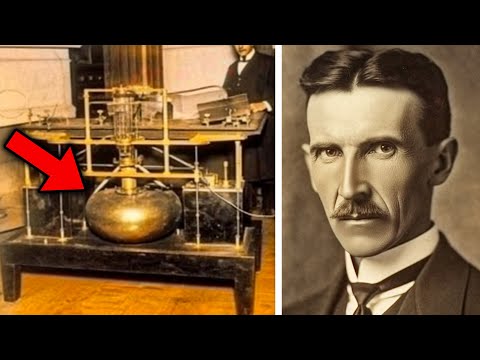
So, let me tell you about this wild guy named Nikola Tesla. You know, the inventor who was like, way ahead of his time? He came up with some crazy stuff, like alternating current and wireless energy. Seriously, it’s mind-blowing!
But here’s the kicker: he also had this obsession with magnetic fields. I mean, how many of us can say we’re obsessed with magnets? Right?
Anyway, if you’ve ever played with fridge magnets or watched those cool science experiments where they make objects float—yep, that’s all part of the magnetic magic he was into. Tesla believed in harnessing these forces to change the world.
And guess what? His ideas are still inspiring scientists and innovators today. It’s like his spirit is hanging around every time someone turns on a light switch! So buckle up as we take a little journey through Tesla’s magnetic world and why it still matters today.
Exploring Tesla’s Contributions to Physics and Their Impact on Modern Science
Nikola Tesla was a genius inventor whose work has shaped modern technology in ways we might not even realize. His contributions to physics, particularly in the realm of magnetism and electricity, are pretty mind-blowing. Let’s take a closer look at some critical aspects of his contributions and how they’ve influenced today’s science.
First off, Tesla’s work on alternating current (AC) revolutionized how we use electricity. Before him, direct current (DC) was the standard. But AC allows for electricity to be transmitted over long distances much more efficiently. Basically, it’s like having a superhighway for electrical power! This led to the widespread electrification of cities and homes.
Moreover, Tesla’s experiments with **magnetic fields** were groundbreaking as well. He conducted extensive research on **electromagnetism**, which is the interaction between electricity and magnetism. This led him to invent the **Tesla coil**, an apparatus that enables high-voltage generation and wireless energy transmission—yes, that’s right; he was thinking about wireless long before smartphones came along!
Now, let’s talk about his concept of the magnetic field itself. You see, Tesla imagined using magnetic fields for various applications beyond simple electric motors or power transmission systems. He believed that harnessing magnetic fields could lead to innovations in transportation and communication. Just think about magnetic levitation trains—Tesla had a vision for that!
Besides that, there’s the whole idea behind resonance frequency that he explored extensively. In simple terms, resonance occurs when an object vibrates at its natural frequency after being disturbed by an external force. Tesla cleverly applied this concept in various machines he developed, including transformers and oscillators.
The impact of Tesla’s discoveries is massive—even today! For example:
- Wireless energy transfer: Thanks to Tesla’s ideas, we now have technologies like wireless charging pads for our phones.
- AC motors: These are everywhere—from household appliances to industrial machines—thanks to his pioneering work.
- Radio technology: Although Guglielmo Marconi is often credited with inventing radio, it was built on principles discovered by Tesla.
His vision didn’t stop at just practical inventions; it extended into more theoretical realms too! People often overlook how important his theories were in laying groundwork for future advancements in quantum mechanics and electromagnetic theory.
It’s kind of emotional knowing that such a brilliant mind faced so many challenges during his lifetime yet managed to change the world profoundly through relentless innovation. Some folks even say he had an almost prophetic understanding of technology—his ideas were ahead of their time!
So yeah, exploring Tesla’s contributions gives us insight into how physics can fuel innovation and transform society. His legacy continues to inspire countless scientists and engineers who build upon those groundbreaking concepts today—it’s like passing the torch from one genius to another!
Exploring Nikola Tesla’s Contributions to the Discovery of Magnetic Fields in Science
Nikola Tesla was, without a doubt, one of the most brilliant minds in the world of science and technology. His contributions shaped so much of what we use today, especially when it comes to electricity and magnetism. Have you ever thought about how essential magnetic fields are in our everyday lives? Let’s break it down a little.
Tesla had this incredible knack for understanding electricity and magnetism together. He didn’t just invent random gadgets; he really dug deep into how these forces work. One of his biggest achievements was developing the alternating current (AC) system that powers homes and businesses globally. But what’s super interesting is how this ties into magnetic fields.
- Magnetic Fields and AC: Tesla showed that when you have electricity flowing through wires—especially in an alternating current—it creates magnetic fields around those wires. This was groundbreaking! It helped us understand that you can generate electricity from these magnetic fields too!
- The Tesla Coil: Ever heard of the Tesla Coil? It’s one of his coolest inventions. This device creates high-voltage electricity and generates impressive electrical arcs—all thanks to manipulating magnetic fields. When the coil operates, it shows off those magnetic fields like a fireworks display!
- The Induction Motor: Another biggie! Tesla invented the induction motor, which uses electromagnetic fields to create motion. Basically, he figured out how to harness these magnetic forces to power machines efficiently.
One thing I find fascinating is how Tesla viewed magentic fields as not just physical forces but almost as living entities! He believed they could be harnessed for more than just powering things: he dreamt big about using them for wireless communication and even energy transmission over long distances.
Now picture this: there’s this moment when people were unsure about whether DC or AC would be the future of electricity. It was like watching two rival teams fight it out during a championship game! In the end, thanks to Tesla’s insights on magnetic fields and their applications with AC power, his team won—and revolutionized electric power systems worldwide.
You might be asking yourself why all this matters today. Well, think about all your gadgets—the phone in your pocket, the fridge keeping your food fresh—all powered by those principles Tesla laid down ages ago! Plus, his ideas are still inspiring new technologies like wireless charging and advances in electric vehicles!
Tesla’s exploration into magnetic fields opened doors we’re still walking through today—creating pathways for innovation that go beyond what he even imagined back then. And who knows? Maybe some bright kid out there will take up tesla’s legacy and come up with something we can’t even dream of yet!
Understanding the Tesla Effect in Physics: Exploring Its Impact on Modern Science
The Tesla Effect is one of those intriguing ideas that sparks curiosity and gets the science nerds talking. Named after the brilliant inventor Nikola Tesla, it dives into how electromagnetic fields can impact various systems, especially in energy transfer. It’s definitely one of those cool concepts that merges history with modern physics!
So, like, what’s the deal with Tesla’s work? Back in the late 19th century, Tesla was all about electricity and magnetism. He came up with concepts like alternating current (AC), which powers our homes today. But his experiments also led him to explore something even cooler: how magnetic fields interact with electric currents. This is where you start to see the so-called Tesla Effect in action.
Basically, it’s all about the interaction between magnetic fields and conductive materials. When you have a magnetic field and you move a conductor through it—or even just change the magnetic field itself—you can induce an electric current. This phenomenon is known as electromagnetic induction. Think of it like magic, where movement creates electricity! You know how when you rub a balloon on your hair, it creates static? Kind of similar, but way cooler!
The Tesla Effect has had such an impact on modern science—and tech—that it’s hard to overstate its importance. Engineers use these principles every day to design transformers and motors. They’re essential in everything from your smartphone to power plants! And honestly? Without Tesla’s pioneering work, we might still be stuck lighting our homes with candles.
- Wireless Energy Transfer: One of Tesla’s dreams was transmitting energy without wires. Today, we’re getting closer to that with wireless charging for devices.
- ELECTRIC Vehicles: The design of electric motors heavily relies on principles from the Tesla Effect.
- Magnetic Resonance Imaging (MRI): This medical technology uses strong magnetic fields to create detailed images inside our body—again linked back to those basic principles that Tesla explored.
A little anecdote: Picture this—Tesla once famously demonstrated his wireless lighting system at a world exhibition in 1893. He lit up lamps without any visible wires connecting them! Imagine being there and witnessing this electrifying moment; people must have thought it was pure sorcery!
The thing is, as we continue exploring areas like quantum physics or renewable energy sources, the implications of the Tesla Effect are becoming more prominent than ever. Scientists today are inspired by his theories as they investigate cutting-edge technologies like wireless power grids or advanced electrical engineering methods.
You see? The ripple effects of what one individual dreamed up over a century ago are felt across diverse fields today! So next time you charge your phone wirelessly or hop into an electric car, think about good ol’ Nikola Tesla and how his visionary ideas have paved the way for modern science as we know it!
You know, when we talk about Tesla’s magnetic field, it’s like a peek into this fascinating blend of physics and innovation that just makes your head spin. I remember reading about Nikola Tesla in school, and honestly, it felt like the stuff of superheroes rather than real life. This guy was all about harnessing electricity and creating powerful magnetic fields to promote wireless energy transmission. Can you imagine living in a world where your devices don’t need plugs? Mind-blowing!
So, what’s the deal with these magnetic fields? Well, basically, a magnetic field surrounds any electric current or magnet. It’s invisible but super powerful—it can affect everything from how our compasses point north to how certain types of machines run smoothly. It’s like an unseen dance happening all around us.
Tesla realized the potential of these magnetic fields to do more than just make motors spin or lights flicker. He believed they could change the way we connect to energy itself. Think about that for a second! In his vision, electricity would flow freely through the air without wires—how cool is that? Unfortunately, his ideas were way ahead of his time and met with skepticism.
But even today, the legacy of Tesla’s work lives on in modern technology! Take maglev trains for instance; they use electromagnetic forces for propulsion and levitation. These trains can zoom along tracks at crazy speeds because they’re floating above them—no friction! That’s pure Tesla magic right there.
And then there’s renewable energy! Solar panels and wind turbines are all about converting natural sources into usable power. The concept boils down to using magnetic fields in various ways—whether it be for generation or storage. It makes you feel like we’re slowly getting closer to Tesla’s dream.
Reflecting on this makes me wonder about how many of Tesla’s ideas are still waiting for their time in the spotlight. Innovation often requires not just great minds but also great timing and a society ready to embrace those changes—like catching lightning in a bottle!
In the end, Tesla’s influence stretches beyond science; it sparks imagination and creativity even now. It encourages us to think boldly about what is possible; maybe one day we’ll actually nail down that wireless energy thing! Isn’t it thrilling? The interplay between physics and innovation can sometimes feel like magic, even if we know it’s really rooted in science! And who knows what other wonders are out there just waiting for someone brave enough to chase them down?