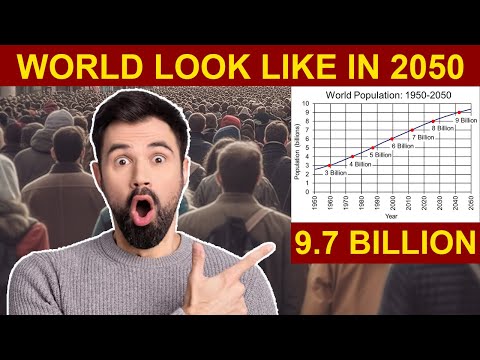
So, picture this: it’s 2050 and you’re trying to find a seat on the bus. You suddenly realize there’s, like, 9.7 billion people on this planet! That’s a whole lot of folks bumping elbows. Seriously though, global population growth is one wild ride.
Now, I don’t wanna scare ya, but it’s kinda like the ultimate game of Tetris. As more people pop up everywhere, we’ve gotta figure out how to fit them in. Schooling? Food? Jobs? It’s a massive puzzle with missing pieces.
You might be asking yourself why even care about this stuff? Well, let me tell you—it hits closer to home than you think. What happens next can shape everything from your grocery bills to climate change action. Wild, right?
So let’s chat about what that 2050 number really means and how it could change our world for better or worse!
Projected Global Population Distribution by Country in 2050: Insights from Demographic Science
Okay, so let’s talk about projected global population distribution by 2050. It’s a big deal, and, you know, understanding how populations grow can really change how we think about the future. The world is changing fast, and demography—the study of populations—gives us some pretty interesting insights.
First off, global population is expected to hit around 9.7 billion people by 2050. That’s like adding another 2 billion folks just chilling on this planet! So, where are all these people going to be living? Well, demographic science tells us that certain regions will experience way more growth than others.
Africa is where the action is happening. Countries like Nigeria are expected to see massive increases in their populations. Nigeria alone could surpass the United States in terms of population size by then! Can you imagine? The streets will be buzzing!
This all leads to some **big implications** for the future. If we continue on this trajectory:
- **Urbanization**: More people moving into cities means bigger cities with more demand for housing and services.
- **Economic Power Shifts**: Countries like Nigeria could become major players in global economics as their populations grow.
- Resource Allocation: Food supply, water availability, and healthcare resources might face serious strain unless managed well.
I remember reading a story about a small village in Japan where they had an aging population—like seriously elderly folks everywhere—and no young people around to take over businesses or farms. It really made me think about how important it is to have a balanced demographic! What happens when there aren’t enough young people to support those who are older?
The takeaway here? Population trends aren’t just numbers—there’s real life behind them! As different countries experience unique growth patterns, we need to pay attention and prepare for the changes ahead. Planning now can help ensure a better quality of life for everyone as we move toward 2050!
Projected Global Demographics: Analyzing World Population Trends and Implications for 2050
So, let’s chat about global demographics. You know, the whole “who’s living where and how many of us will be around in the future” thing? It’s kind of a big deal. By 2050, we’re looking at some seriously interesting shifts in the population numbers worldwide.
First off, the **global population** is expected to hit around **9.7 billion**—that’s like adding two more Indias to the planet! This growth is not happening everywhere evenly, which is super important to understand. Some regions will see massive increases, while others might even experience declines.
Let’s break it down a bit:
- Africa: This continent is set to boom! Countries like Nigeria are projected to become some of the most populous in the world. Imagine that wild growth—more young people needing jobs, education, and healthcare.
- Europe: On the flip side, many European countries are aging quickly and seeing very low birth rates. Places like Italy and Germany might face shrinking populations if nothing changes.
- Asia: While China has been a population giant for decades, its growth is slowing dramatically due to past policies and current trends. India could soon take over as the most populated country!
Now think about this: more people mean more challenges but also opportunities. For instance, with loads of young folks in Africa looking for jobs, there’s a chance for innovation and economic development. But then again, those same young people need resources—like food, water, healthcare—all that essential stuff.
On another note—climate change could really shake things up by 2050. As populations grow in certain areas (especially coastal ones), rising sea levels and extreme weather could lead to displacement of people. Picture entire communities having to move because their homes are underwater or too hot to live in!
And don’t forget about urbanization! More than half of mankind already lives in cities now; by 2050 that number could rise even further. It’s going to mean packed cities with enormous challenges regarding housing and transportation… think traffic jams on steroids!
But here’s an emotional side note: I remember visiting a small village once where everyone knew each other—it had this amazing sense of community. Fast forward a few years with urbanization on overdrive; unfortunately, we might lose those close-knit Communities as people flock into city centers searching for better opportunities.
So what does all this mean for you? Well, it encourages you to think about what kind of world you want to live in or create for future generations. Whether it’s advocating for responsible resource use or supporting sustainable city planning efforts—the choices we make today can impact all these projected demographic trends.
The future’s pretty unpredictable but one thing’s clear: with nearly **10 billion** folks potentially sharing this planet by 2050 it’s going to be an adventure!
Exploring Future Demographics: The Projected World Population in the Year 3000 and Implications for Science
So, picture this. It’s the year 3000. The world is a totally different place, and we’ve managed to pile up around 12 billion people living on this planet—at least that’s what scientists think could happen if current trends stick around. But like, why should we care about this? Well, there are some big implications for science, the environment, resources, you name it.
Let’s break it down a bit more. First off, the projected global population growth isn’t just some random number crunching. It’s based on trends we see today—birth rates, death rates, and migration patterns. And if you think about it, these numbers can help us understand certain things better:
- Resource Management: With more people comes a higher demand for everything from food and water to energy and healthcare. Scientists need to figure out how to produce enough resources sustainably.
- Climate Change: More people mean more carbon footprints! Projections show that by 3000, if we don’t change our habits now, we’ll face serious climate challenges that scientists are already scrambling to address.
- Urbanization: Imagine mega-cities stretching across continents. As populations grow, more folks will flock to cities for jobs and opportunities. This means urban planning needs serious attention—think roads, public transport, housing—all of it!
- Aging Population: In many places today, life expectancy is soaring while birth rates drop. By 3000? We might have a bunch of elderly folks relying on fewer younger ones to support them.
You know what’s kind of wild? Back in the day (like the early 1900s), world population was around 1.5 billion. Fast forward to now—over 8 billion! It feels like just yesterday when my grandmother used to tell me stories about how crowded her neighborhood was with only a handful of families.
As we push further into the future, science has got its work cut out for it; new technologies will need to emerge in agriculture (hello vertical farms!), renewable energy sources (solar panels everywhere!), and even healthcare innovations (let’s get those robots running). If we want a bright future with all those extra folks around in 3000—well—we gotta start planning now.
See what I mean? The implications go way beyond just having more people running around; they touch almost every aspect of our lives on Earth. So while dreaming about year 3000 sounds fancy and sci-fi-ish—it really brings us back down to Earth when you think about what’s at stake for humanity!
So, you know how sometimes you sit back and think about where the world is headed? I mean, the whole population thing is a biggie. Seriously, projections say we could hit around 9.7 billion people by 2050. That’s like adding another billion humans in just a few decades. Makes you wonder what that’s gonna mean for everything, right?
I remember a chat I had with my grandfather a while back. He was born in the 1930s when there were only about 2 billion people on Earth. Two billion! Can you imagine that? We laughed about how different life was and how much nature was just… well, nature. Now, fast-forward to today – the world feels so crowded sometimes that it’s easy to forget about those simpler times.
When we think about those numbers for 2050, it’s not just a stat. It’s us trying to figure out how to feed all these people, provide jobs, and keep our planet livable. Urban centers are gonna boom, which means cities might get even more congested and stressed. Have you ever been stuck in traffic during rush hour? Yeah, multiply that feeling by a few million.
And let’s chat about resources for a sec. Water scarcity is already an issue in some places; imagine it getting worse! Plus, all these new folks need housing and food—lots of food! Agriculture has to step up its game big time; otherwise, hunger might creep up on us more than we expect.
But hey, population growth isn’t all doom and gloom. Young people bring innovation and energy! They’re driving advances in tech and sustainability—like finding ways to grow food with less water or inventing renewable energy solutions. So there’s hope!
At the end of the day though, balancing growth with sustainability is the real trick here. It’s not just about numbers; it’s about quality of life and protecting our planet too—so future generations can enjoy this beautiful mess we call home. And maybe one day they’ll look back at us chatting over coffee about their own future challenges too!