Did you know that the very first X-ray was discovered by accident? Yep, Wilhelm Röntgen was just messing around in his lab, and bam! He stumbled upon something that changed science forever.
Now, imagine using X-rays not just to see bones in your hand but to dive deep into materials at a microscopic level. That’s where X-ray photoemission spectroscopy, or XPS for short, comes in.
It’s like having a superpower that lets scientists peek inside materials to uncover their secrets. Crazy, right? You’d be surprised at how much we can learn about everything around us—from tiny gadgets to complex biological systems—thanks to this cool technique.
Let’s unpack this together and explore how XPS is shaking things up in modern research!
X-Ray Photoemission Spectroscopy: Advancements and Applications in Modern Scientific Research (PDF)
X-Ray Photoemission Spectroscopy, or XPS for short, is like the detective of the materials world. It helps scientists figure out what things are made of and how they behave. So, let’s break it down a bit!
What is XPS? Basically, it’s a technique that uses X-rays to knock electrons out of a material’s surface. When those electrons escape, they give us clues about the material’s composition and electronic states. Imagine it as peeking under the hood of a car to see what makes it run.
Advancements in XPS have been pretty cool in recent years. For one thing, researchers have developed ways to analyze smaller and more complex samples. A few years back, if you wanted to do this kind of work, you needed big samples with clear surfaces. Now? You can analyze super tiny bits—like just molecules! This means more precise measurements and insights.
Also, newer detectors make everything faster and more efficient. Instead of waiting for ages to collect data, scientists can now get results in real-time! This not only speeds up research but also opens new doors for applications across different fields.
Now let’s talk about applications. XPS is being used everywhere:
- Materials Science: When creating new materials, understanding their surface properties is key. For instance, if you’re developing a new battery material, knowing how its surface interacts with ions can tell you a lot about its efficiency.
- Electronics: In semiconductor manufacturing, XPS helps verify the chemical purity of materials before they’re used in circuits. Imagine trying to build something intricate with faulty parts—it just won’t work!
- Catalysis: Catalysts speed up chemical reactions without being consumed themselves. By studying their surfaces via XPS, scientists can tweak them for better performance.
- Bioscience: Researchers are even looking at biomaterials! Understanding how biological molecules interact on surfaces can lead to better implants or drug delivery systems.
One time I read about how scientists used XPS to develop a new type of solar cell that could harness more sunlight than ever before! They figured out exactly what was happening on the surface level and fine-tuned their design accordingly.
In short, X-Ray Photoemission Spectroscopy has become an indispensable tool in modern scientific research. Its ability to dive deep into the molecular level lets researchers unravel mysteries across multiple disciplines—from electronics to biology—and creates endless possibilities for innovation! Isn’t that just amazing?
Comprehensive Guide to X-Ray Photoelectron Spectroscopy: PDF Resources for Advanced Scientific Research
So, let’s talk about X-Ray Photoelectron Spectroscopy, or XPS for short. It’s a technique used to analyze the surface composition of materials. Seriously cool stuff! The idea is that you blast a sample with x-rays, and then you measure the energy and number of electrons that get ejected from the surface. This lets you figure out what elements are present and even their chemical states.
How does it work? Well, when those x-rays hit the sample, they knock out electrons from atoms in the material. The kinetic energy of these emitted electrons tells us how tightly they were bound in their respective orbitals. Basically, it’s like peeling an onion – layer by layer revealing more about what’s inside.
You might ask: why is this important? Think about materials science, nanotechnology, or chemistry – understanding surface properties can be crucial. For example, in semiconductor research, knowing the chemical state of surface oxides can greatly affect device performance.
Now, regarding resources for diving deeper into XPS: there are plenty of PDFs out there that can give you detailed insights into its applications and methodologies.
- Scientific Journals: Most academic papers discussing advanced uses of XPS can be found in journals like “Surface Science” or “Journal of Electron Spectroscopy.” These often have extensive research studies that outline methodologies.
- University Resources: Many universities offer free online courses or lecture notes on XPS. Just search for “XPS lecture notes” along with the name of your favorite university.
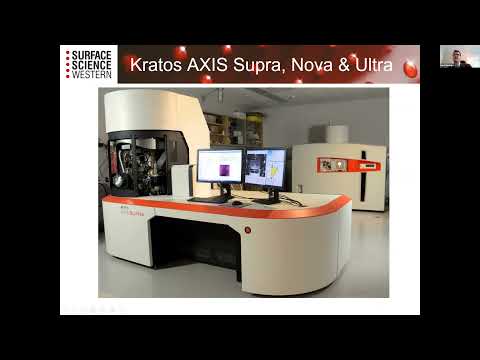
- Technical Manuals: Companies that manufacture XPS equipment usually provide technical manuals and user guides as PDFs. These documents not only explain how to use their machines but also include valuable information on interpreting data.
Also, if you’re looking for something more visual or hands-on, there are YouTube channels dedicated to spectroscopy techniques where scientists share tutorials and real-life applications.
You know what’s interesting? I remember a time when a researcher friend showed me their first XPS results. They were so excited – they had just discovered a new alloy’s oxidation state which could change everything for battery technology. The look on their face was priceless; it was like they had just unlocked a treasure chest!
So yeah, getting your head around X-ray Photoelectron Spectroscopy is definitely worth it if you’re into material analysis or any related fields. There’s so much depth to explore!
Enhancing Binding Energy Referencing in X-Ray Photoelectron Spectroscopy: Strategies and Advances
X-ray Photoelectron Spectroscopy, or XPS, is like having a superpower for scientists. It lets them see the elements and chemical states at the surface of materials. Pretty cool, right? You can analyze metals, semiconductors, polymers, and more. And when you enhance binding energy referencing, you’re seriously upping your game in understanding these materials.
So what’s binding energy anyway? Well, think of it as how tightly an electron is held by an atom. If you imagine electrons like kids on a merry-go-round, those who cling tightly to the ride are at a higher binding energy compared to those who are barely hanging on. In XPS, measuring this binding energy helps us determine different elements and their chemical states.
Now onto strategies for enhancing that binding energy referencing! Here’s where things get interesting:
- Calibration Techniques: One biggie is using reliable calibration standards. These are materials with known binding energies that help anchor your measurements. Common standards might include gold or silver because they have well-defined core electron levels.
- Multi-Reference Methods: Instead of relying on just one standard, why not use several? Incorporating multiple references can minimize errors caused by instrument drift or sample variations.
- Software Improvements: Advanced software algorithms can correct for instrumental artifacts that skew data. They can smooth out noise and help identify peaks more accurately.
- Spectral Fitting Techniques: Using complex fitting models allows scientists to resolve overlapping peaks better. This means you get clearer insights into the composition and oxidation states of materials.
- Environmental Control: Managing the conditions of your experiments—like temperature and pressure—can affect results too! Keeping everything stable ensures that your readings are as accurate as possible.
I remember my first time watching an XPS analysis—I swear I was glued to my seat! A researcher meticulously adjusted parameters while explaining each step. It felt almost like being part magician and part chemist as layers were peeled back to reveal elemental secrets.
The advances in this area don’t just stop at strategies—they’re also about new technologies that make these measurements even better. For example, synchrotron radiation sources provide high-intensity beams which can enhance the detection limits significantly.
All these enhancements lead to more precise characterization of materials in various fields—from electronics to catalysis. As we push the boundaries in research with these techniques, we’re opening doors to innovations we haven’t even imagined yet!
So remember how crucial it is when working with XPS: diligent referencing of binding energies means deeper insights into material properties and behaviors! Stay curious; keep exploring!
You know, when you think about the world of science and all its fancy tools, X-Ray Photoemission Spectroscopy (XPS) might not be the first thing that pops into your head. But really, it’s one of those unsung heroes in modern research. Imagine you’re sitting in a lab, peering at tiny bits of material to understand their surface chemistry. It’s like looking through a window into a whole other universe where even the smallest details tell a big story.
Let me share a little something personal here. A couple of years ago, I stumbled across an article about how scientists used XPS to analyze art restoration materials for ancient paintings. Can you picture that? They were peeling back layers of history while trying to preserve these masterpieces! I mean, how cool is it that this technique helps protect our cultural heritage? It just shows how versatile XPS can be.
So, what’s the deal with XPS anyway? Basically, it involves bombarding a sample with X-rays and then measuring the energy of electrons ejected from its surface. Sounds simple, right? But this process gives researchers tons of info about chemical states and elemental composition. It’s like getting an exclusive VIP pass to see what’s really going on at the atomic level.
The neat thing is that XPS isn’t limited to just one field; it’s used in materials science, nanotechnology, and even in studying biomaterials. Whether you’re figuring out why a certain material behaves differently or looking for contaminants on surfaces, this technique has got your back!
But here’s something to chew on: In our fast-evolving world where technology changes overnight, isn’t it amazing that we have methods like XPS that bridge so many fields? The ability to analyze surfaces down to such fine detail helps answer questions we didn’t even know needed asking!
At the end of the day, it feels pretty inspiring knowing that tools like XPS are paving new paths in research every day—turning abstract ideas into tangible knowledge. Who knows what kind of breakthroughs are lurking just around the corner because someone decided to look closer using this powerful technique?