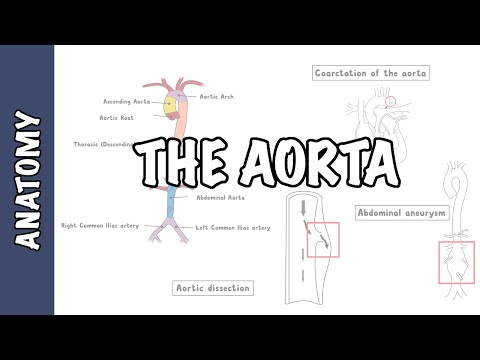
Did you know that the aortic arch is like the ultimate highway for your blood? Seriously! It’s where all the action happens. Imagine driving on a road that splits into different directions, taking your precious cargo to various destinations. That’s kinda what this part of your heart does.
You know, just the other day, I was chatting with my buddy about the weirdest parts of our bodies. We stumbled upon the aortic arch and couldn’t help but laugh at how it sounds like something from a superhero movie. “The Aortic Avenger!”—it has a nice ring to it, right?
But in all seriousness, this structure is super important for keeping you alive and kicking. If there are any hiccups here, it could lead to some serious trouble. So let’s break it down together! What’s happening in this little archway of life? And why should we even care? Well, stick around because it’s way cooler than you might think!
Understanding the Clinical Significance of the Aorta in Cardiovascular Health
The aorta is basically the superstar of your circulatory system. It’s the largest artery in your body and plays a crucial role in delivering oxygen-rich blood from your heart to the rest of your organs. If you think about it, that’s a pretty big deal!
So, let’s break down how this essential vessel works and why its health is a must for overall cardiovascular well-being.
Aortic Structure
The aorta starts at the left ventricle of your heart. The first part is called the aortic root, which leads directly into the ascending aorta, then curves into the aortic arch. This arch branches off into major arteries that supply blood to your arms, head, and neck. From there, it extends downward as the descending aorta and further splits into smaller arteries.
- Aortic Arch: It’s like a main highway splitting into side streets for different neighborhoods—your major organs.
- Ascending Aorta: This part carries freshly oxygenated blood right out from your heart.
- Descending Aorta: It takes care of sending blood down to lower parts of your body.
Clinical Significance
So why should you care about this big artery? Well, lots can go wrong with it, and when it does, you really feel it. Conditions like aneurysms or dissections can seriously threaten cardiovascular health.
An **aortic aneurysm** happens when part of the wall weakens and bulges out. Imagine blowing up a balloon until it’s on the verge of bursting—that’s what an aneurysm is like inside your body! If it ruptures, well… that can lead to life-threatening internal bleeding.
Another scary issue is an **aortic dissection**, where layers of the artery wall tear apart. Think about peeling an onion—if you don’t handle it carefully, those layers can come apart pretty easily! This condition often comes with severe chest pain that could mimic other serious issues like heart attacks.
- Aneurysms are usually asymptomatic until they rupture.
- Anatomical variations in people may affect how doctors approach treatment.
Some risk factors for these conditions include high blood pressure, genetic disorders (like Marfan syndrome), and even aging. Taking care of your heart through regular check-ups can help you catch these conditions early!
Diagnosis & Treatment
Getting diagnosed typically involves imaging tests such as ultrasound or CT scans. Imagine looking at a detailed map so doctors can see exactly what’s going on inside your chest.
Treatment options range widely from medication to manage symptoms or surgery for more severe cases. Sometimes they use stents or grafts to repair damaged sections—kind of like patching up holes in tires!
Keeping an eye on **blood pressure** and lifestyle choices matters too! Eating healthy foods, quitting smoking (if that’s something you’re struggling with), and exercising regularly are proactive ways to keep that big artery happy!
In wrapping this up, understanding how vital that little arch in your chest is makes all the difference in taking care of yourself! The aorta may seem simple but plays such an important role in keeping us alive and well! So be sure to listen to what your body tells you—it just might be talking about that awesome arch!
Understanding the Clinical Anatomy of the Ascending Aorta: A Detailed Overview for Medical Professionals
The ascending aorta is like the big boss of blood flow in your heart. It’s this large artery that pumps oxygen-rich blood from the left ventricle to the rest of your body. If you think about it, that’s a pretty crucial job! But there’s a lot more to it than just being a pipe for blood.
Location and Structure: The ascending aorta starts right at the top of the heart, attached to the left ventricle. It’s typically around 5 centimeters long and about 2.5 to 3 centimeters in diameter, but hey, don’t hold me to those numbers because they can vary from person to person. After that, it curves into what’s known as the aortic arch.
Now, let’s talk about branches. Right after leaving the heart, the ascending aorta gives rise to two important arteries: the right coronary artery and the left coronary artery. These guys are essential for supplying blood to your heart muscle itself! Without them functioning properly, it’s kind of like trying to drive your car without gas—a no-go!
Clinical Significance: Understanding this anatomy is key for medical professionals. For instance, when someone has chest pain or other cardiovascular issues, knowing exactly where problems might arise can really help in diagnosing conditions like aortic dissections or aortic aneurysms. An aneurysm occurs when part of the wall weakens and bulges out, which can be super dangerous if it ruptures.
Also, things like hypertension can impact how well this artery functions over time. You could picture it like an old rubber band—over time it just doesn’t stretch as well anymore! So monitoring patients with high blood pressure is crucial because it could lead to complications in the ascending aorta.
- Aortic Dissection: This happens when there’s a tear in the inner layer of the artery which causes blood to flow between layers instead of out into circulation. Pain felt here can be pretty intense—think ripping or tearing.
- Aneurysm Formation: As mentioned before, bulging areas are weak spots that could burst any moment—definitely not something you’d want happening!
- Surgical Interventions: Sometimes doctors need to intervene surgically if they suspect severe conditions related to these problems; understanding anatomy helps them navigate safely around vital structures.
- Differential Diagnosis: Being able to pinpoint whether chest pain is caused by something relating directly to cardiac issues vs other sources relies heavily on anatomical knowledge.
This area can become complex quickly but knowing these fundamental concepts makes all this so much easier! If you happen across someone who feels an unusual fluttering feeling in their chest while running—or just chilling on their couch—you’ll have some newfound insights into what might be going on!
The takeaway? The ascending aorta may seem simple at first glance, yet it plays such an important role in stacking up against various clinical situations. That’s why understanding its anatomy not only helps you appreciate how magnificent our circulatory system is but also equips you with tools for better patient care!
Understanding the Most Common Aortic Arch Abnormality: Insights into Cardiovascular Anatomy and Pathology
So, let’s chat about the aortic arch. It’s kind of a big deal when it comes to understanding how our heart works. You might not think about it often, but this part of your cardiovascular system is super important.
The aortic arch is essentially the section of the aorta that curves between your ascending aorta and descending aorta. Think of it as the main highway where blood travels from your heart to various parts of your body. This arch gives rise to major arteries like the brachiocephalic trunk, left common carotid artery, and left subclavian artery.
Now, you might be wondering, what’s the most common abnormality related to this interesting structure? Well, one of the most frequently seen issues is called a brachiocephalic artery anomaly. What happens here is that instead of having three separate vessels branching off from the arch, sometimes they get mixed up or merged together in some way.
Here are some key points about it:
- Types of Anomalies: These can include conditions like a double aortic arch or an absence of one artery. These variations can lead to complications.
- Symptoms: Some people don’t even know they have this issue until they run into problems like difficulty breathing or trouble swallowing. Crazy, huh?
- Diagnosis: Doctors often use imaging techniques like echocardiograms or CT scans to spot these abnormalities.
- Treatment: Depending on severity, treatments can range from monitoring over time to surgical intervention.
One time I was chatting with a friend who had a condition related to his aorta. He shared how he always felt fatigue and occasional pain in his chest but thought it was just stress or something routine. After some tests, he found out he had an abnormality in his aortic arch! Imagine going through life not knowing that something so vital was going awry.
When we think about cardiovascular anatomy, it really highlights how every little part plays its role—kind of like a band where every instrument matters for that perfect harmony. If one piece goes outta tune (or malfunctions), things can really spiral out.
In short, understanding cardiac anatomy and the potential anomalies can be quite enlightening—like peeking under the hood of your body’s engine! It’s fascinating stuff that shows just how intricate our systems are and reminds us to pay attention if something feels off because you never know what might be lurking beneath the surface!
You know, the aortic arch is one of those things that doesn’t get as much love as it deserves. I mean, think about it: this big ol’ structure is like the main highway for blood leaving your heart. It’s not just there to look pretty; it plays a critical role in keeping your whole system running smoothly.
So, the aortic arch sits right above your heart, and it branches off into major arteries that supply blood to your head, neck, and arms. It kinda looks like a little bridge or an upside-down U when you see it in medical illustrations. The arch has three primary branches: the brachiocephalic trunk (which itself splits into the right subclavian and right common carotid), the left common carotid artery, and the left subclavian artery. Each of these arteries has its own job—like delivering oxygen-rich blood to different parts of your body.
I remember being at my best friend’s dad’s birthday party one year. He was a cardiologist, and after cake and ice cream, he casually started explaining how important understanding structures like the aortic arch is for diagnosing heart conditions. One story he told really stuck with me: he was once part of a team that saved a patient with an unusual tear in their aorta right at the arch. If they hadn’t acted quickly—like super quick—the result could’ve been tragic.
The reality is that if something goes wrong with this area—like an aneurysm or dissection—it can lead to serious health problems. Aneurysms are basically weird bulges where your artery weakens; if they rupture, it’s panic stations! Then there are dissections where layers of the artery start coming apart—think of peeling an onion but way less tasty—and that’s also really dire stuff.
And here’s where clinical significance comes into play: doctors often use imaging tests like CT scans or MRIs to look at someone’s aortic arch if they suspect issues. Understanding how it works helps them predict problems before they blow up into emergencies.
So yeah, while it’s easy to forget about these internal structures until something goes wrong, recognizing their importance can be life-saving! You might not think about your aortic arch every day (and honestly who does?), but when you dig into its anatomy and significance, you realize just how much we owe it for keeping us ticking along nicely!