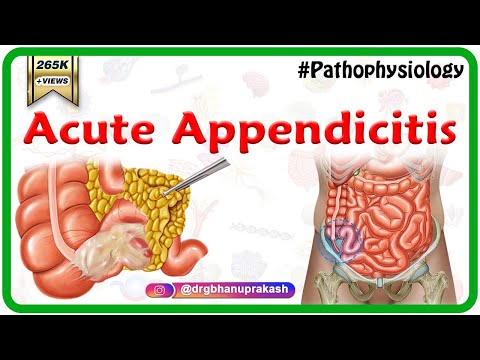
You know that feeling when you have a really bad stomach ache, and you’re just praying it’s not something serious? Well, I remember the first time I thought I had appendicitis. I was in high school, and I had just finished a massive slice of pizza. Suddenly, bam! Pain hit me like a freight train.
Turns out it was just my body saying “too much cheese!” But for some people, that pain means way more than an unfortunate pizza choice.
Appendicitis is one of those things that sounds scary but is actually pretty common. It’s like your appendix decides to throw a tantrum and gets inflamed. So what gives with that little organ anyway? Why does it go off the rails?
Let’s break down what really happens in your body when appendicitis strikes. Spoiler alert: it involves a wild mix of inflammation and confusion! So stick around; we’re about to dig into this quirky little mystery together.
Understanding the Pathophysiological Mechanisms Associated with Appendicitis in Medical Science
Well, let’s break down appendicitis in a way that makes sense, shall we? Appendicitis is basically when your appendix—a small pouch hanging off your large intestine—decides to throw a fit. So what exactly happens in your body? Here’s the scoop.
When we talk about pathophysiology, we’re diving into the “how” and “why” behind diseases like appendicitis. It’s all about understanding what goes wrong at the cellular and systemic levels. In the case of appendicitis, it often starts with an obstruction of the appendix. Imagine you’re trying to shove a lot of stuff into a tiny bag, and then it gets stuck; that’s kind of what happens here.
This obstruction can be caused by various things, like stool, a foreign body, or even cancer. Inside your appendix, bacteria—which are usually chill—start to multiply because they’ve got nowhere to go. More bacteria equals more trouble! Your body senses this invasion and sends out signals for help; this is when inflammation begins.
Inflammation is like your body’s emergency response team kicking into action. You might feel sharp pain on your right side—that’s called rebound tenderness, and it’s no joke! The swelling and irritation make everything feel super sensitive. Basically, your immune system thinks it’s a full-on battle zone in there!
If left unchecked, this situation can escalate quickly because the pressure builds up inside that tiny space. The worst-case scenario? Your appendix could burst—yikes! When that happens, all those nasty germs flood into your abdomen, leading to something much scarier called peritonitis. That’s an infection of the lining of your abdomen which can be life-threatening.
So why do some people get appendicitis while others don’t? Well, that’s still being studied! There might be genetic factors at play or lifestyle choices like diet (not enough fiber could contribute). Some researchers are even looking into how certain gut bacteria impact our chances of developing appendicitis.
In terms of treatment, most folks will undergo an operation called an appendectomy, which is just a fancy way of saying they’ll remove the pesky appendix before it causes more chaos. Once removed, many people bounce back quickly because our bodies can function just fine without this little pouch.
To sum things up:
- The appendix can get blocked for various reasons.
- This blockage leads to bacterial growth and inflammation.
- If untreated, it may burst—resulting in serious complications.
- Surgery is usually needed to fix this issue.
So there you have it! Appendicitis isn’t just about having tummy troubles; it’s an intricate dance between obstructions and immune responses gone awry. Pretty fascinating how our bodies operate under pressure—literally!
Understanding the Pathophysiology of Appendicitis: Key Insights and Mechanisms in Gastrointestinal Health
Well, appendicitis. It’s like that unexpected guest at a party—you know, the one who shows up uninvited and just kind of takes over everything? Yeah, it can be a real pain in the abdomen. So let’s break down what really goes on in your body when appendicitis strikes.
First off, what is appendicitis? Basically, it’s the inflammation of the appendix, that little finger-shaped pouch that hangs off your large intestine. But when it gets blocked—by anything from stool to foreign bodies or even tumors—it can turn into a pretty serious situation.
Now, **let’s get into the nitty-gritty** of how this all happens. When there’s a blockage in the appendix:
- Increased Pressure: The blockage causes pressure to build up.
- Bacterial Growth: This increased pressure creates an environment for bacteria to multiply.
- Inflammation: Your body senses something’s wrong and sends white blood cells to fight off this bacterial invasion, leading to inflammation.
So here’s where it gets intense: as the inflammation worsens, you might start feeling sharp pains in your lower right abdomen. Remember that time you ate too much spicy food? Well, this is kind of like that—but much worse!
If left untreated, things can escalate quickly. The inflamed appendix can become filled with pus—a collection of dead cells and bacteria—and may even burst! A ruptured appendix isn’t just painful; it can lead to peritonitis, which is an infection of the abdominal cavity and is super serious.
Another interesting thing about appendicitis is how it varies in different people. Some folks might experience nausea and vomiting first; others just feel a dull ache at first that escalates over time. This variation makes diagnosing appendicitis somewhat tricky!
Now let’s talk treatment options because knowledge is power! When you get diagnosed with appendicitis:
- Surgery: The most common treatment is an appendectomy—removing the appendix before complications arise.
- Antibiotics: Sometimes doctors may use antibiotics alone if surgery isn’t an option immediately.
But once they take out that pesky appendix? You’ll usually recover pretty quickly! I mean sure, you’ll have some stitches and maybe a few days off your feet—but trust me, it’s better than dealing with that pain.
One last point worth mentioning: some researchers are looking into whether we really need our appendix at all. There’s some evidence suggesting it might play a role in gut health by hosting beneficial bacteria—but honestly? If you’re considering whether to keep yours after an infection—just let go!
So there you have it! Appendicitis is no joke but understanding what goes on when your appendix acts up can make it feel a little less scary. Always keep listening to your body!
Comprehensive Overview of Appendicitis Pathophysiology: Downloadable PDF Resource for Researchers and Students in Medical Science
Appendicitis is one of those ailments that send you straight to the ER, right? It’s that sudden belly pain that many of us dread. But what exactly happens in your body when this strikes? Let’s break down the pathophysiology of appendicitis in a way that’s, hopefully, pretty easy to digest.
So, first off, appendicitis is basically an inflammation of the appendix. The appendix is this little tube attached to your large intestine. Think of it as the body’s “forgotten” organ—it’s there but doesn’t do much we can pinpoint. Well, until it decides to throw a fit!
Now, what usually kicks off appendicitis? It often starts with some sort of blockage in the appendix. This can happen for several reasons:
- A buildup of stool
- A foreign body (like seeds or maybe even indigestible food pieces)
- An infection—in some cases, viral infections can also lead to inflammation
When that blockage occurs, bacteria start multiplying like crazy inside the appendix. So you’ve got this perfect storm brewing—pressure builds up because of fluid and gas being produced by those bacteria. It’s like when you shake a soda can and then pop it open; it can get messy!
This increasing pressure causes blood flow to decrease. And here’s where things get really nasty: without enough blood supply, the tissue can die off. What follows can be really serious—when tissue dies, it might cause the appendix to burst or perforate.
If all that happens and the contents spill into your abdomen? Yikes! That’s called peritonitis and it’s no joke—it can lead to severe complications.
Another interesting aspect is how your body reacts to this situation. You see, inflammation triggers an immune response. White blood cells rush in trying to fight off this infection. Often people experience fever or a quickened heartbeat because their body is battling what it perceives as an intruder.
The classic symptom profile includes:
- Pain starting around the belly button and moving down
- Nausea or vomiting
- Lack of appetite
- A fever that sometimes creeps up
And here’s something cool yet scary: if doctors don’t catch this early enough and treat it properly (usually with surgery), complications might arise like abscess formation or gangrene due to poor blood flow.
The whole thing’s pretty fascinating when you think about how our bodies try so hard to protect us—even if it means setting off alarms like appendicitis! Understanding these processes not only helps us see why we feel certain symptoms but also stresses why timely medical intervention is key.
If you’re looking for more detailed information on this topic—like charts or deeper studies—you’d ideally want a downloadable PDF resource full of data tailored for researchers and medical students ready for some serious learning!
In summary, appendicitis isn’t just about pain; it’s a complex battle unfolding in our bodies every day! Who knew such a small organ could cause such big trouble?
Alright, let’s chat about appendicitis for a sec. It’s that pesky inflammation of the appendix that can cause one heck of a surprise. Picture this: you’re going about your day, feeling fine, and then suddenly you get this sharp pain in your lower right abdomen. Ouch! You might be thinking, what on earth is happening? Spoiler alert: it might just be your appendix throwing a tantrum.
So, here’s the deal. The appendix is this tiny, tube-like structure attached to your large intestine. For ages, people thought it was just some leftover piece of our evolutionary past—like a vestigial organ. Turns out, it might actually help with gut health by harboring good bacteria. Go figure!
But when something goes wrong—like if the opening of the appendix gets blocked by stool or an infection—it can lead to appendicitis. And then things get messy. The pressure builds up inside, causing the appendix to swell and become inflamed. It’s almost like it’s screaming for attention! If the condition isn’t treated in time, it can lead to a rupture. Yikes! That’s where things can take a serious turn for the worse.
I remember hearing my friend telling me about her experience with appendicitis. She was just chilling at home and thought she had a stomach bug or something harmless like that—but nope! A trip to the ER revealed her angry appendix needed immediate action. It’s wild how quickly things can escalate when you least expect it.
The pathophysiology behind appendicitis is fascinating because it shows how interconnected everything in our body really is. You’ve got inflammation running rampant as immune cells flood into the area trying to fight off whatever caused the issue—be it bacteria or blockage—and that leads to pain and discomfort.
So, next time someone mentions their weird stomach pains or if you feel something odd going on down there, remember how sneaky appendicitis can be! And stay curious about what goes on inside our bodies—it’s like an intricate puzzle that science is still piecing together bit by bit.