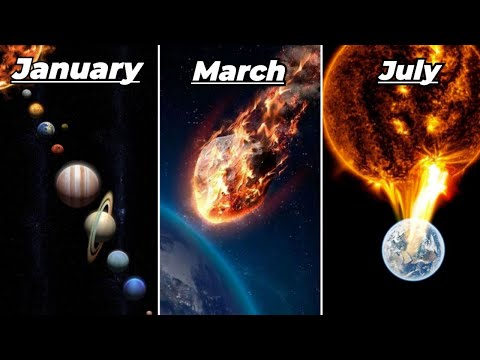
You know that feeling when you’re staring up at the night sky, and a shooting star zooms by? It’s like, “Whoa! Did I just see that?” Just the other night, I was out camping, and my friend tried to convince me we were seeing aliens instead of meteors. Classic.
But seriously, 2024 is shaping up to be a pretty wild year for celestial events. There’s gonna be eclipses, meteor showers, and all kinds of cosmic shenanigans happening right above us. It’s like our very own fireworks show in space!
And what’s cool is these events aren’t just pretty lights. They’re packed with scientific significance! I mean, who knew a total eclipse could teach us about the sun’s atmosphere? So let’s chat about these stellar happenings and why they matter to all of us earthlings. Ready for the ride?
Exploring the 2024 Celestial Phenomenon: A Scientific Analysis of Its Impact on Astronomy
So, there’s a big cosmic event coming up in 2024 that has astronomers buzzing with excitement. This year, we’re all set to witness a total solar eclipse on April 8. It’s not just an awesome sight; it’s also a super important opportunity for scientists!
What makes this eclipse special? First off, it’ll be crossing a swath of the United States, from Texas all the way up to Maine. That means millions of people can catch a glimpse of the moon completely blocking the sun! But, here’s the thing: this isn’t just about the spectacle; it’s about science.
When the moon covers the sun, astronomers get a unique chance to study its corona—the outer atmosphere of the sun— which is usually hidden from view. This corona is crucial because it helps scientists understand solar activity and its effects on Earth. You know those solar flares you sometimes hear about? Well, studying them during an eclipse can lead to better predictions and protective measures for our technology.
Here are some key points about what we might learn during this event:
- Understanding Solar Phenomena: The corona’s temperature is much hotter than the surface of the sun! Why? That’s one big mystery scientists are still trying to solve.
- The Impact on Space Weather: Eclipses allow chemists and physicists to gather data that helps us predict space weather events that can affect satellites and power grids on Earth.
- Public Engagement: It’s a chance for outreach! Schools and communities can engage people in science through viewing parties and educational programs. Imagine kids looking through telescopes!
- Cultural Significance: Eclipses throughout history have influenced art, mythology, and science—this event carries that same weight.
An interesting anecdote comes to mind: Back in 1919, during an eclipse, scientists confirmed Einstein’s theory of general relativity by observing how light bent around the sun. So you see? These events aren’t just pretty pictures; they’ve historically changed our understanding of physics!
After this eclipse, researchers are keen on examining how such phenomena impact our environment. Studies show that animal behavior changes when darkness falls suddenly during daylight hours. Birds might get confused and stop chirping or head back to their nests prematurely!
So yeah, all these insights combined make this total solar eclipse quite significant for astronomy. Watching it will not only be breathtaking but also serve as a powerful reminder of our place in the universe—and how much we still have left to learn about it.
Exploring the Major Space Milestone of 2024: A Breakthrough in Astrophysics and Exploration
So, let’s chat about something really exciting happening in the astrophysics world in 2024! This year is going to be a big one for space exploration and studying the universe. There are some important celestial events lined up that can totally change what we know about the cosmos.
First up, we’ve got a total solar eclipse on April 8, 2024. This isn’t just any eclipse; it’s gonna sweep across parts of Mexico, the U.S., and Canada. When the moon completely covers the sun, day turns into night for a few minutes. It’s kinda magical, if you ask me! During this whole event, scientists will be studying the sun’s corona—the outer atmosphere that’s usually hard to see. You know how hot it gets outside? Well, surprisingly, the corona is even hotter than the sun’s surface! The thing is, researchers are trying to figure out why that happens and how the solar wind (that stream of charged particles) flows from it.
Next on our celestial calendar is a significant meteor shower: the Lyrids on April 16-25. These shooting stars are actually bits of debris left behind by Comet Thatcher. When Earth passes through this debris trail, we get a sky show! But there’s more to it than just wishing on falling stars; monitoring meteor showers helps scientists understand more about comets and our atmosphere.
Now let’s talk about a major event later in 2024: A remarkable alignment of planets. In late November and early December, five planets—Mercury, Venus, Mars, Jupiter, and Saturn—will line up in such a way that you can see them all at once without needing any fancy telescope! It’ll be visible right after sunset if you’re in a good spot without too much light pollution. This kind of alignment reminds us how interconnected everything is out there in our solar system.
Oh! And I can’t forget to mention advancements in space exploration missions scheduled for this year. NASA’s Artemis II mission, set for late 2024 or early 2025 (fingers crossed!), will send astronauts around the moon again after over half a century since Apollo flew them there last time. This mission will pave the way for future lunar landings and beyond.
So basically what I’m saying is: 2024 has some serious cosmic activities lined up that could lead us to fundamental discoveries about celestial mechanics and astrophysics. Watching an eclipse or catching shooting stars leaves you with this sense of wonder—like when I was kid staying up late trying to spot satellites zooming by or imagining what life might be like among those twinkling dots in the sky.
To wrap things up:
- The total solar eclipse will help us study the sun’s corona.
- The Lyrid meteor shower gives insight into comets.
- The planetary alignment offers a rare visual treat.
- NASA’s Artemis II aims to take humans back around the moon.
Isn’t that exciting? Just think about how all these events could enhance our understanding of space! It’s like we’re finally starting to scratch beneath the surface of what lies beyond our little blue planet. Can’t wait to see what discoveries come from all this science happening in 2024!
Exploring the Scientific Significance of Rare Events in 2024: What to Expect
So, in 2024, we’re looking at some pretty cool celestial events that are gonna get a lot of us stargazers excited. When we talk about **rare events**, we mean those moments that don’t happen every day, and they often have some serious scientific significance. Let’s explore what’s on the calendar!
First off, solar eclipses are super popular. Next year in April, there’s gonna be an **annular solar eclipse**. This means the moon will cover the center of the sun, leaving this stunning ring of fire around it. Whoa! Isn’t that beautiful? But aside from just looking cool, eclipses help scientists understand more about the sun’s corona—basically its outer atmosphere—and its effects on space weather.
Then we’ve got meteor showers. Transitioning to August, expect a peak in the **Perseid meteor shower**. These little shooting stars come from debris left by Comet Swift-Tuttle. They’re not just pretty to watch; they can also tell us about the composition of comets and how our solar system formed ages ago.
Also worth mentioning is a rare alignment event in May: **five planets lined up** in the sky, visible to us without binoculars or telescopes! When planets align like this, it’s not just eye candy—scientists can gather information about their atmospheres and surface compositions through telescopic observations.
Oh! I can’t forget about that super rare event happening on December 14th—an especially close conjunction of **Jupiter and Saturn**. The two biggest planets will be so close together that they might look like one bright star! For astronomers, studying these kinds of conjunctions helps refine models of planetary formation and evolution over billions of years.
Now you might wonder why all these events matter beyond their beauty. Well, it’s because each one enriches our understanding of space physics and even *potential impacts on Earth*. For example:
- Solar eclipses show how solar radiation affects our planet.
- Meteors give insight into materials left over from when our solar system was formed.
- Planetary alignments help explore gravitational interactions between planets.
Every time these rarities roll around, they bring scientists together to share data and ideas while sparking interest and awe among those who take a moment to look up at the night sky.
So yeah, as we gear up for 2024’s spectacular celestial events, remember: it’s not just about what you see; it’s also about what we learn! Whether you’re an amateur stargazer or a seasoned astronomer, there’s something magical waiting for you in those cosmic wonders!
Celestial events have this amazing way of capturing our imagination, right? I mean, there’s just something romantic about looking up at the night sky and feeling a connection to the universe. It makes you think about how tiny we really are, like, in comparison to everything out there. So let’s chat about what’s coming up in 2024 and why it matters.
First off, there’s a total solar eclipse happening on April 8. Imagine standing under the sun one moment and then bam! Everything goes dark. The cool thing is that people across parts of North America can actually see it. It brings folks together—families having picnics in parks, strangers sharing glasses to catch that fleeting moment where day turns to night. Seriously, it’s not just a pretty sight; it’s an incredible reminder of how our planet interacts with the sun and moon. This type of event helps scientists study the sun’s corona (which is basically its outer atmosphere), giving insights into solar winds that affect everything from satellites to climate.
Then there are meteor showers like the Perseids in August. They’re like nature’s fireworks show! When you watch those shooting stars streak across the sky, you can’t help but feel a little awe-struck, right? Plus, studying these meteors can reveal information about the early solar system—what materials were floating around back then and how they contributed to planet formation.
And don’t forget about Jupiter making a super close approach in November! It’ll be shining bright and looking pretty spectacular through telescopes or even with your naked eye if you know where to look. Learning about our neighboring planets enhances our understanding of space weather patterns—like radiation levels—that could even affect future space missions.
It’s easy to get swept away by the beauty of these celestial events without thinking about their significance for science. They make us curious; they inspire questions. Like when was the last time you stared at a meteor shower? Did you wonder what those little rocks were made of or where they came from? Each event is a chance for scientists to observe and collect data while also igniting our imaginations.
So as we gear up for 2024 and all its heavenly happenings, maybe take some time to step outside, look up, and really soak it all in. These events are not just eye candy; they’re deeply intertwined with scientific exploration and discovery—and who knows what new revelations await us just beyond our atmosphere? Seriously exciting stuff!