You know that moment when you’re staring at the stars, wondering what the heck they are? Sometimes, it feels like they’re just there, twinkling away. But really, there’s a whole lot of science behind those shiny little dots.
Now, let’s talk about atoms for a sec. Remember that one science class where you learned everything is made up of these tiny particles? It’s super cool stuff! Atoms have their own personalities and quirks—kind of like people, if you think about it.
Here’s where it gets really interesting. Each atom gives off a unique light show when you zap it with energy. Like, who knew atoms could be such drama queens? This light show is called atomic spectra, and it tells scientists all sorts of secrets about what’s happening on the tiniest levels.
So grab a snack, get comfy, and let’s dig into this colorful world of atoms! You’ll feel like a pro in no time.
Understanding Atom Spectra: Insights into Atomic Structure and Behavior – Answer Key
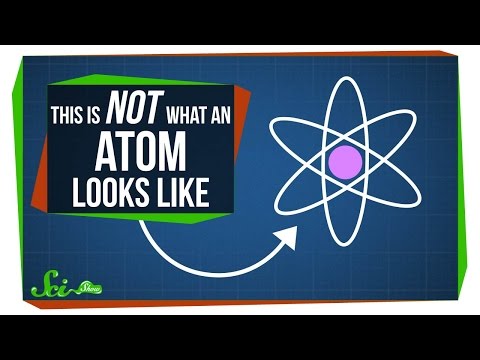
Atoms are like tiny solar systems. At the center, there’s a nucleus made up of protons and neutrons. Then, zipping around that nucleus are electrons. But here’s the cool part: when these electrons jump to different energy levels, they can absorb or emit light. That’s where atom spectra come into play.
You know how a rainbow forms when light passes through a prism? Well, atoms do something similar. Each element has its own unique “fingerprint” of light it emits or absorbs, often seen in colorful lines when you look at them through a spectroscope. These colored lines are called spectral lines.
So, what’s going on with these spectral lines? Basically, when an electron gains energy (say from heat or light), it can move up to a higher energy level—this is called an excited state. Once it gets there, it doesn’t hang around for long. It eventually falls back down to its original level and releases that extra energy as light. The color of the light depends on how much energy is released.
Let’s break this down further:
Now here comes a personal touch! I remember watching fireworks as a kid and being amazed by the different colors—reds, greens, blues! What I didn’t realize then was that those colors come from atoms in the fireworks getting heated up and emitting those specific wavelengths of light as they returned to their normal state.
The uniqueness of each element’s spectrum is super useful too! Just by looking at the spectral lines through telescopes or spectrometers, we can tell what elements are in distant stars or gases in nebulae. It’s like being able to read the universe’s recipe book!
In summary:
– Atom spectra offer key insights into atomic structure.
– Electrons jump between defined energy levels.
– Each element emits unique spectral lines based on those transitions.
– We can learn about distant cosmic objects just by analyzing their emission or absorption spectra.
Next time you see something glowing or changing colors—think about those busy little electrons dancing between their floors! It shows just how dynamic these tiny particles really are in shaping our universe’s beauty.
Exploring Atom Spectra: Insights into Atomic Structure and Behavior
Okay, let’s dive into this whole idea of atom spectra. You might be wondering why this is even important. Well, understanding atomic spectra is like getting a sneak peek into the tiny building blocks of everything around us. It’s pretty cool, really!
So, what exactly is atomic spectra? Basically, it’s the light emitted or absorbed by atoms. When energy gets added to an atom—like when it gets heated or electrified—it can get excited. Think of it like a kid bouncing off the walls after too much candy! When those atoms calm down, they release that energy as light.
Now, every element behaves differently when it comes to this process. The unique patterns of light emitted or absorbed are called spectra. They’re like fingerprints for elements! Each element has its own specific “color” pattern in the spectrum, which helps scientists identify them. This is super useful in fields like astronomy; researchers can look at distant stars and gases and see their composition just by analyzing their spectra.
Let’s break things down a bit more:
- Emission Spectra: This occurs when an atom emits light as it relaxes back to its normal state. You’ll see bright lines against a dark background.
- Absorption Spectra: Here, an atom absorbs specific wavelengths from a continuous spectrum, creating dark lines on a rainbow-like background. It’s like the opposite of emission!
Now think about fireworks for a second! When they explode, they emit different colors based on the metals used in them—copper gives green; strontium gives red. That’s pretty similar to how different elements create their unique spectral lines.
But why do we care about these spectra? Well, studying them gives us insights into atomic structure and behavior. For instance:
- Electron Energy Levels: Atoms have electrons buzzing around them at specific energy levels or “orbits.” When electrons jump between these levels during excitation and then fall back down again, they release specific amounts of energy as light.
- Nuclear Forces: The interactions between positively charged protons and neutral neutrons can also influence how electrons behave in an atom.
I remember once sitting outside with my friend looking up at stars through a telescope. We didn’t just gaze; we talked about how each twinkling point could tell us stories about its composition through its spectral lines! It felt magical to think that those distant lights were revealing secrets about their atomic makeup.
To sum it all up: exploring atomic spectra truly opens up windows for us to understand not only what makes up matter but also how atoms behave under various conditions. Whether it’s in labs or faraway galaxies, these tiny patterns pack powerful information! Who knew something so small could have such big implications?
Understanding Atomic Structure and Behavior Through Atom Spectra: A Comprehensive PDF Guide
Alright, let’s chat about atomic structure and behavior, specifically through something called atomic spectra. Sounds fancy, huh? But don’t worry; we can break it down into bite-sized pieces.
So, to start with, atoms are the building blocks of everything around us. You’ve got protons and neutrons in the nucleus, and then there are electrons zipping around them. When we talk about atomic spectra, we’re really diving into how these atoms interact with light. It’s like looking at them through a special pair of glasses!
What exactly is atomic spectra? Well, when atoms absorb or emit light (which basically just means they’re gaining or losing energy), they create specific patterns of colors. This is called their spectrum. Each element has a unique fingerprint of colors—imagine every element having its own playlist!
- Emission spectra: This happens when an atom releases energy in the form of light. When you heat up something like sodium gas, it glows bright yellow! That yellow light tells us something distinct—it’s part of sodium’s atomic spectrum.
- Absorption spectra: On the flip side, this occurs when an atom absorbs certain wavelengths of light and leaves gaps where those specific colors aren’t seen. If you pass white light through a cool gas (like helium), some colors will fade away because helium absorbs them.
The cool part? Scientists use these spectra to figure out what elements make up distant stars or even planets! It’s like cosmic detective work! For example, when we look at sunlight through a prism—or any way that separates light—you can see those dark lines in rainbow colors that tell us about the elements in our Sun.
But why should you care? Well, understanding these atomic structures helps in so many ways! From developing new materials to figuring out how stars work or even tracking pollution levels on Earth—the applications are everywhere!
In your daily life, this might sound abstract, but think about your phone or your favorite gadgets; they all rely on materials that have been designed based on understanding atomic properties and behavior through spectra.
You know what’s wild? This science doesn’t stay confined to labs either! Artists are inspired by spectral analysis too—think about how they use light and color in their work. Pretty neat connection between science and creativity!
So next time you hear someone mention atomic spectra, remember it’s not just a bunch of numbers and charts; it’s like peeking into the inner workings of atoms that make up everything around us—like magic but totally real!
You follow me? In short, atomic spectra give us crucial insights into both the micro-world of atoms and our macro-universe beyond. It’s kind of amazing what you can learn from something as tiny as an atom!
So, let’s talk about atom spectra, which may sound super technical, but it’s actually a pretty cool window into the tiny universe of atoms. Imagine standing in front of a giant canvas, just waiting for a painter to splash on colors that tell you about the secrets hidden within that blank surface. That’s kind of what studying atom spectra is all about!
When we shine light through a gas—like hydrogen or helium—what we see is this beautiful rainbow of colors, but not quite like the ones you’d see after a rainstorm. Instead, it shows up as these distinct lines or bands, each representing different energies. These “fingerprints” are unique to each element and help scientists figure out what an atom is made of and how it behaves.
Thinking back to my science class days, I remember staring at those colorful diagrams in my textbook and feeling totally lost. But one day, our teacher brought out a prism and shone light through it. I’ll never forget how everyone gasped as that white light transformed into vibrant colors! It was like magic! At that moment, I realized these spectral lines weren’t just boring data points—they were clues leading us deeper into understanding nature.
So here’s the deal: every atom has its own specific set of energy levels where electrons hang out. When an electron gets excited (say from heat or light), it jumps up to a higher level—like jumping to the top shelf for cookies! But eventually, it can’t stay up there forever. It falls back down and releases energy in the form of light. Voila! That light produces those spectral lines we see.
Now think about this—by studying those lines and their patterns, scientists can determine not just what elements are present but also learn things like temperature and even movement toward or away from us based on how those lines shift (a little thing called redshift). Isn’t that wild?
It’s kind of humbling really when you think about how much we can learn from something so small and subtle as an atom. They’re like little storytellers whispering their secrets if we just take the time to listen. So next time you catch a glimpse of shimmering colors in your own life—even if it’s just in a soap bubble—remember there’s a whole atomic world behind them waiting to share its story!