So, picture this: you’re at a party, and someone pulls out a laser pointer. Suddenly, everyone’s like kids again, chasing that little dot around the room!
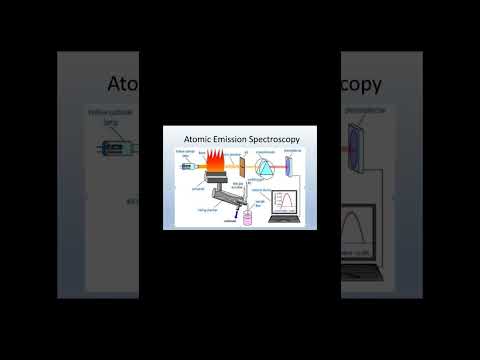
That’s kind of how atomic emission spectroscopy works. It’s like shining a light on elements to see what they’re made of. Seriously, it can tell you about everything from the stars in the sky to bad water quality.
Imagine being able to peer into the very essence of matter. Sounds a bit like magic, huh? But it’s all science, and it’s pretty darn cool!
In this piece, we’re going to explore how scientists are using this fancy technique to unravel mysteries from tiny samples – and maybe even improve our lives along the way. You ready for this ride?
Applications of Atomic Emission Spectrum in Modern Scientific Research
Atomic Emission Spectroscopy (AES) is like having a superpower that allows scientists to see the elemental makeup of materials. When an atom gets excited—like after being zapped with energy—it emits light at specific wavelengths. That light is what we analyze. It’s a bit like fingerprints; each element has its own unique set of “fingerprints” in the spectrum, which helps researchers identify what’s present.
One major application of AES is in **environmental science**. Imagine you’re testing water from a river. You can use AES to check for contaminants. Let’s say there are trace amounts of heavy metals like lead or mercury; by analyzing the emitted light, you can determine their concentration. This information is crucial for assessing pollution levels and making sure our water stays clean and safe, you know?
Another cool area where AES shines is **material science**. Scientists use it to study the composition of alloys or new materials they’re developing. For example, if developers are crafting a new metal for aircraft, they can analyze the blend using atomic emission spectroscopy to ensure it meets the required specifications—like strength and durability.
In **astronomy**, AES helps unlock the mysteries of distant stars and galaxies. By studying the light emitted from these celestial bodies, astronomers can figure out their chemical composition and temperature! Imagine looking up at a star and knowing exactly what it’s made of just by analyzing its light—that’s some cosmic detective work!
Also, in **biomedical research**, AES plays an important role. Researchers often need to analyze biological samples for metals that could indicate disease states. For instance, elevated levels of certain metals in blood might signal health issues related to poisoning or metabolic disorders.
Industry uses atomic emission spectrometry too! Imagine quality control in manufacturing; companies need to ensure their product meets safety standards. By applying AES, they can quickly test raw materials or finished goods without much hassle.
So yeah, as you see, atomic emission spectroscopy isn’t just some lab technique gathering dust on a shelf—it’s out there making big waves across various scientific fields! From keeping our environment clean to unlocking cosmic secrets and ensuring safe products—AES really does have its hands in many jars! The next time you hear about elements dancing under UV light for analysis, remember it’s more than just science; it’s a vital tool driving innovation and protecting our world every day!
Applications of Emission Spectroscopy in Real-World Science: Innovations and Insights
Emission spectroscopy is pretty cool and super useful in real-world science. Think about it: it helps scientists analyze materials by looking at the light they emit when excited. This technique has a range of applications that make it invaluable in various fields, like chemistry, astronomy, and environmental science, just to name a few.
One of the most exciting aspects is its role in chemical analysis. Researchers use emission spectroscopy to figure out what elements are present in a sample. For example, if you took a soil sample and wanted to know if it contained heavy metals like lead or cadmium, this technique could give you answers pretty quickly. The method works by vaporizing the sample with some heat or electricity, which then excites the atoms and causes them to emit light. By measuring this emitted light at specific wavelengths, scientists can determine what elements are there.
Then there’s its application in astronomy. Have you ever looked up at the stars and wondered what they’re made of? Emission spectroscopy helps answer that! By studying the light from distant stars and galaxies, astronomers can identify their chemical composition. Each element has a unique fingerprint in terms of the light it emits. When we look at stars’ spectra (those patterns of lines), we can tell not only what they’re made of but also their temperature and even their velocity relative to us.
On another front, environmental monitoring is another area where emission spectroscopy shines bright. It’s used to detect pollutants in air or water. Imagine standing next to a river and worrying about contamination—this technique can help check for toxic substances efficiently! By analyzing water samples with emission spectroscopy, scientists can quickly identify pollutants like mercury or arsenic before they become a serious threat.
Additionally, let’s not forget its impact on forensic science. When investigating crime scenes, forensic scientists often need to know if certain materials are present—like gunshot residue or other trace elements left behind. Emission spectroscopy can help determine these things rapidly without needing complex procedures. It’s fascinating how such technology supports justice!
Moreover, industries utilize emission spectroscopy for quality control too! In manufacturing processes where materials need strict specifications—think pharmaceuticals or food products—monitoring composition is key for safety and effectiveness. Here again, emission spectroscopy comes into play by ensuring that products meet required standards right from production lines.
So yeah, whether we’re peering deep into space or checking our water supply for contaminants, emission spectroscopy is truly an unsung hero of modern science! Its versatility makes it crucial across different domains while constantly pushing forward innovation and discovery in ways we sometimes take for granted but really rely on every day.
Exploring the Role of AES Technology in Environmental Monitoring and Analysis
Atomic Emission Spectroscopy (AES) is a technique used to analyze materials by measuring the light emitted from atoms when they’re energized. Now, you might be thinking, “Why should I care about this?” Well, it’s actually super important for keeping an eye on our environment!
Let’s break it down a bit. When we talk about environmental monitoring, we’re looking at how to keep track of pollutants in air and water. That’s where AES comes in handy! It helps scientists figure out what elements are there and in what amounts.
One cool way AES works is through the use of high temperatures. When a sample gets really hot, its atoms get excited and start emitting light. Each element produces its own unique light signature, kind of like a fingerprint! By capturing and analyzing this light with some fancy equipment, scientists can identify which elements are present.
- Water Quality Testing: AES is often used to check for heavy metals in water samples. For example,Lead or mercury in drinking water can be super dangerous.
- Soil Analysis: Healthy soil is crucial for farming. AES can help determine nutrient levels and toxic substances that might affect crops.
- Air Quality Monitoring: In places where pollution is a big issue, like cities or industrial areas, AES helps measure harmful emissions.
It’s pretty impressive how this tech can directly impact public health and safety! Imagine living near a factory that releases toxins into the air; you definitely want to know if it’s safe to breathe.
Let me share a little story. A friend of mine works at a lab using AES technology to monitor river pollution near their hometown. They once discovered alarming levels of cadmium—a really nasty metal—after running some tests on fish caught there. Thanks to their findings, local authorities stepped in quickly to address the pollution sources and warned people not to eat those fish. It’s amazing how science can directly save lives!
But it’s not just about identifying bad stuff; AES also helps with resource management. Scientists can track essential nutrients in environmental samples that are vital for ecosystems or agriculture.
Still, there are some challenges when using AES tech. For one thing, it requires complex instruments that need careful calibration before use—you don’t want misleading results! Plus, if you’re looking at very low concentrations of an element, things can get complicated fast.
So yeah, AES technology plays a crucial role in environmental monitoring and analysis by helping us detect elements that impact our health and ecosystems. And as long as we keep harnessing this powerful technique wisely, we’re one step closer to understanding—and protecting—our world better!
You know, atomic emission spectroscopy (AES) might sound pretty technical, but at its core, it’s just a clever way to figure out what elements are in a sample by looking at the light they emit when they’re excited. Seriously! Picture a bunch of tiny atoms getting all hyped up, and when they calm down, they release light in different colors. Each color corresponds to a specific element. Pretty neat, huh?
I remember the first time I actually saw this process in action during a chemistry class. The teacher had us look at a colorful spectrum on a screen after shining light through various samples. It was like staring into some cosmic rainbow! I couldn’t help but think about how something so small and invisible could tell us so much about the world around us.
Now, when you think about how we use this in scientific progress, it’s kind of mind-blowing. For example, AES is super handy in environmental science to identify pollutants in water or soil. Let’s say there’s contamination from heavy metals—AES can help scientists pinpoint exactly what’s there and figure out how to clean it up without throwing random chemicals around.
But it doesn’t stop with just environment stuff! In medicine, AES can be crucial for analyzing biological samples. Imagine checking your blood for trace minerals or toxins. It’s like having a tiny detective on the case that not only tells you what’s wrong but also helps improve treatment options.
And you know what? The tech keeps evolving too! With advances in technology, AES is becoming faster and more precise, which means researchers can do their jobs quicker and more accurately than ever before.
Sure, you could say atomic emission spectroscopy is just another lab technique among many others—but honestly? It feels like one of those unsung heroes of science! Just think about how much we owe to these glowing little signals that help us understand and improve our world bit by bit. Every time scientists harness these emissions for progress, they’re not just moving forward; they’re lighting the way for future discoveries too!